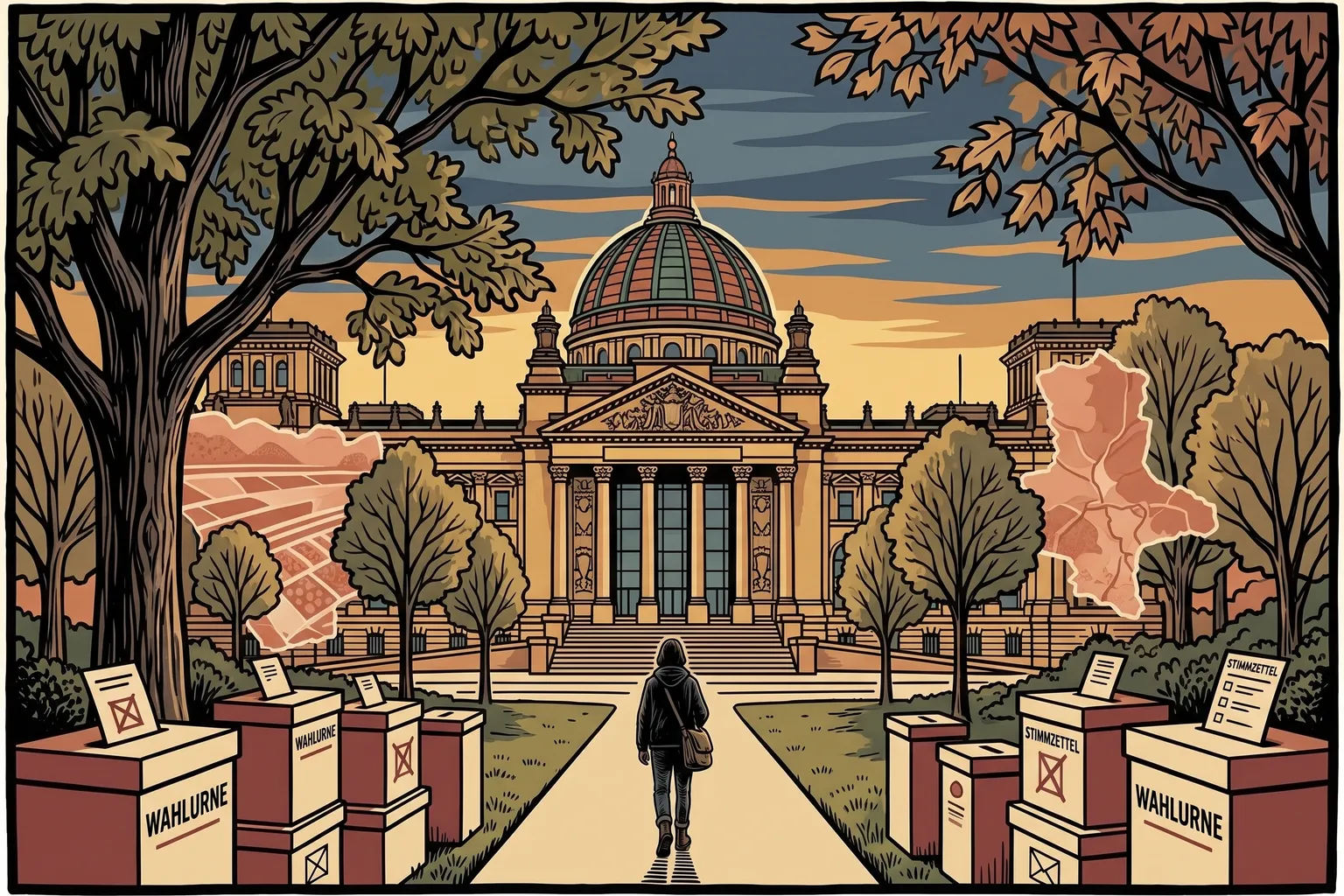
The German state of Saxony-Anhalt voted Sunday. The AfD, which Germany’s domestic intelligence agency classifies as a right-wing extremist organization, came in first with 44 percent of the vote. By Monday morning, Chancellor Friedrich Merz had released a statement. He said he was “deeply shocked.”
I’ve been reading European political news for most of my adult life. This one stopped me.
Not because I hadn’t seen it coming. The AfD has been building in the eastern states for years, and Saxony-Anhalt has trended harder right than most. But there’s a difference between watching a number rise in polls and watching a party the government’s own intelligence service calls extremist come in first in a state election, in Germany, in 2026.
What Germany built after the war was something unusual. The Basic Law, the constitution written in 1949, was designed with the Weimar Republic’s failure explicitly in mind. It gave the courts power to ban parties that threatened the constitutional order. It built in protections against the kind of slow hollowing-out the NSDAP had used to dismantle democracy from within. And alongside the legal architecture, Germany built something harder to codify: a culture of memory. Memorials. Required history. Reckoning with what ordinary Germans had done and known and looked away from between 1933 and 1945.
That culture was supposed to be self-reinforcing. The memory was supposed to prevent the repetition.
Saxony-Anhalt was part of East Germany until 1990. That matters. The postwar culture of antifascism in the communist east was official doctrine, not a genuine reckoning. The party declared itself antifascist by definition, which conveniently removed any need for examination of what ordinary Germans there had actually done. When the Wall came down, that reckoning was still largely unfinished in the east. The eastern states have shown higher AfD support than the west throughout the party’s rise. That’s not an accident.
This doesn’t excuse anything. It explains something. The distinction matters because if you don’t understand what’s driving the numbers, you can’t address them. Shock is not a policy.
Which is why I’m not sure “deeply shocked” was the right thing to say. Merz has been watching this for years. So has anyone paying attention to European politics. Two more state elections are coming in under two weeks, Berlin and Mecklenburg, and the AfD will be on the ballot in both of them.
Germany has tools that most democracies don’t. The Basic Law gives it the legal authority to address a party like the AfD if the political will to do so exists. Whether that will is there is a separate question from whether the tools are.
What I know is that Sunday is in the record now. Forty-four percent. First place. Right-wing extremist, by the government’s own assessment.
Something is being tested here. I don’t know yet what will pass.