GREENLAND
After eight months of threatening to take Greenland by force, President Trump announced Friday that the United States and Denmark have reached a security agreement. Washington gets what it wanted. The annexation it never legally could have achieved doesn’t happen.
Under the deal, the United States gains “permanent control over security, and all other needs” in Greenland, according to Trump’s post on Truth Social. The island remains part of the Kingdom of Denmark. Danish Prime Minister Mette Frederiksen confirmed Friday that Danish sovereignty is preserved. The agreement explicitly bans non-NATO military bases and includes screening mechanisms to block Chinese and Russian investment, according to reporting by The Washington Post.
The United States has maintained a military presence in Greenland since 1941, when Denmark’s minister in Washington, Henrik Kauffmann, signed a defense agreement on his own authority after the Nazi occupation, without the consent of the government in Copenhagen (Source). Thule Air Base, which was renamed Pituffik Space Base in 2023, has operated continuously through the Cold War as a radar and satellite warning station. The American interest in Greenland isn’t new. What changed under Trump was the ambition: the administration wanted outright territorial control, not a security partnership. What it got is closer to partnership with a revised framework.
For Denmark, the calculation was always about how much sovereignty it could preserve while satisfying Washington. It kept the island. It accepted a larger American footprint. Whether Greenland’s elected government, which has long sought independence from Denmark itself, sees this as progress or as two outside nations deciding its future is a different question, and one not answered in Friday’s announcement.
RUSSIA VOTES IN OCCUPIED UKRAINE
Russia opened its State Duma elections on Friday, and for the first time, polling includes residents of Donetsk, Luhansk, Kherson, and Zaporizhzhia. Moscow illegally annexed those four Ukrainian regions in September 2022.
Russian authorities say 3.5 million voters are registered in the four territories, according to NPR. Voting in the occupied areas began at the end of August, weeks before the rest of Russia, with officials citing security conditions for the extended timeline. Russian soldiers fighting in Ukraine will also vote. One hundred and eighty-six veterans of the war are running as Duma candidates.
Kyiv called the elections illegal. A human rights activist told reporters that residents in the occupied territories were being coerced to participate. CNN’s reporting from Moscow described empty candidate podiums, prizes offered to encourage electronic voting, and no opposition candidates of consequence.
In 1938, Germany held a referendum in the Sudetenland shortly after annexing it; the published numbers showed overwhelming approval. The vote wasn’t intended to measure opinion. It was intended to produce documentation. What Moscow is doing on Friday and through the weekend serves a similar purpose. The occupation is being threaded into Russia’s political fabric, seat by seat and candidate at a time, in a format designed to look like consent.
THE STRAIT
The Houthis control Bab al-Mandeb.
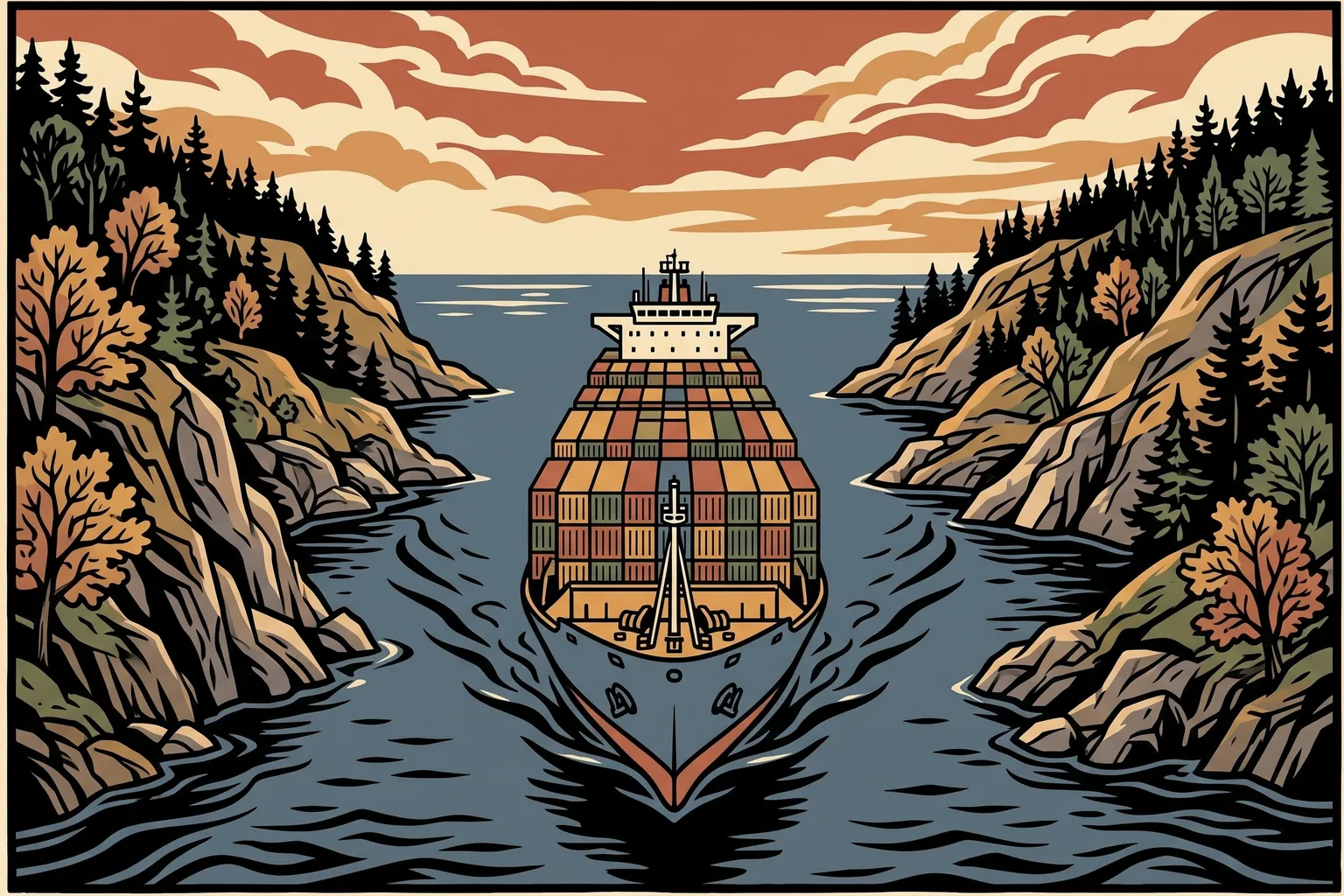
That’s worth a moment. The strait between Yemen and the Horn of Africa is one of the most consequential maritime chokepoints on the planet. Cargo traffic through Bab al-Mandeb accounts for roughly 12 percent of global trade, including 11 percent of maritime oil and 8 percent of liquefied natural gas, according to Al Jazeera. The Strait of Hormuz at the other end of the Arabian Peninsula carried about a fifth of the world’s energy supplies before the U.S. and Israeli war on Iran began in February.
The Houthis captured the port of Mocha on September 10, then moved quickly to Mayyun Island, Dhubab, the Hanish Islands, and six additional districts in Taiz and Hodeidah governorates, covering approximately 5,400 square kilometers in a matter of days. They are now positioned twenty kilometers from the African coast. Iran-backed forces haven’t merely disrupted Red Sea shipping since late 2023. They now hold the geography.
Saudi Crown Prince Mohammed bin Salman spoke with President Trump twice, pressing for U.S. military intervention as the Houthi advance closed in on the strait. American officials met Houthi representatives over the weekend in Muscat, according to NPR. No outcome from those talks has been publicly announced.
When non-state actors gain durable control of a major shipping corridor, insurance rates reflect that fact immediately. Freight gets rerouted. Transit times lengthen. Those costs get passed along. The Houthis have been disrupting the Red Sea for three years. This week is different in kind, not degree.
THE FEDERAL RESERVE
The Federal Open Market Committee voted 12-0 on Wednesday to raise its benchmark interest rate by a quarter point, to a range of 3.75 to 4 percent. It’s the first rate increase since 2023, according to CNBC. The committee cited elevated inflation. The projections released Wednesday point toward one more hike before year’s end, with the median dot holding the rate flat through 2027 (Source).
The connection between this decision and the earlier stories in this column is direct. Oil prices are rising in part because of Houthi control of Bab al-Mandeb and the disruption at Hormuz that preceded it. Supply disruption becomes price pressure. Price pressure triggers tightening. Tightening raises mortgage rates, car loan rates, and the cost of carrying credit card balances. A committee vote in Washington traces back, in part, to a military advance in Yemen that moved across the news cycle quickly.
The Fed has been through this before, though not in identical form. After OPEC’s 1973 embargo, the Federal Reserve was slow to respond to the inflation that followed. By 1980, the benchmark rate exceeded 20 percent. The mechanism then was a cartel withholding supply. The mechanism now is a conflict disrupting transit. The result in both cases arrives at the same place: households paying more for the things they buy because of something that happened far away.
Unemployment currently sits at 4.1 percent. The Fed’s own projections lowered that forecast slightly from June. The economy isn’t in crisis. The committee decided it didn’t want to wait to find out if that would change.
WEST NILE AND THE MOSQUITO MAP
More than 650 West Nile virus infections have been reported in Italy so far this year, according to NPR. That’s roughly half of all cases recorded across Europe. The disease has been considered endemic in Italy since 2020, when cases started rising sharply.
Researchers at Italy’s National Institute of Health described the pattern this week: “Higher temperatures linked to climate change help mosquitoes reproduce and extend the transmission season, increasing the chances that infected mosquitoes will spread the virus to people.” The Culex mosquito that carries West Nile is finding hospitable range farther north and staying active later in the fall. The Aedes albopictus, the tiger mosquito that carries dengue and other diseases, is now established in 13 European countries and 337 regions. Marc-Alain Widdowson at the World Health Organization’s Europe office told reporters: “There’s no doubt that warming weather will expand the period of replication for the virus and the vector in more countries.”
West Nile arrived in North America in 1999, detected first in a cluster of cases in New York City. By 2003, it had spread to 46 states. Italy is now watching the same pattern: a pathogen finds new range as the climate accommodates it, season by season, province by province.
FOUR FOOTPRINTS IN NORTH DAKOTA
Kent Hups is a high school science teacher from Northglenn, Colorado. In 2025, he was volunteering on a paleontology dig near Marmarth, North Dakota, led by Tyler Lyson, the senior curator of vertebrate paleontology at the Denver Museum of Nature & Science. The site is in the Hell Creek Formation, which has been producing late Cretaceous fossils for more than a century.
Hups noticed something sticking out of the ground. He got Lyson’s attention. They looked at it.
What Hups had found was a trackway. Four footprints, two left and two right, each about three feet across, set in a sequence stretching twenty-three feet. Based on the stride and foot measurements, the researchers calculated the animal was moving at roughly 3.4 to 4.5 miles per hour. One footprint preserved the impression of a claw. The paper was published September 8 in the Journal of Vertebrate Paleontology, according to the Smithsonian.
These are the first footprints ever found from an adult Tyrannosaurus rex walking in sequence. Only two isolated adult T. rex tracks had been documented before: one in New Mexico, one in Montana. A trackway is different. A trackway tells you how the animal moved. It tells you the stride, the pace, the posture. Sixty-six and a half million years after this particular animal walked across what would become North Dakota, a teacher paying close attention to what was in the ground figured out where it had been.
That is a good way to end a Saturday.
It’s September 19. The United States and Denmark announced a Greenland security deal that stopped short of annexation. Russia opened its first parliamentary elections in occupied Ukrainian territory, with 3.5 million registered voters under coercion. Houthi forces completed their takeover of Yemen’s Red Sea coastline, placing them twenty kilometers from the African shore. The Federal Reserve raised interest rates for the first time since 2023. Italy reported 650 West Nile virus cases in a season getting longer as the climate accommodates the mosquito. And a high school teacher from Colorado found the first adult Tyrannosaurus rex trackway ever documented, four footprints in the North Dakota badlands, while paying attention to the ground beneath his feet.
That’s Saturday. Have a good weekend.