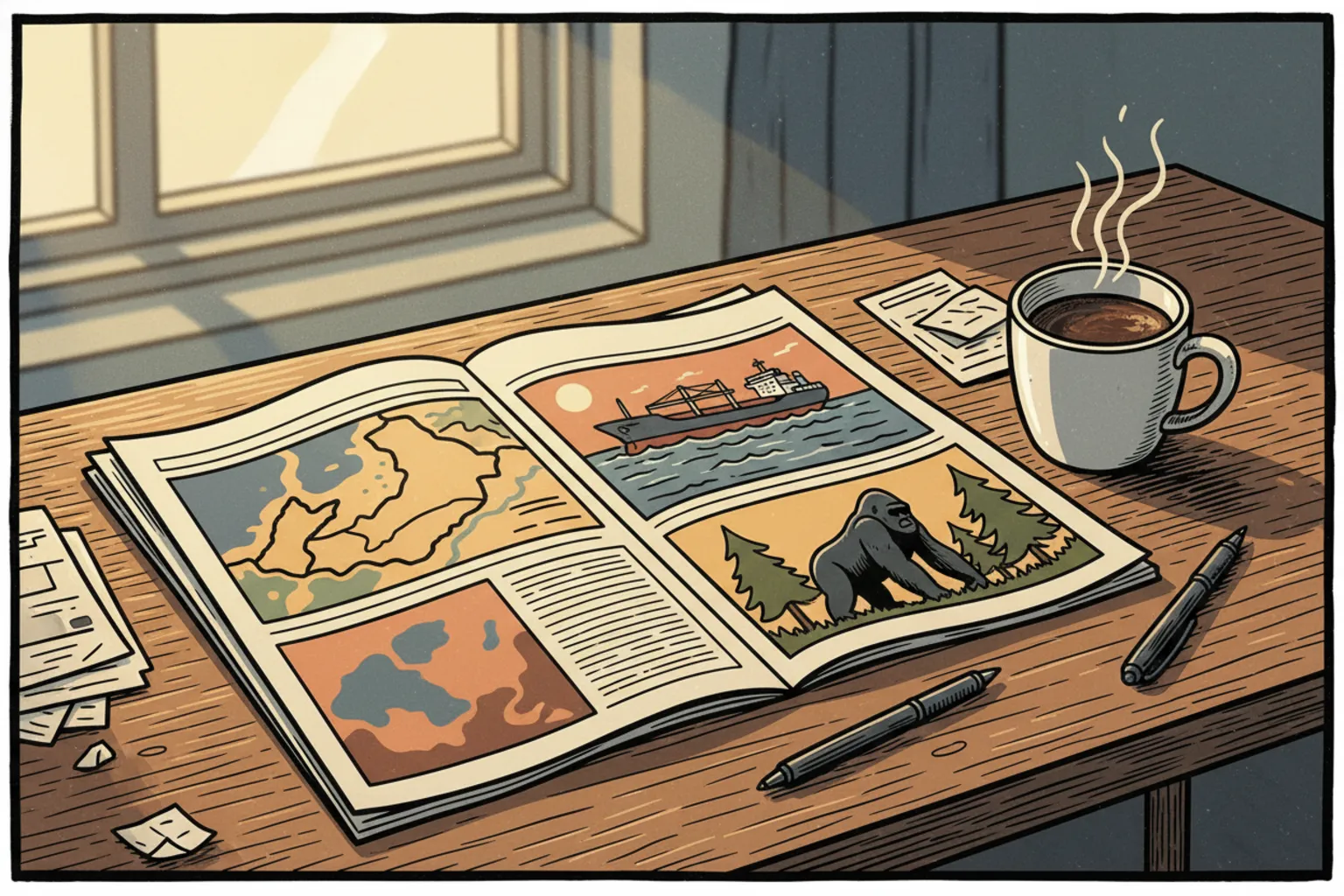
Tennessee Governor Bill Lee signed a new congressional map into law on Thursday that divides the state’s only majority-Black House district, centered on Memphis, into three predominantly Republican districts, PBS News reported. The map passed during a special session of the General Assembly. Memphis, represented in Congress by Democrat Steve Cohen since 2007, will now be split among three districts that stretch hundreds of miles east into rural Tennessee. If the map holds, Republicans could control all nine of the state’s House seats after the November midterm elections.
Tennessee is the first state to redraw its congressional boundaries since the Supreme Court’s 6-3 decision in Louisiana v. Callais on April 29, which raised the legal standard for challenging redistricting under Section 2 of the Voting Rights Act, SCOTUSblog reported. Under the ruling, anyone challenging a map must now prove it was drawn with the intent to discriminate. Voting rights groups have called that standard nearly impossible to meet. Alabama, Louisiana, and South Carolina are pursuing similar redistricting, the Washington Post reported.
The final vote unfolded amid sustained protest. Democratic senators locked arms at the front of the Senate chamber. State Senator Charlane Oliver stood on her desk holding a sign that read “NO JIM CROW! STOP THE TN STEAL 2.0” before Senate staff removed it from her hands, CNN reported. Protesters in the galleries blew air horns and chanted. State troopers held back crowds in the hallways. Cohen called the map “shameful” and said: “Next stop is the courts,” The Hill reported.
Section 2 of the Voting Rights Act was adopted in 1965 to prevent exactly this: the dilution of minority voting power through the drawing of district lines. For sixty-one years it served as the primary federal tool for challenging maps designed to diminish the ability of Black voters to elect their preferred candidates. The Callais decision didn’t strike Section 2 from the statute. It changed what plaintiffs must prove to invoke it. Tennessee moved eight days later.
Roughly twenty thousand seafarers remain stranded aboard some 1,600 ships in and around the Strait of Hormuz, where they have been since Iran effectively closed the waterway in late February, Al Jazeera reported. The International Maritime Organization has said there is “no precedent for the stranding of so many seafarers in the modern age.” Thirty-two ships have been hit by missiles since the war began, killing ten people and injuring at least a dozen, according to the IMO.
Iran is reviewing the fourteen-point memorandum of understanding reported by Axios earlier this week that would declare an end to the war and begin thirty days of negotiations on opening the strait, limiting Iran’s nuclear program, and lifting American sanctions. President Trump told reporters Wednesday: “They want to make a deal. We’ve had very good talks over the last 24 hours, and it’s very possible that we’ll make a deal,” Al Jazeera reported. He later told the Jerusalem Post that Iran had one week to respond, the Jerusalem Post reported.
Operation Project Freedom, the Navy mission Trump announced on May 4 to escort merchant ships out of the strait, was paused less than forty-eight hours later, CNN reported. During the Tanker War of 1987 and 1988, the United States escorted Kuwaiti oil tankers through the Persian Gulf under Operation Earnest Will. That operation lasted fourteen months. The current escort attempt lasted two days.
The MV Hondius, a Dutch cruise ship carrying about 150 passengers and crew from twenty-three countries, remains anchored off the coast of Praia, Cape Verde, with no port willing to accept it, NPR reported. Three passengers have died and at least five have tested positive for the Andes strain of hantavirus, the only known strain that can spread between humans. The World Health Organization has deployed an expert aboard the ship and shipped 2,500 diagnostic kits to laboratories in five countries.
What officials disclosed this week changed the scope of the problem. Thirty passengers left the vessel at the island of St. Helena on April 24, eight days before the first hantavirus case was confirmed, NPR reported. Health officials in at least twelve countries are now tracking former passengers. In the United States, officials in five states are monitoring seven returning passengers, NBC News reported. The WHO has assessed the overall public health risk as low.
In February 2020, the Diamond Princess sat quarantined in Yokohama harbor with what would become 712 confirmed cases of a new coronavirus and fourteen deaths. That was a larger ship, a more transmissible virus, and a different scale of crisis. But the shape of the problem was the same: a vessel at sea, a pathogen on board, and every port in range deciding it was someone else’s responsibility.
Thirty former Ohio State football players, including several who went on to play in the NFL, have agreed to join a federal lawsuit against the university over sexual abuse by the late team physician Richard Strauss, the Washington Post reported. Strauss worked at Ohio State from 1978 to 1998 and died by suicide in 2005. A university-commissioned investigation concluded in 2019 that he sexually abused at least 177 male students and athletes and that university personnel knew as early as 1979.
Three of the thirty players have agreed to identify themselves publicly: Al Washington, Ray Ellis, and Keith Ferguson, all recruited to Ohio State by Woody Hayes and members of the 1979 squad that reached the Rose Bowl. Washington said in a statement: “Coach Hayes always preached to us to ‘Pay Forward.’ Using our voices to pay forward in this situation is not easy, but we believe it is necessary to protect future athletes and to ensure accountability for what happened to us,” WOSU reported. Their attorney said the men came forward eight years after the first lawsuit was filed because they needed to overcome the fear of publicly challenging the university and the shame of disclosing what had been done to them.
Ohio State has settled with 317 survivors for more than sixty-one million dollars. More than two hundred claims remain active. The pattern is now established at scale in American higher education: Penn State and Jerry Sandusky. Michigan State and Larry Nassar. Ohio State and Richard Strauss. Abuse that lasted years. Institutional knowledge that produced no action. And survivors who came forward only when other survivors went first.
And one good thing.
Today is the eighty-first anniversary of Victory in Europe Day, when the unconditional surrender of Nazi Germany ended the war on the continent. President Trump signed a proclamation marking the occasion, the White House announced. In Paris, President Macron laid a wreath at the statue of Charles de Gaulle and led a tribute at the Tomb of the Unknown Soldier beneath the Arc de Triomphe, Connexion France reported.
It is also Sir David Attenborough’s one hundredth birthday.
Attenborough was born on this date in 1926. He joined the BBC in 1952 and has spent more than seven decades showing the world what lives on it. Life on Earth, the documentary series that made him a household name, premiered in 1979. He wrote the entire thirteen-hour script and spent three years traveling the world to tell the story of evolution from single-celled organisms to human beings, CBC News reported.
In a message released ahead of his birthday, Attenborough said he had been “completely overwhelmed by birthday greetings” and thanked well-wishers “most sincerely,” Discover Wildlife reported. The BBC is marking the milestone with a live celebration at the Royal Albert Hall, featuring colleagues including Michael Palin and Chris Packham. Scientists at the Natural History Museum named a newly described species of parasitic wasp in his honor: Attenboroughnculus tau.
In the scene from Life on Earth that has been replayed more than perhaps any other in the history of nature television, Attenborough sat among a family of mountain gorillas in Rwanda and said: “There is more meaning and mutual understanding in exchanging a glance with a gorilla than any other animal I know.”
A hundred years old. A man who spent them paying attention to what is alive. That is something good.
It is Friday. The map in Tennessee is signed. The ship in the Atlantic has no port. The seafarers in Hormuz have no timeline. And in London, a man who has been watching this planet for a century is one hundred years old today. That’s the day.