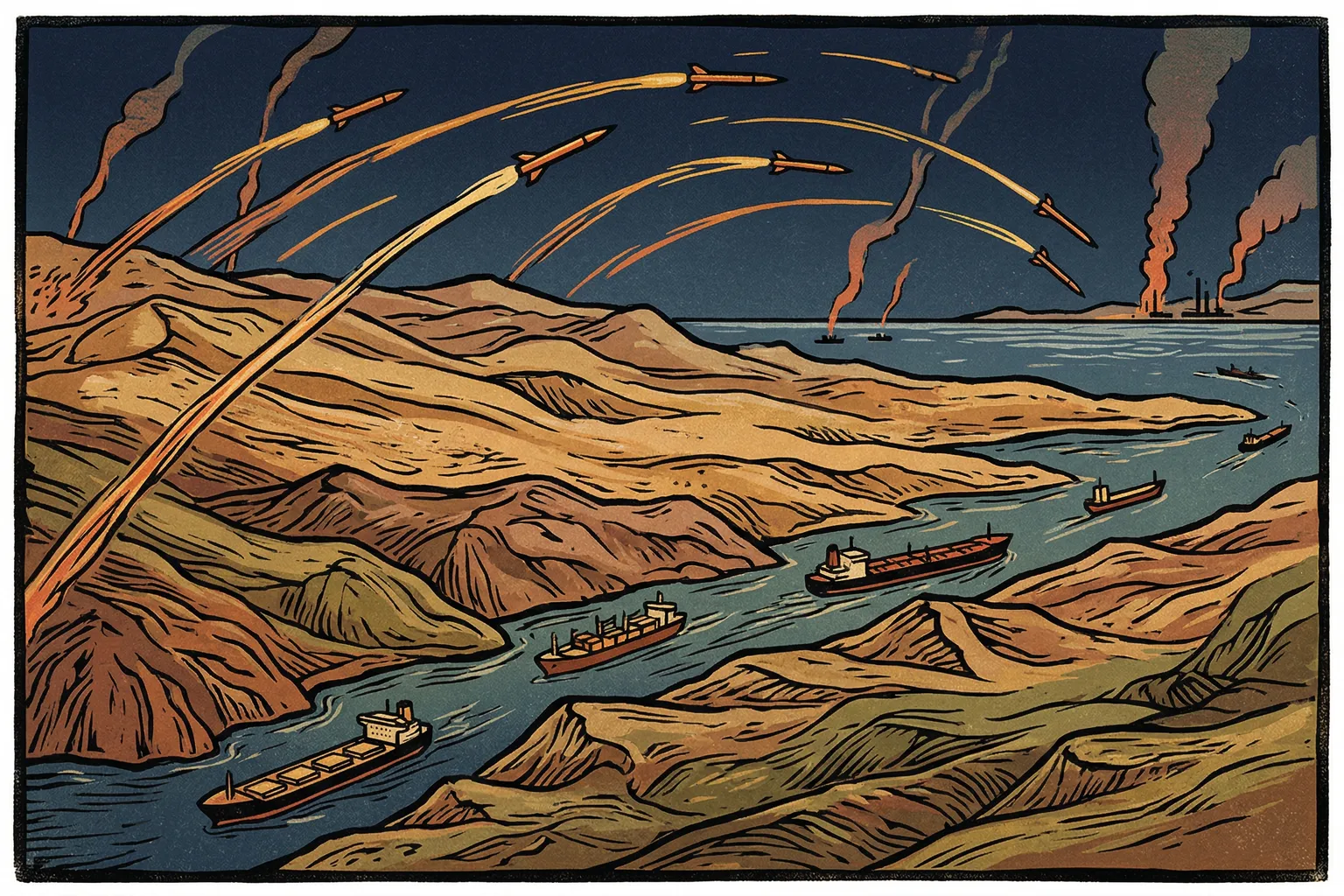
The Houthis fired missiles at Israel early Saturday morning, their first attack since the war in the Middle East began one month ago, the Associated Press reported. The Israeli military said it intercepted the projectiles. Brig. Gen. Yahya Saree, a Houthi military spokesman, said the rebels launched a barrage of ballistic missiles targeting what he described as “sensitive Israeli military sites” in southern Israel.
Sirens went off around Beer Sheba and the area near Israel’s main nuclear research center. Loud explosions filled the air in Tel Aviv. Israel’s Fire and Rescue Service said it was responding to 11 different impact sites across the metro area as Iran and Hezbollah continued to fire on Israel overnight.
The Houthis have held Yemen’s capital, Sanaa, since 2014 and had stayed out of this war until now. They fought a devastating conflict with Saudi Arabia beginning in 2015 and had maintained an uneasy ceasefire with Riyadh for years. Their entry raises a question that military planners in the Pentagon have been trying to avoid: whether the USS Gerald R. Ford, which arrived Saturday in Split, Croatia, for repairs, will have to be sent back through the Red Sea, where the carrier group would face the same high tempo of Houthi attacks that wore down the USS Dwight D. Eisenhower in 2024 and the USS Harry S. Truman in early 2025.
During the Israel-Hamas war, the Houthis targeted commercial shipping in the Red Sea and disrupted a corridor through which roughly $1 trillion in goods had passed annually. If they resume that campaign alongside missile attacks on Israel, the economic consequences of this war get considerably worse.
Saturday marks one month since the United States and Israel attacked Iran on February 28. President Trump has listed five objectives for what his administration calls Operation Epic Fury. By most accounts, the strikes have significantly degraded Iran’s military capabilities and killed scores of senior leaders, the AP reported. But Iran is still launching missiles and drones.
Trump said Thursday that about 90 percent of Iran’s missiles and launchers have been knocked out. He has also suggested the U.S. may soon be “winding down” the operation, though some of his key aims remain undefined or unfulfilled.
“The diplomatic dissonance this week between the U.S. and Iran dismayed investors,” said Doug Beath, global equity strategist at Wells Fargo Investment Institute. “By the end of the week, risk appetite could not withstand the fog of war.”
The price for a barrel of Brent crude oil settled Friday at $105.32, according to AP. It was roughly $70 before the war began. Benchmark U.S. crude settled at $99.64. If the war continues until the end of June, strategists at Macquarie say the price could reach $200 per barrel. The record is just above $147, set during the summer of 2008, when Iranian missile tests and strong Chinese demand helped send prices spiking even as the Great Recession was underway.
The S&P 500 closed its worst week since the war began, falling 1.7 percent Friday. The Dow dropped 793 points. The Nasdaq sank 2.1 percent. It was Wall Street’s fifth consecutive losing week, the longest such streak in nearly four years.
The shutdown of the Department of Homeland Security reached its 43rd day on Saturday, tying the record for the longest government shutdown in American history, the AP reported. On Sunday it will break it.
The House and Senate ended the week by passing different bills and leaving Washington for a two-week recess without resolving the impasse. The Senate passed a funding deal early Friday that would pay TSA, the Coast Guard, and FEMA but not Immigration and Customs Enforcement or Border Patrol. House Republicans rejected it. “This gambit that was done last night is a joke,” House Speaker Mike Johnson said.
The House then passed its own bill Friday night, 213-203, to fund the entire department through May 22. Senate Democratic leader Chuck Schumer said the House plan would be “dead on arrival in the Senate, and Republicans know it.”
President Trump signed an executive order Friday to pay TSA employees, who haven’t received a full paycheck since February 14. “America’s air travel system has reached its breaking point,” Trump said in the memo. Homeland Security Secretary Markwayne Mullin said workers “should begin seeing paychecks as early as Monday.” But it does nothing for the Coast Guard, FEMA, or the thousands of other DHS employees who remain unpaid.
The previous record was 43 days, set last fall when the entire federal government shut down. Before that, the longest was the 2018-2019 shutdown, which lasted 35 days and ended when sick-outs at airports caused LaGuardia to briefly halt incoming flights. The breaking point arrived differently this time, through mammoth security lines rather than a single dramatic stoppage, but it arrived in the same place: the point where the cost to the public became impossible to ignore.
A pro-Iranian hacking group called Handala claimed Friday to have breached the personal accounts of FBI Director Kash Patel, the AP reported. The group posted photographs of Patel and what appeared to be personal documents dating back more than a decade.
The FBI confirmed the breach. “The information in question is historical in nature and involves no government information,” the bureau said in a statement. The Trump administration is offering a reward of up to $10 million for information leading to the identification of Handala’s members.
The hack of a sitting FBI director’s personal accounts is unusual but not unprecedented in the broader context of Iranian cyber operations. Tehran’s proxy hackers have escalated attacks on American officials and institutions since the war began, and Handala earlier this month claimed credit for disrupting systems at Stryker, a Michigan-based medical technology company.
Organizers of Saturday’s “No Kings” rallies across the country predicted the protests against the Trump administration could become one of the largest demonstrations in U.S. history, the AP reported. More than 3,100 events were registered in all 50 states. Organizers said more than 9 million people were expected to participate.
The flagship rally was set for the Minnesota Capitol in St. Paul, where organizers told state officials they expected 100,000 people. Bruce Springsteen was scheduled to headline, performing a song he wrote in response to the deaths of Renee Good and Alex Pretti, two people killed when federal agents conducted immigration raids in Minneapolis.
“This administration’s actions are angering not just Democratic voters or folks in big blue city centers,” said Leah Greenberg, co-executive director of the organizing group Indivisible. “They are crossing a line for people in red and rural areas, in the suburbs, all over the country.” Two-thirds of the RSVPs came from outside major urban centers, she said.
The White House dismissed the protests. “The only people who care about these Trump Derangement Therapy Sessions are the reporters who are paid to cover them,” spokesperson Abigail Jackson said.
The protests are the third round of No Kings rallies. Organizers estimated the first drew more than 5 million people in June 2025 and the second more than 7 million in October. The right to assemble and petition the government is the oldest of the First Amendment freedoms. People have been using it since before there was a First Amendment to protect it.
And in Nairobi, Kenya, a policy that started with a lunch conversation became something that hadn’t been done before in the country. Gov. Johnson Sakaja granted county employees two paid days off each month for menstrual pain, the AP reported. The policy took effect in December. More than half of Nairobi’s 18,000 county employees are women.
“A lot of labor policies were written many years ago by men,” Sakaja told the AP. “Women’s rights are not anti-productivity. They are an input that creates productivity. It’s actually an investment in your workforce.”
Japan adopted a menstrual leave policy in 1947. Spain followed in 2023. In Africa, only Zambia had a nationwide policy before Kenya’s move. Sakaja said the national government and other county governors have expressed interest in how the program is working.
Janet Opiata, Nairobi’s county human resource manager, said the feedback from staff has been clear. “It’s very refreshing,” she said. “And when they come back, they are able to work even better.” A governor listened. A policy changed. The people it was designed to help said it worked.