Pakistan’s Prime Minister Shehbaz Sharif announced Thursday evening that US and Iranian negotiators have reached a “final, agreed upon text” of a peace framework to end the conflict that began February 28. CBS News live-updated the announcement as it came through from Islamabad. The Washington Post reported Sharif’s full statement: “Peace has never been this close as it is now.”
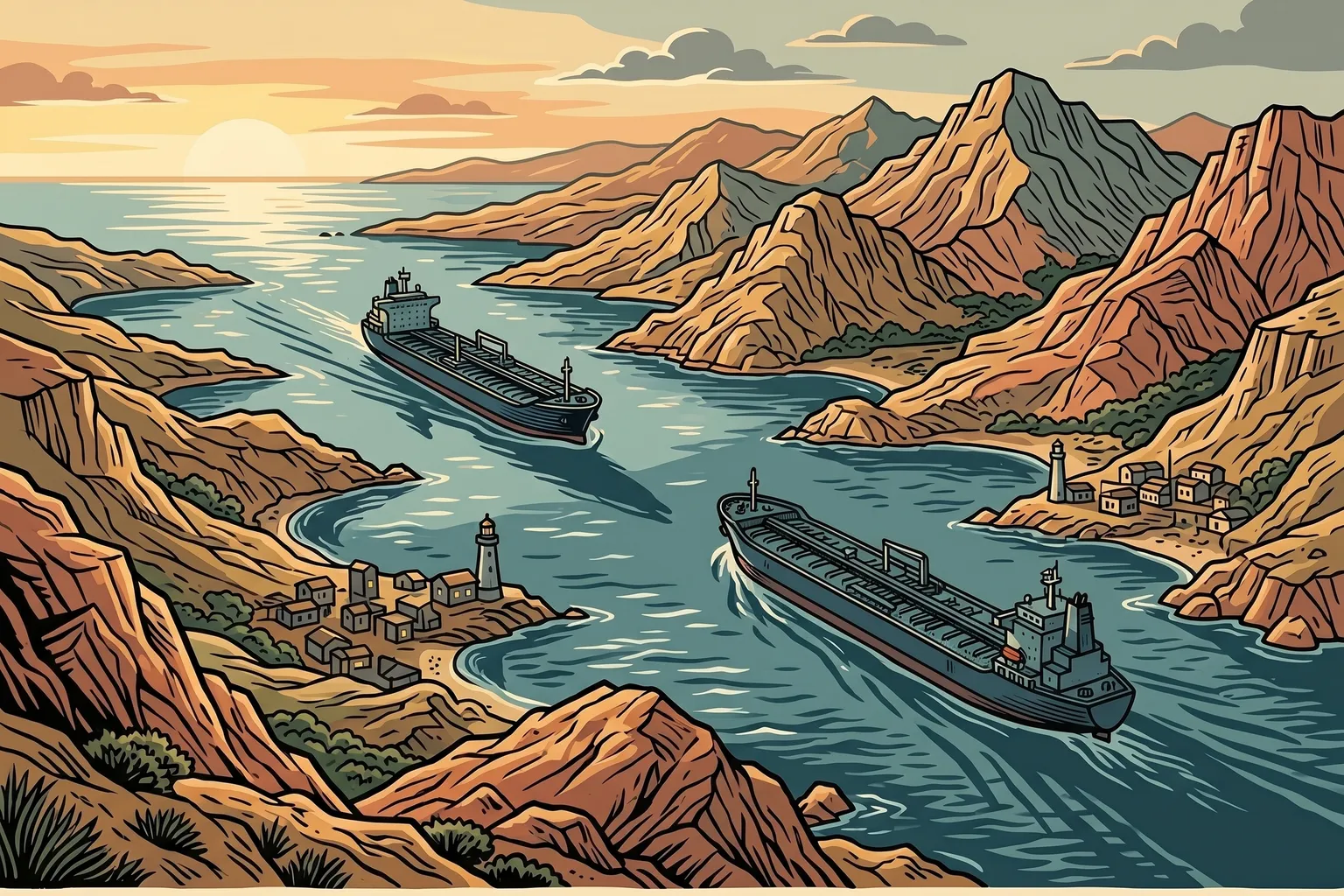
Iranian Foreign Minister Abbas Araghchi confirmed the draft but was careful with the word “finalized.” What the memorandum covers: the end of active hostilities, sanctions relief, and maritime access through the Strait of Hormuz. What it doesn’t cover yet: Iran’s nuclear program. That gets a separate sixty-day negotiating track, which begins only after the initial agreement is signed. Araghchi said the signing would happen remotely and could come “in the coming days.” A Trump administration official confirmed progress while noting that “some uncertainty remains.” The draft framework is being called the Islamabad Declaration in recognition of Pakistan’s role throughout the process.
The Algiers Accords of January 19, 1981 are the nearest precedent in the record. After 444 days of standoff, Iran and the United States resolved the hostage crisis through Algerian intermediaries. The two governments couldn’t talk to each other directly then, either. They used a country in between. Those accords involved frozen Iranian assets, sanctions relief, and pledges of non-interference. They didn’t normalize relations. They got fifty-two Americans home and ended an acute crisis without resolving the underlying one.
The current framework mirrors that structure precisely. Two governments that still don’t formally recognize each other’s diplomatic positions have found a third party willing to stand between them. Pakistan has played the mediating role throughout, including at the Islamabad talks in April that produced the original ceasefire. The sixty-day nuclear track is the harder half of the work, and everyone involved knows it. Getting to agreed text on the surrounding framework is a real development. Getting the nuclear questions answered is a different and larger problem. The two should not be confused.
Belfast is into its fifth day of anti-immigrant violence, with disorder that began after a June 8 stabbing now spread into Glasgow, Edinburgh, and Southampton. The man charged in the attack is a 30-year-old Sudanese asylum seeker. The victim, a man in his 40s, lost an eye. ABC News reported that more than 200 extra officers from across the United Kingdom have been deployed to Northern Ireland, including 90 from Scotland.
Twenty-seven people have been made homeless after rioters went door to door identifying immigrant households and set them on fire. Among those displaced were Ugandan carers, a Ukrainian family, and a Romani family. Belfast’s fire brigade responded to 62 incidents in the first days of the disorder. Schools closed early. Trains stopped running in parts of the city. Businesses shut their doors. The Times called what it witnessed a “modern-day pogrom.”
The victim’s family issued a statement Thursday asking for an end to the riots, saying that peaceful protest is the only legitimate response and that migrants make genuine contributions to the country. The family of the man who was stabbed asked people to stop burning other people’s homes. That sentence is in the public record now. It shouldn’t have needed to be said.
The Troubles that ran from 1969 through the 1998 Good Friday Agreement killed more than 3,500 people and fractured a society for a generation. What began those particular years of violence was always something specific: a march, a death, a neighborhood confrontation that became a flashpoint for everything accumulated underneath it. The 1998 agreement held for twenty-six years and built institutions that are still there. What’s being tested right now isn’t primarily those institutions. It’s the information environment that moves the match to the kindling before the institutions can respond. That’s a newer problem with older consequences.
The US men’s national team opened its home World Cup with a 4-1 win over Paraguay on Thursday night at SoFi Stadium in Inglewood. ESPN’s final score page has the full accounting. Folarin Balogun scored twice in the first half. An own goal by Paraguayan midfielder Damian Bobadilla opened the scoring in the seventh minute. Gio Reyna finished the tally late. Four goals in a single World Cup match set a US record; the men’s team had never reached that number in any previous tournament appearance.
The comparison in the other direction is the 1950 World Cup in Brazil, where the US team upset England 1-0 in Belo Horizonte in a result that American newspapers barely covered and British ones treated as a misprint. The 2026 team is better equipped than any US side that came before it, playing at home in front of 70,000 people, in a tournament it co-hosted and helped design. Thursday’s result was one game. The group stage has two more. But last night in Inglewood was a beginning, and it was the kind that gives the people in the seats something to come back for.
Ukrainian drones reached the St. Petersburg area last week, striking targets around Kronstadt during the final night of the St. Petersburg International Economic Forum. Al Jazeera reported that Russia said its air defenses downed hundreds of drones during the overnight campaign, including more than 140 over Leningrad Oblast. Fires were confirmed at a Defense Ministry facility west of the city. Governor Drozdenko ordered evacuations in the Lomonosovsky district.
The timing wasn’t accidental. The St. Petersburg International Economic Forum is the annual event Putin uses to project economic credibility to foreign governments and investors. Ukraine has targeted the forum before. It targeted it again.
The drone war that began in 2022 with flights rarely exceeding 200 kilometers has become something else. St. Petersburg sits more than 700 kilometers from the Ukrainian border. The military technology that enables this didn’t exist in deployable form four years ago. Ukraine has lost more territory than it has gained on the ground in the last eighteen months. It has nonetheless built a capability that puts Russia’s second-largest city within operational reach. What that asymmetry means for the eventual shape of any settlement is a question neither side has publicly answered.
On June 5, researchers at Cambridge University announced that an AI-designed universal coronavirus vaccine has passed its first human trial. ScienceDaily published the findings. Thirty-nine healthy volunteers received the vaccine in a Phase 1 study. It was safe, well-tolerated, and generated immune responses against multiple coronavirus strains at once: SARS-CoV-2 and its variants, the original SARS virus, and related bat coronaviruses that haven’t yet jumped to human transmission.
The researchers say it’s the first vaccine designed entirely through AI and computer simulation to be tested in humans. It was delivered without a needle, through a micro-fluid jet, which matters for people who can’t tolerate conventional injections and for the logistics of mass vaccination in lower-resource settings where cold-chain supply and trained injectors are harder to maintain.
Every major respiratory pandemic of the past century arrived as a surprise. The 1918 influenza. SARS in 2003. COVID in 2019. The people who built this vaccine are working on the problem before they know what it will be. Phase 1 establishes safety. Phase 2 and 3 trials will establish whether it actually works at scale. That process takes years. The thing they started on June 5 is the beginning of finding out.
In this week’s Letters section, Lorraine Kessler published “Since You Asked: Nobody Died,” her column on the identity crisis that can arrive with retirement. The piece takes on a question that most career writing leaves alone: what happens when the job ends, nothing went wrong, and you still don’t know who you are when you wake up? Lorraine doesn’t offer a resolution. She offers recognition, which is the more honest and more useful thing. It published Thursday. Friday is a good day to start with it if you haven’t already.