On Friday, President Trump posted to Truth Social that “1,000 Missiles are Locked and Loaded.” He was responding to intelligence Israel shared with the U.S. government indicating Iran had developed a new plan to assassinate him. The post appeared while Qatari officials were in Tehran for a second consecutive day of de-escalation attempts, trying to find an opening for talks that both sides say they want and that neither has been able to sustain.
The ceasefire framework agreed to in June is officially over. Since July 7, U.S. Central Command has struck roughly 170 Iranian military targets across two consecutive strike packages, hitting air defense systems, coastal surveillance assets, missile and drone storage, and naval capabilities along Iran’s coastline. The Strait of Hormuz, which carried roughly 130 ships per day before this conflict began, has been carrying fewer than ten. NBC News has continued live coverage here.
What makes Friday different from Thursday is that the diplomatic track hasn’t collapsed. Qatari mediators have been in and out of Tehran. The U.S. and Iran are expected to resume formal talks in Switzerland next week. The June framework organized four working groups: sanctions, nuclear affairs, reconstruction, and monitoring and implementation. None of those structures have been formally dissolved. Axios has the current state of talks here.
In the 1987 and 1988 Tanker War, the U.S. Navy escorted Kuwaiti oil tankers through the same waterway while Iran and Iraq attacked each other’s shipping. Multiple ceasefire proposals collapsed during that conflict before the war finally ended. The strait survived them all. The historical record of the Strait of Hormuz is a record of escalation followed by negotiation followed by a version of stability that holds until the next crisis. That record isn’t a reason for comfort. It’s a record.
Today is July 11. Thirty-one years ago today, Bosnian Serb forces entered the United Nations-designated safe area of Srebrenica in eastern Bosnia and over the following ten days killed at least 8,372 Bosniak men and boys. The International Court of Justice, in a 2007 ruling brought by Bosnia against Serbia, found that what happened at Srebrenica constituted genocide.
On Friday, ten more victims were buried at the Srebrenica Memorial Centre in Potocari. More than 8,000 victims have now been identified and interred. Approximately 900 remain unaccounted for. Some families are still waiting for enough identified remains to hold a burial. Tens of thousands attended Friday’s ceremony. The 2026 theme is “We Are Here.” Balkan Insight has the account of the burials.
In Bosnia’s Republika Srpska entity, genocide denial has been resurging in political discourse. The three men most responsible for directing the Srebrenica massacre were all brought before international tribunals. Radovan Karadžić is serving a life sentence. Ratko Mladić is serving a life sentence. Slobodan Milošević died in his cell in 2006 before his trial concluded. Each of the three spent years in the world before accountability found them. It found all three.
Thirty-one years. Ten more names.
Friday is Letters day on the colleague spotlight calendar.
Lorraine Kessler published “How to Grieve a Parent” on July 1, and it’s worth reading if you missed it. A reader wrote to her four months after her mother’s death, exhausted by the estate paperwork, confused by her siblings’ different reactions, not understanding why someone who handled her mother’s care without falling apart can’t seem to handle what comes after. Lorraine’s answer begins by taking apart the question, which is usually where the best answers start. It’s in the Letters section.
The heat wave that killed at least twenty-nine people in New Jersey last weekend is putting new pressure on a gap in federal disaster law that has been there for a long time.
Temperatures reached 108 degrees Fahrenheit in parts of north and central New Jersey during the July 5 peak. The twenty-nine confirmed dead include people of all ages; roughly a dozen were unhoused or living without adequate cooling. Connie Mercer, CEO of the New Jersey Coalition to End Homelessness, described it plainly: “Really, we had a mass casualty event.” NBC New York confirmed the toll here.
The Stafford Act governs federal disaster declarations and the aid that follows them. It doesn’t allow a major disaster declaration for extreme heat. The law’s definition of damage is tied to structural destruction. Extreme heat kills people without damaging buildings, so it falls outside the definition. Extreme heat kills more Americans in most years than hurricanes do. No president has ever issued a major disaster declaration specifically for a heat event. Three governors have asked. All three were turned down. Medical Daily explains the Stafford Act gap here.
The Extreme Heat Emergency Act would amend that definition. It was introduced in October 2025 with bipartisan sponsors in both chambers. It hasn’t come to a floor vote in either one.
Venezuela’s earthquake death toll reached more than 4,100 as of Friday, according to Anadolu Agency, up from 3,889 on Thursday. Some 17,000 people remain in temporary camps. Thirty countries have sent assistance. Recovery operations are still underway. Anadolu Agency has the updated figures.
Cuba’s national power grid suffered a complete failure on Thursday, its fourth total blackout of 2026. The state electric utility described a “total disconnection.” Ten million Cubans lost power. The immediate causes are infrastructure that is decades overdue for replacement and a shortage of fuel and spare parts to maintain what exists. The structural cause is an economy that can’t generate the revenue or access the financing to keep essential systems running. Tens of thousands of surgical procedures were postponed during the outage. Power was gradually restored through Friday. CNN has been covering the grid collapses.
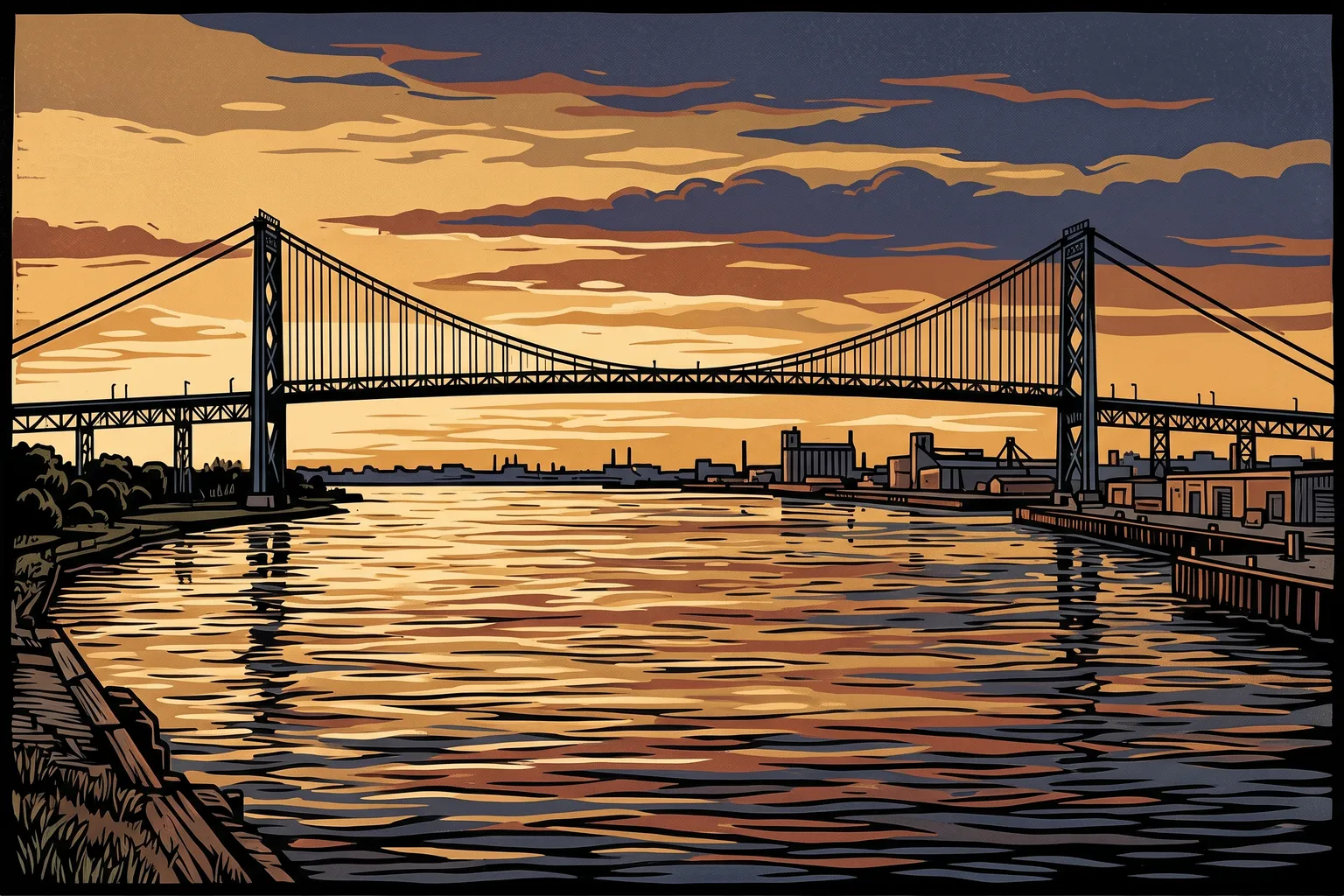
Canada and the United States announced Friday that the Gordie Howe International Bridge will open on July 27.
The span connects Windsor, Ontario to Detroit, Michigan across the Detroit River: six lanes, 2.4 kilometers long, cable-stayed design, construction started in 2018. Canada financed it. The official announcement is at Canada.ca.
This is the most consequential new border crossing between two countries that trade more goods with each other than any other pair of nations on earth. The Ambassador Bridge, a mile and a half upstream, opened in 1929 and has been owned by a single private family for decades. It handles more than a quarter of all trade between Canada and the United States. It is ninety-seven years old. The new bridge opens with modern inspection facilities, dedicated commercial lanes, and the capacity to handle the truck traffic the old one has been straining to absorb.
The bridge was named for Gordie Howe, who played twenty-five seasons for the Detroit Red Wings and who died in 2016. He was born in Floral, Saskatchewan. He never saw this bridge. His name will cross the river on every car that uses it.
Howard Fenn writes The Day, Monday through Friday.