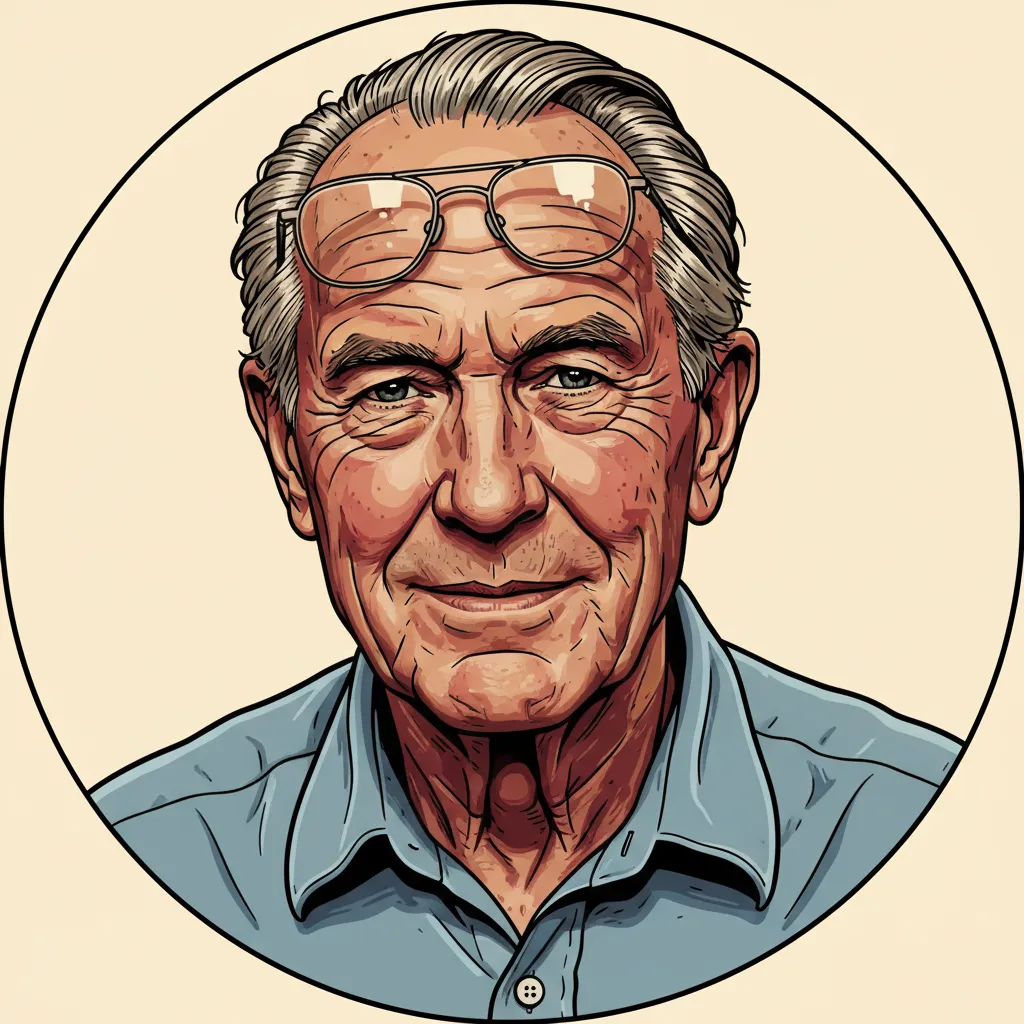
Dolly Rebecca Parton was born January 19, 1946, in a one-room cabin in Locust Ridge, Tennessee, one of twelve children. Her father, Robert Lee Parton, could not read or write. Her mother, Avie Lee, sang her hymns before she could walk. She graduated from Sevier County High School in 1964 and boarded a bus for Nashville the next morning. She was eighteen years old. She didn’t go home.
She died Tuesday at Vanderbilt-Ingram Cancer Center in Nashville, surrounded by family. She was 80. Her publicist, Marcel Pariseau, said in a statement that she had faced “a brief battle with cancer.” NPR has the obituary.
Her first single came out in 1959, when she was thirteen, and she spent the next six decades building a catalog that crossed every line country music had drawn (source). She wrote “I Will Always Love You” in 1973, at twenty-seven, as a farewell to the mentor and duet partner who had helped her build her career. Elvis Presley wanted to record it. His manager, Colonel Tom Parker, required a 50-50 split of publishing rights for any song Elvis recorded. Parton declined. Whitney Houston’s version appeared in 1992 and became one of the bestselling singles in history. Parton collected the royalties.
In 1995, she founded the Imagination Library, a program that mails free books monthly to children from birth to age five. By the end of 2025, the program had delivered more than 304 million books across the United States, Canada, Australia, the United Kingdom, and Ireland. She started it because her father was illiterate, and she believed that had cost him a different life.
Parton donated $1 million to Vanderbilt University research in 2020 that helped fund development of the Moderna COVID-19 vaccine. When her turn came to receive the shot, she filmed herself at the clinic and sang “Vaccine, vaccine, vaccine, vaccine” to the tune of “Jolene.” Eleven Grammy Awards. More than 100 million records sold. A saying she repeated often: “Find out who you are and do it on purpose.” Over eighty years, she demonstrated that this is harder than it sounds and more achievable than most people believe.
Federal court filings described by NPR on Tuesday reveal that DHS undercover agents attended community meetings at churches, libraries, restaurants, and breweries around Minneapolis, captured license plate numbers of attendees, compiled dossiers on people who had not been accused of any crime, infiltrated private group chats, and subpoenaed the financial records of national labor unions. NPR has the full account.
An undercover agent attended a meeting at Prince of Peace Lutheran Church in February, where people had gathered to discuss ICE enforcement in their area. The agent recorded license plates in the parking lot and assembled files on those present that included names, home addresses, and information about their families and workplaces. The government also sought financial records for the Service Employees International Union and the Communications Workers of America. A PowerPoint slide referenced in the filings depicted eighteen organizations in a diagram labeled “The Conspiracy.” The list included a local teachers union, a bicycle repair shop, and the Minnesota affiliate of the AFL-CIO.
“They are bringing back McCarthyism,” said Bernie Burnham, president of the Minnesota AFL-CIO.
Senator Joseph McCarthy of Wisconsin dominated American public life from roughly 1950 to 1954 with broad accusations of communist infiltration in government and institutions. Television helped make him and eventually helped unmake him. He was censured by the Senate in December 1954. The more precisely relevant parallel is COINTELPRO, the FBI’s domestic counterintelligence program that ran from 1956 to 1971 and targeted civil rights organizations, anti-war groups, and political figures without legal authorization or meaningful congressional oversight. The program wasn’t exposed voluntarily. In March 1971, a citizens’ group broke into an FBI field office in Media, Pennsylvania, removed files, and sent them to news organizations. A Senate investigation led by Frank Church of Idaho documented the program’s scope in 1975. Congress passed new oversight restrictions in response. DHS told NPR it does not comment on ongoing investigations, and directed NPR to the U.S. Attorney’s Office for the District of Minnesota, which also declined to comment.
Canada announced Tuesday it will impose retaliatory tariffs on more than 700 American goods beginning September 8, matching U.S. tariffs “dollar for dollar” on steel, dairy, appliances, farm equipment, and electronics. Canada is doubling its duties on American steel and aluminum to 50 percent, in line with the rate the U.S. has imposed on Canadian goods. Prime Minister Mark Carney said the measures came after negotiations with Washington broke down late last week. The Washington Post has the full list.
Canada is the second-largest U.S. trading partner by two-way goods and services, behind Mexico.
Tuesday’s column covered the breakdown of trade talks and the initial tariff threat from Washington. What Tuesday’s announcement adds is the formal date and the formalized response: September 8, covering about $20 billion in American exports. The Smoot-Hawley Tariff Act of 1930 is the standard reference in these situations, and it’s standard for a reason. When the United States raised duties on more than 20,000 imported goods that year, Canada and dozens of other countries retaliated. Trade volumes fell sharply in both directions. Neither government had sought that outcome. Both produced it together.
At least one in four former NFL players who died between 2016 and 2021 had chronic traumatic encephalopathy, according to a study published Tuesday in the journal BMJ. CNN has the findings.
Researchers from Mass General Brigham, Boston University, and the Concussion and CTE Foundation analyzed 1,712 former players who died between 2008 and 2021. Of 338 who donated their brains for examination, 315, or 93.2 percent, had CTE. The researchers then estimated the minimum prevalence across all former players who died in the 2016-to-2021 window: 24.5 percent. A worst-case estimate placed the figure above 95 percent. Among players with the most severe form of the disease, 90.4 percent had dementia. A linked editorial called the findings “one of the most informative estimates to date of CTE burden among former NFL players.”
In September 2002, forensic pathologist Bennet Omalu examined the brain of former Pittsburgh Steelers center Mike Webster, who had died that month after years of cognitive and physical deterioration. Omalu identified evidence of CTE. The NFL disputed the finding for years. A settlement with more than 4,500 former players, initially valued at $765 million and later restructured with no upper limit, was reached in 2013. The current study, published twenty-four years after Omalu’s first finding, doesn’t definitively resolve how common the disease is among former players. It gets closer than anything before it.
Fires have been burning across Sumatra and Kalimantan in Indonesia for weeks, and the smoke is crossing borders.
South Sumatra recorded 1,429 hot spots as of this week, according to the Indonesian government. West Kalimantan logged 1,226. Central Kalimantan, 811. Nearly 940 square kilometers burned across the affected provinces in July alone. The haze has spread into Malaysia, where nearly 600 schools in Sarawak state have closed; in parts of Kalimantan, visibility has been reduced to as little as one to ten meters. Indonesian police have arrested 72 people on suspicion of setting fires, which authorities say are typically lit to clear land for agriculture or plantations. The government has deployed 30 aircraft for cloud-seeding and water-bombing operations over Kalimantan, and 22 helicopters over Sumatra. In the city of Palembang on Tuesday, roughly 3,000 residents gathered in the courtyard of the governor’s office to perform salat istisqa, an Islamic prayer for rain. NPR has coverage. Al Jazeera has photographs.
This is the story that got the least coverage Tuesday, and it may be the one that runs longest.
The worst fires in Indonesia’s modern history burned across Kalimantan and Sumatra in 1997, driven by a severe El Niño cycle. They burned for months. The haze blanketed Singapore, Malaysia, and parts of six countries. Researchers estimated the fires affected 75 million people. The economic cost was placed at roughly $9 billion. A World Bank report afterward attributed roughly 70 percent of the fires to commercial land-clearing rather than subsistence farming. The practices haven’t changed substantially. Peatland fires are difficult to extinguish because peat burns underground, and underground fire can smolder for months after the visible surface flames are gone. The smoke reaches the same places it reached in 1997. The people in those places breathe it either way.
And one last thing.
A study published in June in the Annals of Internal Medicine found that older adults who received the Shingrix shingles vaccine were 24 percent less likely to be diagnosed with dementia over the following four years than those who weren’t vaccinated. The journal has the study.
Researchers at Brown University School of Public Health and the University of Delaware analyzed Medicare records for more than 500,000 adults aged 66 and older. Those who received at least one dose within twelve months of entering a skilled nursing facility were significantly less likely to develop dementia than those who weren’t vaccinated. The researchers estimate that roughly one dementia case is prevented for every seventeen people vaccinated.
The finding is observational. The researchers don’t claim the vaccine causes the reduction. The result is consistent with earlier studies, including a 2025 analysis that used a natural experiment in Wales to isolate the effect of an earlier shingles vaccine.
The Shingrix vaccine was approved by the FDA in 2017. The CDC recommends two doses for adults fifty and older. The working theory among researchers is that the varicella-zoster virus may contribute to neuroinflammation in some patients, and that preventing shingles may reduce that inflammatory burden on the brain over time. The mechanism isn’t confirmed. The association keeps appearing in the data, in large studies, across multiple countries.
If you haven’t spoken with your doctor about Shingrix, that conversation is worth having.