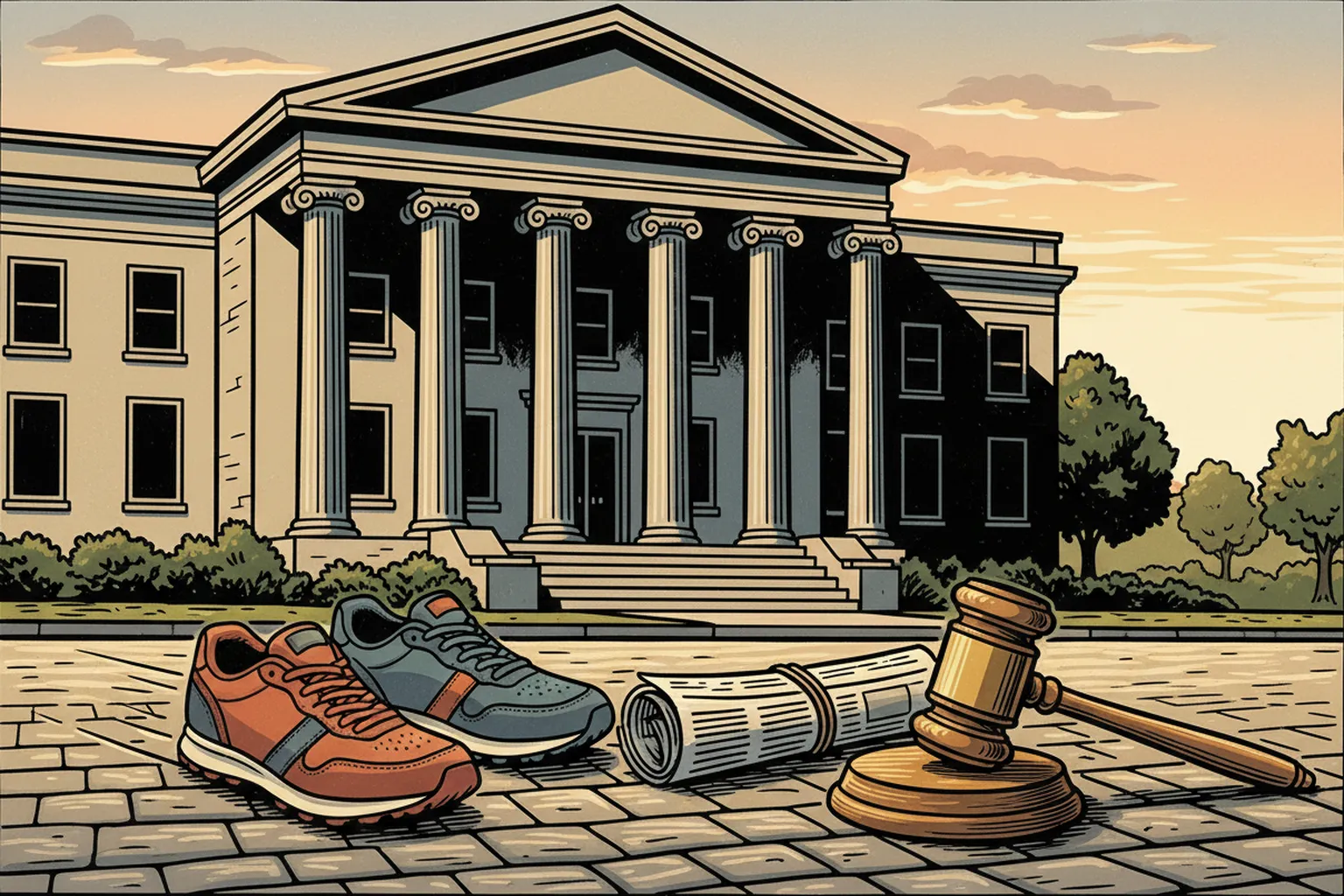
The Supreme Court ruled 6-3 on Wednesday that Louisiana’s second majority-Black congressional district was an unconstitutional racial gerrymander, striking down the map and narrowing a central enforcement mechanism of Section 2 of the Voting Rights Act, SCOTUSblog reported.
Justice Samuel Alito, writing for the majority in Louisiana v. Callais, held that the act didn’t require Louisiana to create the additional majority-minority district and that the state therefore lacked a compelling interest to justify its use of race in drawing the map, CNN reported. The practical effect: the results test that has been Section 2’s primary tool for challenging maps that dilute minority voting strength has been sharply curtailed.
Justice Elena Kagan read a summary of her 48-page dissent from the bench. The Voting Rights Act, she wrote, was “born of the literal blood of Union soldiers and civil rights marchers.” In her closing, she wrote: “I dissent because the Court betrays its duty to faithfully implement the great statute Congress wrote,” HuffPost reported.
The Voting Rights Act was signed by President Lyndon Johnson on August 6, 1965, five months after Alabama state troopers beat marchers on the Edmund Pettus Bridge in Selma. Section 5 required states with a history of discrimination to submit voting changes for federal approval. In 2013, the Court struck down the formula that determined which states were covered, in Shelby County v. Holder, rendering Section 5 inoperable. Section 2, the provision that remained, has now been narrowed by the same Court. Both enforcement pillars of the act have been reduced in thirteen years.
The Iran war has cost approximately $25 billion, acting comptroller Jules Hurst told the House Armed Services Committee on Wednesday, CBS News reported. It was the first time the administration put a dollar figure on the conflict.
Defense Secretary Pete Hegseth, testifying before Congress for the first time since the war began, called congressional critics “the biggest adversary we face at this point,” describing their words as “reckless, feckless and defeatist,” PBS reported. When Rep. Ro Khanna pressed him on what the war is costing Americans, Hegseth responded: “I would simply ask you what the cost is of an Iranian nuclear bomb,” NPR reported. The Pentagon is seeking a $1.5 trillion defense budget for fiscal 2027, CNBC reported.
President Trump said Thursday that the administration is “studying and reviewing the possible reduction of Troops in Germany,” NPR reported. The statement followed Chancellor Friedrich Merz’s comment this week that the U.S. is being “humiliated” by Iran’s leadership. More than 36,000 American troops are stationed in Germany, where they have been continuously since 1945. In July 2020, Trump ordered 12,000 of them withdrawn. President Biden reversed the order in 2021.
Former FBI Director James Comey appeared in federal court in Alexandria, Virginia, on Wednesday after a grand jury indicted him on two counts of threatening the president, PBS reported. The charges stem from a since-deleted Instagram post in which Comey shared a photograph of seashells arranged to read “86 47,” with the caption “Cool shell formation on my beach walk,” NPR reported.
Each count carries a maximum sentence of ten years. Comey didn’t speak or enter a plea. The hearing lasted less than ten minutes. The judge rejected the government’s request to set conditions on his release, PBS reported. Defense attorney Patrick Fitzgerald said the team would argue the prosecution is vindictive and selective, The Washington Post reported. It is Comey’s second indictment by the current Justice Department.
The House passed a three-year extension of Section 702 of the Foreign Intelligence Surveillance Act on Wednesday, 235 to 191, NPR reported. The Senate faces a Thursday deadline. Its path is unclear: the bill includes a provision banning a central bank digital currency that senators in both parties oppose, Axios reported.
Section 702 allows intelligence agencies to collect communications of non-Americans abroad without a warrant. The original FISA was enacted in 1978, three years after the Church Committee revealed that American intelligence agencies had conducted widespread surveillance of civil rights leaders, antiwar activists, and journalists. Section 702 was added in 2008. The question of how much surveillance authority the government needs, and how much oversight Congress should require, has outlived every administration that has tried to answer it.
In Lebanon, 1.24 million people are expected to face acute food insecurity between April and August, according to a report released Wednesday by the UN Food and Agriculture Organization, the World Food Programme, and Lebanon’s Ministry of Agriculture, Al Jazeera reported. That is nearly one in four people. Before the current war began in March, the number was 874,000. Among the most affected: 45 percent of Palestinian refugees in the country and 36 percent of Syrian refugees are at crisis levels or worse, Action Against Hunger reported.
Seventy-six percent of south Lebanon’s farmers have been displaced. Twenty-two percent of the country’s agricultural land has been damaged, WFP USA reported. Lebanon was already in crisis before the fighting: a financial collapse in 2019, the Beirut port explosion in August 2020, and a previous round of war in 2024. The damage is compounding in a country that hasn’t had a stable year in seven.
And last Saturday in London, a Kenyan runner named Sabastian Sawe ran 26.2 miles in one hour, fifty-nine minutes, and thirty seconds.
It is the first sub-two-hour marathon in the history of competitive racing, NPR reported. In 2019, Eliud Kipchoge broke the barrier in a specially designed time trial in Vienna, with rotating teams of pacers and conditions engineered for a single purpose. That effort didn’t count as an official record. Sawe’s does. He ran it in an open race, against other competitors, on a standard course, World Athletics reported. Yomif Kejelcha, competing in his first marathon, finished second in 1:59:41. Two men broke the barrier in the same race.
The previous world record was 2:00:35, set by Kelvin Kiptum at the Chicago Marathon in October 2023. Kiptum died in a car accident in Kenya four months later. He was twenty-four.
“I’ve made history today in London, and for the next generation I’ve shown them that nothing is impossible,” Sawe said after the race, London Marathon Events reported.
On May 6, 1954, Roger Bannister ran a mile in under four minutes at a track in Oxford. People had said that was impossible too. It is Thursday. The Court narrowed the Voting Rights Act. A war has a price tag. And in London, a man ran faster than anyone in history has ever run a marathon. That’s the day.