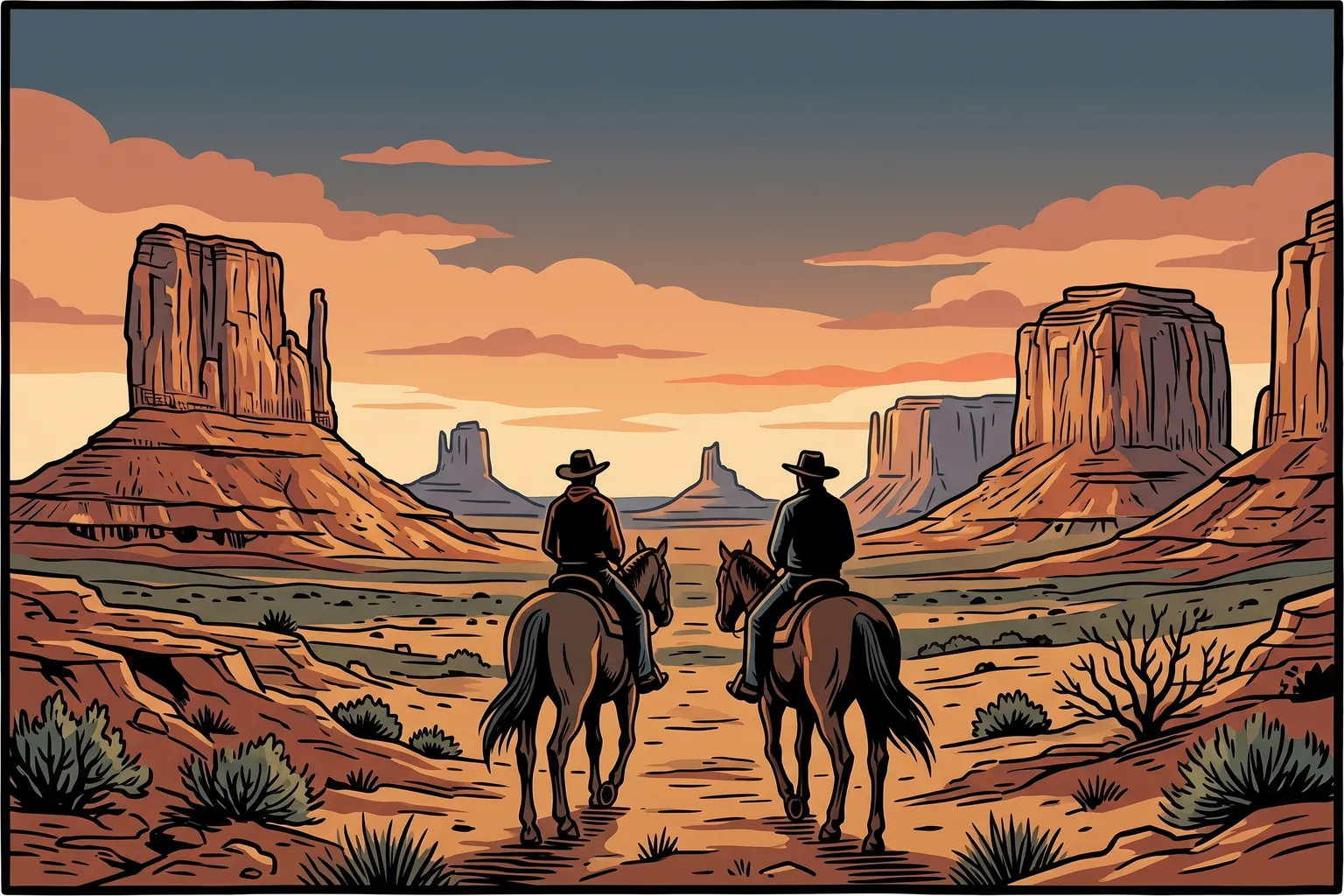
There’s a moment in “Ride the High Country,” Sam Peckinpah’s 1962 film, when Joel McCrea looks out at a mountain country he has spent a career protecting and you understand, without any dialogue to explain it, that the world has moved on past him. It doesn’t need him anymore. The West he served is already gone. McCrea knows this. Peckinpah knows this. And if you’ve gotten to a certain point in your own life, you know exactly what that feeling is.
I saw “Ride the High Country” for the first time in a revival house in the late 1970s, when I was in my mid-twenties and writing about films for whoever would print what I had to say. I thought it was a good Western. I thought Peckinpah had done something unusual before “The Wild Bunch” absorbed most of his reputation. I wasn’t wrong. I was just missing the equipment to fully receive what the film was offering, because the equipment gets built from experience, and I hadn’t had enough yet.
I have it now. And if you’ve been reading this column for a while, so do you.
This isn’t an argument that Westerns are secretly great. Most of them aren’t. The genre produced as much formula and studio comfort as any other. What I want to make a case for is that a handful of American Westerns are doing something specific and serious, and that what they’re doing lands differently when you’ve lived long enough to know what they’re actually talking about. Age, regret, the end of a way of life, the impossibility of going back. These aren’t themes a twenty-five-year-old can fully inhabit, even when they can name them. The distance between naming a thing and knowing it is the whole distance of a life.
“Ride the High Country” (1962)
Peckinpah was making his second feature. The studio thought they were getting a routine Western to pad out a double bill. What they got instead was a film about two old men hired to escort a gold shipment from a remote mining camp, played by McCrea and Randolph Scott, both near the end of their careers as Western leads. McCrea plays Steve Judd, an aging lawman taking one last honest job. Scott plays Gil Westrum, his former partner, who has decided the gold represents a retirement they’re both owed by a world that stopped caring about men like them.
Peckinpah is asking whether a man can get to the end of his working life with his self-respect intact. Not as a concept. As a practical question, with practical consequences, on a specific afternoon in a specific mountain camp. Peckinpah doesn’t make this sentimental. He makes it exact. McCrea’s final scene is one of the best endings in American cinema. I won’t tell you what happens, but I’ll tell you that when I watched it at sixty-five, I understood what the man was choosing and why in a way I hadn’t understood at thirty. The film hadn’t changed. I had.
That’s what I mean by equipment.
“The Searchers” (1956)
John Ford’s masterpiece isn’t a comfortable film. It never was, and if you remember it as comfortable, you’re remembering a different movie. John Wayne plays Ethan Edwards, a Confederate veteran who returns home after the Civil War to find his family massacred and his niece taken captive. He spends years searching for her, and the search consumes him in a way that has nothing to do with rescue and everything to do with his own capacity for hatred.
The film is about what obsession costs. Not in the abstract, but specifically: in a man’s face and posture and the way other people stop being real to him because he’s made one thing into the whole of his life. The Western allows Ford to put this on a vast physical scale, across deserts and years, but the territory being mapped is interior. Ethan Edwards can’t go home. Not because the frontier is closing, though it is. Because the thing he did with his years is a door that doesn’t open from the outside.
Ford makes this visible. He doesn’t explain it or argue it. He just shows you what a man looks like who has organized his entire existence around a hatred that no outcome can dissolve. The final shot of “The Searchers” has been written about more than almost any image in American cinema. It still hits me like a door closing.
“The Ox-Bow Incident” (1943)
William Wellman’s film is the least visually spectacular on this list and possibly the most morally precise. Henry Fonda and a group of town men ride out to catch cattle thieves and end up hanging three men who turn out to be innocent. Nobody’s a villain. Everyone’s responsible. The letter one of the condemned men had written to his wife, read aloud by Fonda after the fact, is among the most devastating sequences ever filmed.
What the film is about is the impossibility of taking something back. The terrible specific weight of an action that can’t be undone. The men who rode out with torches and conviction ride back in silence, and Wellman doesn’t let them off the hook with self-pity. They did what they did. They know what they did. They have to live inside the knowledge of what they did until they don’t.
That’s not an abstract horror at a certain age. The weight of choices that can’t be revisited sits differently when you’re close enough to your own history to understand that some of it is permanent. Wellman made this film in 1943, when the country was at war, and there’s an argument to be made about what he was saying to an American audience watching men convince themselves that swift action was the same as justice. That argument still holds. But what I notice now, watching it in my seventies, is how specifically Wellman renders the aftermath. The riding back. The silence. The men who have to go home and sit with what they’ve done. That’s the part I couldn’t really see at twenty-five.
“Unforgiven” (1992)
Clint Eastwood’s film won the Academy Award for Best Picture and Best Director, and it deserved both, and it’s still not fully reckoned with. Most people discuss it as a deconstruction of the Western hero, a genre film that dismantles its own mythology. That’s accurate but it understates the case. The film is about the fact that violence doesn’t wash off. William Munny, Eastwood’s character, is a retired killer trying to be a farmer and a decent father. He picks up the gun one more time for the money. What follows is an argument about who you are when you take off the story you’ve been telling about yourself.
Gene Hackman’s Little Bill Daggett is the film’s moral counterweight, a sheriff who believes he’s a fair man. The confrontation between them is about two different kinds of self-deception, and Eastwood is far harder on both men than the genre usually permits. This isn’t a film that tells you the gunfighter was secretly justified. It tells you the price keeps compounding.
Eastwood directed this at sixty-one. He understood something about guilt and self-knowledge that shows in every frame. The questions he’s asking about who a man is beneath the reputation he’s built aren’t abstract when you’re in your seventies. I don’t have William Munny’s particular history. But I understand, in a way I couldn’t have at thirty-five, the gap between the story you carry about yourself and the record that actually exists. Eastwood understood it too. That’s why the film lands.
The Western has other virtues, and other eras. I’ve written in this space about the American New Wave of the 1970s and the way that period knew exactly what it was dismantling. Peckinpah was a bridge figure in that story too, moving the Western away from Ford’s monumental vistas and toward something more uncomfortable, more interested in failure. The tradition runs straight from Ford to Peckinpah to Eastwood, and along that line you can watch an entire country’s mythology about itself being tested against the evidence.
What I’d argue is that the moral darkness the Western shares with film noir isn’t accidental. Both genres found ways to ask what American violence actually costs and who actually pays. The Western just asks it on horseback, across a longer historical frame.
These four films aren’t comfort viewing. They don’t offer resolution or absolution or the assurance that things even out. What they offer instead is recognition, which is rarer and more useful. The recognition that the world moves on whether you’re ready or not. That the things you did at thirty are still in the room at seventy. That dignity isn’t the absence of regret but what you do while carrying it.
If you haven’t seen these films in twenty years, go back. If you’ve never seen them, start with “Ride the High Country.” It’s the most direct entry point to what the American Western, at its best, was actually saying.
The conversation gets more interesting the more history you have to bring to it.