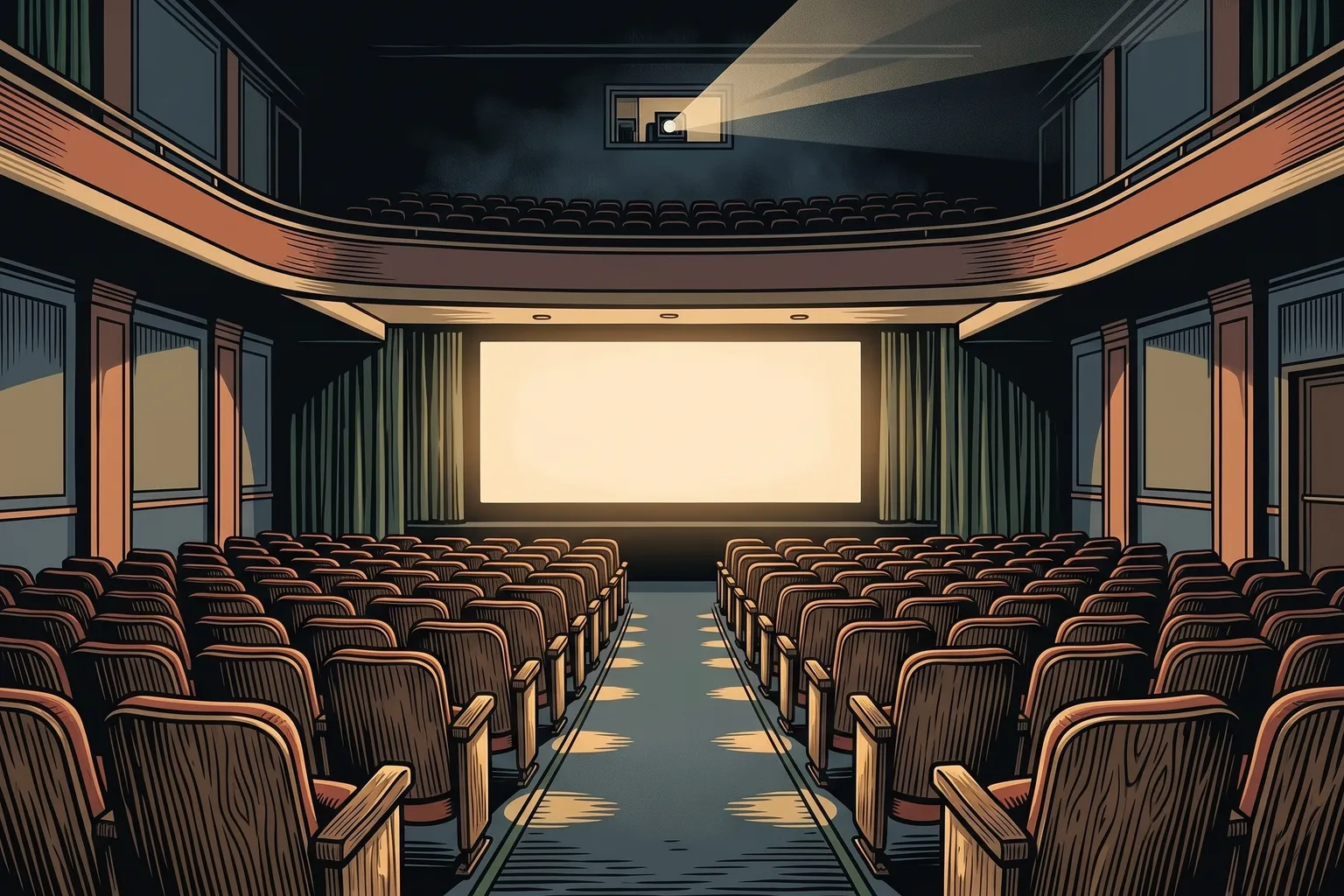
The question I get asked most often, in some form or another, is whether you have to like black and white films to enjoy classic cinema. The question is sincere, and I take it seriously. What it tells me is that someone has been meaning to explore this territory for a while, has picked something up and put it down, and doesn’t quite know if the format is the problem or if they just happened to start with the wrong film.
My answer is no. You don’t have to like black and white. You have to be willing to spend about fifteen minutes in a different visual language before deciding. That’s the actual ask.
I’ve been watching black and white films for sixty years, and I want to tell you something that took me longer than it should have to understand: I have never once sat down in front of one and thought of it as old. What I think about is that I’m watching a different kind of visual grammar, one that was worked out by directors and cinematographers who didn’t have color to lean on. When you can’t use a warm palette to signal safety or a cold one to signal threat, you have to find those things somewhere else. In light and shadow. In the geometry of the frame. In the face of the person the camera is studying. The films that did this well did it so thoroughly that color was never the missing ingredient. The light was the ingredient, and they found everything they needed in it.
Here is where I’d start someone today.
12 Angry Men (1957)
Sidney Lumet made his first feature film in seventeen days, in one room, with a cast of twelve men, an adapted screenplay, and almost no money. Henry Fonda plays the one juror who thinks the verdict hasn’t been earned yet, and he has to spend the next hour and a half convincing eleven other men to look at what they’ve decided not to see. Lumet understood the room as a character. He placed the camera above eye level early in the film to make the space feel open, then gradually lowered it as the afternoon wore on until by the end you feel the ceiling pressing down. The black and white makes the heat tangible. The sweat on the faces, the loosened ties, the exhaustion of the afternoon, all of it delivered by light and shadow without a word of explanation. If you want to know where to start and you don’t want something that feels like homework, this is the film.
Some Like It Hot (1959)
If someone has told you that black and white films are serious films, they haven’t seen this one. Billy Wilder made what is probably the funniest Hollywood comedy of the studio era in black and white, partly because color tests turned his two leading men’s drag makeup a ghoulish green, and Marilyn Monroe waived the color clause in her contract once she saw them. Tony Curtis and Jack Lemmon play musicians who witness a mob execution and have to spend the rest of the film maintaining a disguise that keeps escalating into more and more trouble. The film is impeccably timed, structurally airtight, and has a closing line that is probably the single best joke at the end of any American film. The black and white gives the whole thing a newsreel urgency, a snap and quickness that matches what Wilder was doing with the editing. Genre equality is a principle I’ve held for forty years. This film is part of why.
Night of the Hunter (1955)
Charles Laughton directed exactly one film in his life, and what he made was either the darkest fairy tale ever put on screen or the most disturbing thriller, depending on when you came to it and how old you were. Robert Mitchum plays a self-appointed preacher with “LOVE” tattooed on his right hand and “HATE” on his left, and the film follows two children through dark countryside that Laughton and his cinematographer Stanley Cortez photographed to look like something between a dream and a threat. The shadows are absolute. The light on the river at night is unlike anything I’ve seen in color cinema. I’ve written about what noir did with black and white light at length elsewhere, but this film goes somewhere noir wasn’t quite willing to follow, into a register of genuine fear constructed entirely from what’s shown rather than what’s explained. It’s more than sixty years old and it still isn’t comfortable. That’s what you want from a thriller.
Brief Encounter (1945)
David Lean made this before he became the man responsible for films about deserts and rivers and the vastness of the world. Here he is working in a small space, interested only in the gap between what two people do and what they feel. Celia Johnson and Trevor Howard play married strangers who meet at a train station and spend a few weeks in a quiet, unconsummated attachment that they both understand to be impossible from the beginning. The film is almost entirely about restraint, about what doesn’t happen, and Lean photographs that restraint in a black and white that makes everything look like it’s already the past, like you’re watching someone’s memory of an afternoon rather than the afternoon itself. The architecture of loss is the subject, and the format is the architecture. This is the most accurate film I know about the specific weight of choosing to do what’s right.
Ikiru (1952)
Akira Kurosawa made Seven Samurai two years after this, and Seven Samurai is one of the great achievements of cinema. Ikiru is the film I think about more often. Takashi Shimura plays Watanabe, a minor municipal bureaucrat in postwar Tokyo who has spent decades avoiding decisions and who learns near the beginning that he is dying. What the film asks is what a person does with that information, specifically what this particular man does, in the life he has made for himself. Kurosawa shoots postwar Tokyo in a black and white that feels documentary, unadorned, insistently factual. Nothing is made to look like more than it is. And somehow that restraint is what makes the final section land the way it does. You don’t need any familiarity with Japanese film history to follow this completely. It’s a film about being alive and paying attention to it, which requires no translation.
The Last Picture Show (1971)
Peter Bogdanovich made this in black and white in 1971, when no studio made films in black and white anymore, because the Texas town he was filming needed to look like it was already disappearing even while you were watching it. Jeff Bridges and Timothy Bottoms play young men whose lives are bounded by a small Texas town where the movie theater is about to close and everything that mattered is becoming the past in real time. Bogdanovich and his cinematographer Robert Surtees found the particular quality of light on the Texas plains, the pale sky, the flat distances, and used black and white to make the whole thing look like something you’re being allowed to witness before it’s gone. I’ve written about what the New Hollywood generation did with American mythology in another piece, but this is the film from that era I return to most often, because it understands loss at the same granular level that Ikiru does and applies it to the specific texture of American provincial life.
Paths of Glory (1957)
Stanley Kubrick made this at twenty-eight, on a modest budget, filming in West Germany. It’s a First World War film about French soldiers ordered to attack a position that can’t be taken, and what happens when three of them are selected for court-martial after the attack falls apart. Kirk Douglas plays the colonel assigned to defend them against a charge that is really a charge about who is considered expendable. Kubrick’s tracking shots through the trenches are some of the best work in the format, not because they’re technically impressive, though they are, but because the camera moves at exactly the pace a man would walk through that ground, and that pace puts you there. The moral clarity of the film is absolute. It knows what it thinks and it says it plainly. The black and white isn’t atmospheric here; it’s ethical. Kubrick needed the image to be as clean as the argument, and that’s what he got.
Where you start depends on what you’re looking for. If you want something that makes you laugh, pick up Some Like It Hot this weekend. If you want the form working at its most concentrated, 12 Angry Men. If you want something that will stay with you in ways you don’t entirely anticipate, watch Ikiru on a weeknight when you have the house to yourself.
The black and white, in every one of these films, isn’t something you’ll be working to get past. It’s what you’ll remember.