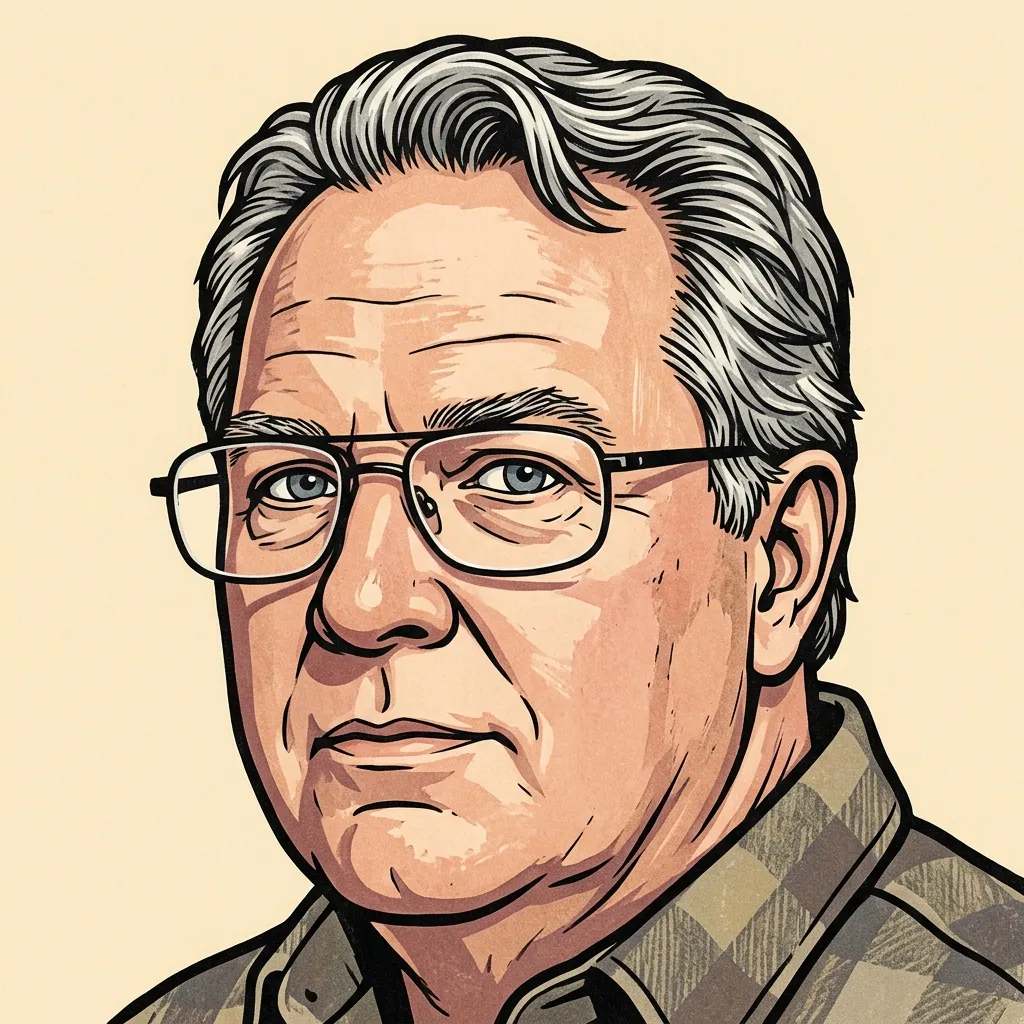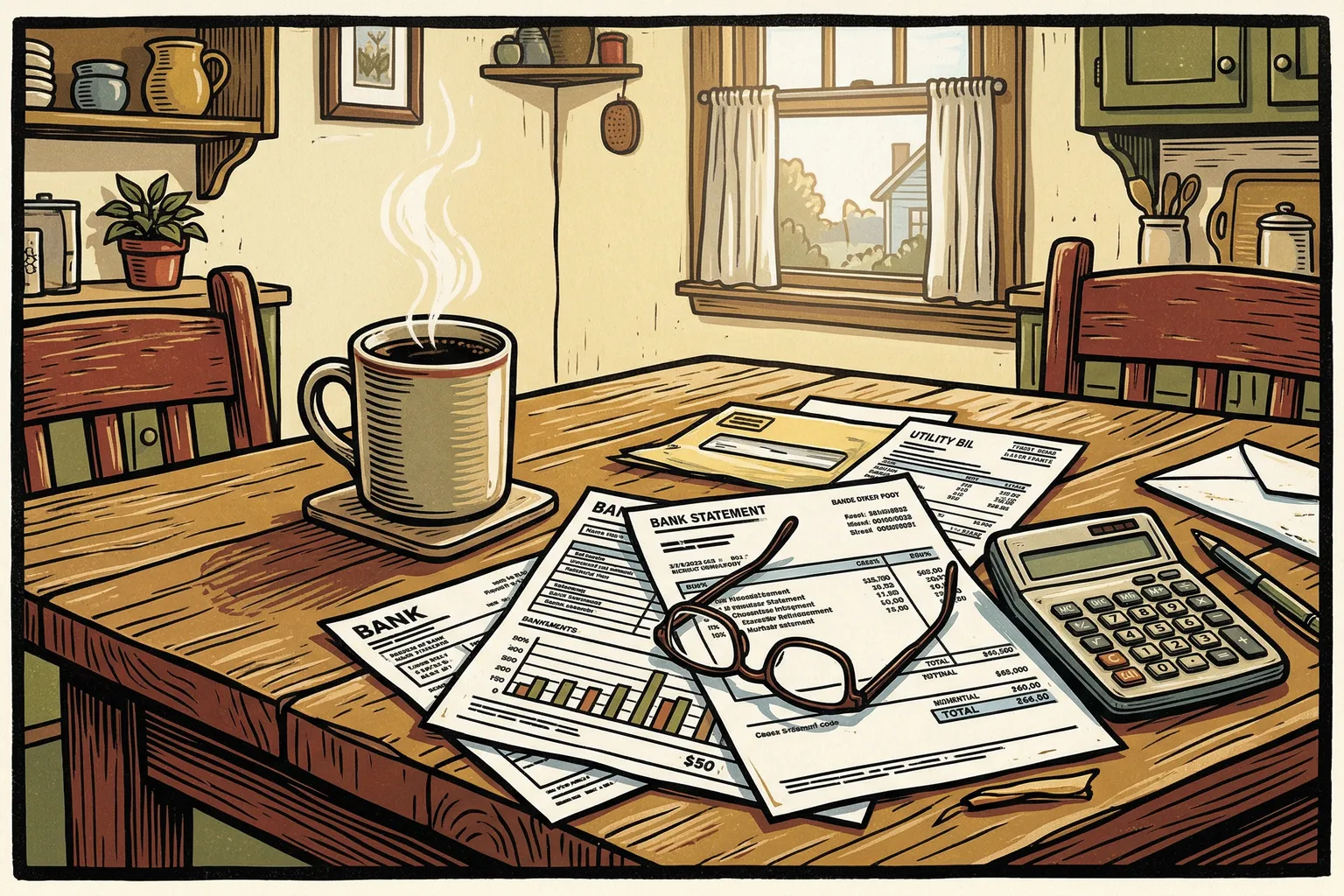
Margaret and Don Kessler sat in my office in the spring of 2019 with a portfolio worth $620,000, a paid-off house, two Social Security checks totaling $4,160 a month, and a look on their faces like the building was on fire.
They weren’t broke. They weren’t even close. They were, by any reasonable standard, in excellent shape. Don had retired from a paper products company after thirty-one years. Margaret had worked part-time in a medical billing office until she was sixty-four. They had saved steadily, lived within their means, made their catch-up contributions, and arrived at retirement with more money than either of them had imagined having when they started.
They were terrified to spend any of it.
Don had a spreadsheet he checked every morning. Not once a week. Every morning, before coffee. When the market dropped, even by a fraction of a percent, he felt it in his chest. When he and Margaret talked about replacing the twenty-year-old furnace, he’d pull up the spreadsheet and show her what the portfolio had done that week, as if a $6,200 furnace and a Tuesday dip in the S&P 500 were the same category of problem.
Margaret wanted to visit her sister in Tucson. The flight was $380. She couldn’t make herself book it.
I have seen the Kesslers in my office a hundred times. Not the same couple. The same pattern. A person, or a pair of people, who did everything right during the saving years and then arrived at the spending years unable to flip the switch. They watch the portfolio. They live on Social Security. They clip coupons for groceries they can afford without coupons. The principal sits there, intact, like a monument to decades of discipline, and nobody touches it.
The clinical term for this is “decumulation anxiety.” I’ll use that phrase once and then call it what it is: the inability to spend what you saved. It is so common among the people I work with that I’d call it the default setting. The ones who can comfortably spend down their savings in retirement are the exception, not the rule.
Where This Comes From
For forty years, the message was simple. Save more. Spend less. Watch the number go up. Every quarterly statement that showed growth was a small reward. Every dip was a small punishment. Your entire financial life was organized around one signal: up is good, down is bad.
Then you retire, and the math reverses. The number is supposed to go down now. That’s the plan. That’s what the money was for. But your nervous system didn’t get the memo. It spent four decades learning that a declining balance means danger, and it isn’t interested in your financial plan.
Think of it this way. If you trained a dog for twelve years to sit every time you opened the front door, you wouldn’t be surprised when that dog kept sitting after you decided you wanted it to stand. You’d understand that the training was deep and the new instruction would take time. You wouldn’t blame the dog.
The same logic applies to your own brain. You trained it. It learned. Now it’s doing exactly what you taught it, and you’re frustrated because the assignment changed. That’s not a character flaw. It’s conditioning.
I watched Don Kessler check that spreadsheet every morning and I understood completely. For thirty years, he measured his progress by that number going up. It was the scoreboard of his financial life. Now I was asking him to watch the scoreboard go backward and feel good about it. That’s a big ask.
The Fears That Keep the Money Locked Up
The inability to spend is not irrational. It’s built on real fears, and dismissing those fears isn’t helpful. So let me name them.
Running out. This is the big one. What if I spend it down and then I live to ninety-seven? What if there’s nothing left? This fear is legitimate if you have no plan and no guardrails. It is less legitimate than most people think if you do. A person with $620,000 in a diversified portfolio and $4,160 a month in Social Security isn’t in danger of running out of money at a $25,000-per-year withdrawal rate. The math simply doesn’t support the level of fear most people bring to it.
Inflation. What if everything costs twice as much in fifteen years? Inflation is real. It has averaged roughly 3% historically. Over twenty years, that means something that costs $100 today will cost about $180 in 2046. This matters. It matters more if all your money is sitting in a savings account earning close to nothing than if it’s in a balanced portfolio that historically outpaces inflation. The fear of inflation is, oddly, often used as a reason not to spend, when the actual risk of inflation is a reason not to sit in cash.
The catastrophic medical event. What if one of us needs long-term care? This is the fear I take most seriously, because the costs are real and Medicare doesn’t cover custodial care. The median cost of a private room in a nursing facility in the United States is over $116,000 per year. That number can eat a $620,000 portfolio in five years. But there are ways to plan for this that don’t involve leaving $620,000 untouched for decades. A long-term care insurance policy, even a hybrid policy, a Medicaid planning conversation with an elder law attorney, a clear-eyed assessment of your actual risk factors. These are specific tools for a specific problem. Using your entire retirement portfolio as an unstructured emergency fund for a scenario that may or may not happen is not a plan. It’s paralysis dressed up as caution.
What a Sustainable Withdrawal Actually Looks Like
You’ve heard of the 4% rule. It says you can withdraw 4% of your portfolio in year one of retirement, adjust for inflation each subsequent year, and have a high probability of not running out over thirty years. It was based on research by Bill Bengen in 1994 and has been studied, debated, and updated many times since.
Here’s my position on it: it’s a reasonable starting point and a terrible finish line. The 4% rule assumes a thirty-year retirement, a portfolio split roughly 50/50 between stocks and bonds, and historical U.S. market returns. It doesn’t account for your specific situation, your Social Security income, your pension if you have one, your tax bracket, or the fact that most retirees don’t spend the same amount every year for thirty years. You spend more in your sixties and seventies when you’re healthy and active. You spend less in your eighties. You potentially spend much more in your late eighties and nineties if you need care.
For Don and Margaret, 4% of $620,000 is $24,800 in year one. That’s about $2,067 a month on top of their $4,160 in Social Security. Total household income: roughly $6,227 a month, or just under $75,000 a year. Their mortgage was paid off. Their property taxes were $3,400 a year. They didn’t need $75,000 a year, but they could have lived on it comfortably, taken the trip to Tucson, replaced the furnace, and still had decades of runway.
Instead, they were living on $4,160 a month and treating the $620,000 like it belonged to someone else.
The Permission Structure
Some of my clients don’t need a financial plan. They need a permission slip.
I mean that literally. I have sat across from people who have the math in front of them, who can see that their portfolio supports a $30,000-a-year withdrawal, who understand the longevity projections and the inflation assumptions and the sequence-of-returns scenarios, and who still can’t bring themselves to move the money from the investment account to the checking account.
For those people, I sometimes suggest what I call a spending policy. Not a budget. A policy. It’s a written statement that says: I will withdraw $X per month from my portfolio. I have reviewed this number with my advisor. It is sustainable. I don’t need to revisit this decision every month or feel guilty about it. The money is doing what it was saved to do.
It sounds simple because it is simple. But for a person who has spent forty years in saving mode, having a written document that says “this spending is approved” can be the difference between booking the flight and not booking the flight. Between replacing the furnace in October and replacing it after the first cold snap in January because you couldn’t pull the trigger.
Don Kessler didn’t need a more sophisticated portfolio. He needed someone to tell him, with numbers behind it, that spending $2,000 a month of his own money wasn’t reckless. It was the plan.
The Unlived Retirement
I’m going to be direct about something because I’ve earned the right to be direct about it after thirty years in this work.
I have watched clients die with full portfolios. I don’t mean they left modest inheritances after long, well-funded retirements. I mean they lived on Social Security for fifteen or twenty years, never took the trip, never replaced the car, never upgraded from the apartment, never spent the money on the thing they said the money was for, and then they died with $400,000 or $600,000 or $800,000 sitting in an account that their children inherited and, in several cases, spent in under three years.
I’m not criticizing frugality. Frugality is a skill, and it served these people well during the accumulation years. I’m saying that frugality without purpose is just deprivation. And deprivation in your seventies, when your health is good and your time is finite and the money is right there, is a waste. Not a financial waste. A human waste.
The money was for something. If you saved $620,000 and you can’t name what it’s for, that’s not a financial planning problem. That’s an identity problem. For forty years, your identity was “the person who saves.” Now you need a new identity, or at least an addition to the old one: “the person who saved, and now uses what they saved, for the life they wanted.”
That transition isn’t easy. I don’t pretend it is. Don Kessler didn’t flip a switch after one meeting with me. It took about a year of monthly conversations before he booked the flights to Tucson. Two tickets. He told me about it the following week. He said the trip cost $760 for airfare and about $400 for meals and rental car, and that Margaret cried when she saw her sister, and that he watched his wife laugh for three straight days in a way she hadn’t laughed at home in a year.
He said it was the best $1,160 he ever spent.
I didn’t argue.
Starting the Work
If you recognize yourself in any of this, here’s where I’d suggest you begin.
Name the fear. Say it out loud or write it down. “I’m afraid of running out.” “I’m afraid of needing care and not having enough.” “I’m afraid the market will crash right after I start spending.” Name it. The unnamed fear is always bigger than the named one.
Then get the math. Not a guess. Not a feeling. The actual math. What is your portfolio worth? What is your monthly Social Security? What are your fixed expenses? What does a 3.5% or 4% annual withdrawal look like, in dollars, per month? If you can’t do this yourself, find a fee-only financial planner, one who charges by the hour and doesn’t sell products, and sit down for two hours with your statements.
Then make a decision about what the money is for. Not what it was for. What it is for now. Maybe it’s for travel. Maybe it’s for helping a grandchild with college. Maybe it’s for keeping the house comfortable. Maybe it’s for all three, in specific amounts, written down, reviewed once a year.
The money is not a monument. It’s not a trophy for decades of good behavior. It was always a tool. You built it so you could use it. The hardest part of retirement, for the people who did the saving right, is giving themselves permission to do the spending right.
That’s not financial work. That’s psychological work. And if you haven’t started it yet, now is the time.