The itinerary arrived in my email forty-eight hours before departure: departure time, bag drop instructions, a list of what not to bring. I printed it out, which I always do, and read through it twice. Line twelve said departure was at seven. Line fifteen said late arrivals could not be accommodated. I had been traveling alone for nearly two years by then. The last person who had told me I had a departure time was an airline. The idea of a group waiting for me, or not waiting for me, felt like a strangely adolescent anxiety.
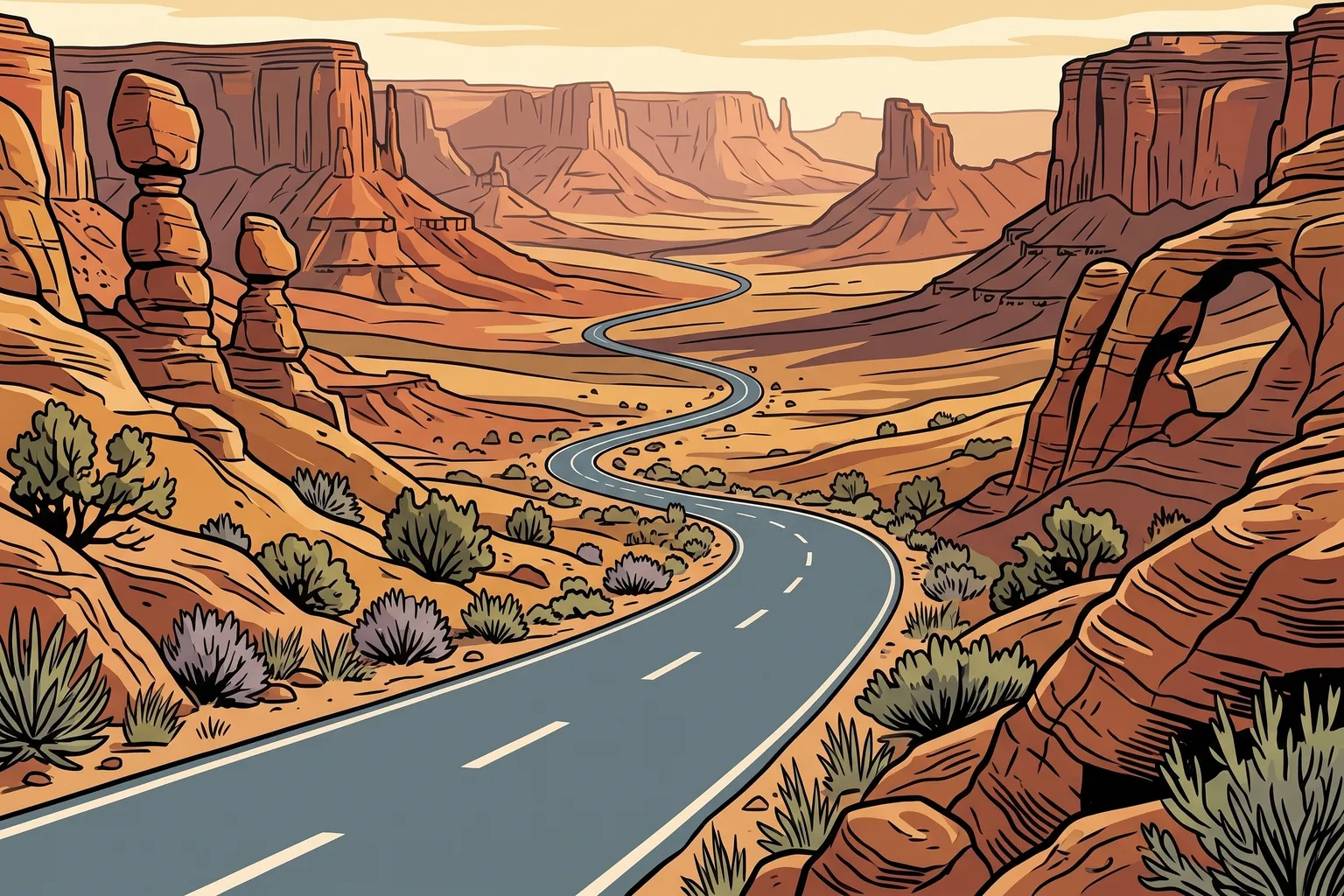
That was three years ago, outside Moab, Utah, with eleven other people I had never met and a guide named Claire who would turn out to be the best argument for organized travel I’ve encountered in thirty years of doing this.
I want to be honest about my biases. I came to group travel late, and I came to it reluctantly. For most of my working life, I traveled for assignment, which meant I decided the pace and the itinerary. When I traveled with my husband George, we decided together, which was its own negotiation but still an intimate one: just the two of us figuring out what came next. George, an engineer by training, mapped every trip with the precision of someone who genuinely enjoyed the planning. I planned nothing and relied on his circuit board. It worked. The idea of syncing a schedule with eleven strangers felt like giving something up, and I wasn’t sure what I’d get in return.
Here is what I can tell you now, having done it enough times to have opinions: the return depends almost entirely on variables that no travel brochure will tell you about.
What you give up when you join a group isn’t complicated to name. You give up the moment at the overlook when you would’ve stayed for another hour. You give up the unplanned detour down the two-lane road to see what’s at the end of it. You give up the freedom to eat dinner at nine because the restaurant looked good and you weren’t hungry yet. Those are real losses. If you’re someone who organizes your whole travel life around unplanned hours, a group will chafe. It will chafe immediately, and it won’t stop.
But here’s what happens in exchange, and what I didn’t anticipate when I went to Moab skeptical.
You get people. Not in the soft way, the way that sounds like a marketing headline about connection. I mean the specific thing that happens when twelve adults who don’t know each other spend eight days crossing canyon country together and start to know each other in the way you only do when you’re tired and altitude-dizzy and watching the same sun go down over the same mesa. By day three, I knew that the retired postal worker from Wichita had cried at the Colorado River in a way she didn’t try to explain. That the couple from Vermont had been coming to the Southwest every decade since 1985 and were quietly watching what had changed. That the schoolteacher from Sacramento knew the geology of the Colorado Plateau the way I know the back roads of Oregon.
By day four, the group had become something it hadn’t been at day one.
The word for what made that group work is harder to pin down. Part of it was Claire, who was the kind of guide who spoke when she had something to say and otherwise let the canyon do the talking. Part of it was the size: twelve is small enough for real conversation and large enough that you don’t have to carry the whole social weight yourself. Part of it was luck. The people who signed up that particular week happened to be genuinely curious about what they were looking at and reasonably quiet about their opinions of everything else.
I’ve been in groups where none of those conditions held. Where the guide talked continuously, filling silence the way bad television fills silence. Where two people in the party had an unresolved conflict from day one that colored every shared meal. Where the pace was aggressive enough that you finished the day knowing you had been somewhere without having actually been anywhere. A bad travel group isn’t just a neutral experience with minor friction. It’s actively corrosive. You leave knowing less about the place than you would have if you’d driven through alone with your paper maps and your own schedule.
The variables that predict the difference aren’t the ones that appear in the marketing copy. What the travel industry calls organized senior travel groups tends to lead with itinerary and accommodation quality. Those aren’t the variables. The variables are: how many people, how the guide handles a difficult participant, what the genuine pace of the optional activities is, and whether the group has a culture of opt-out or a culture of compliance. You want opt-out. The group where it’s genuinely fine to skip the morning hike and read on the porch while everyone else is on the trail is a group organized around individual experience. The one where skipping earns you a look is organized around group performance. The look is what you’re trying to avoid.
I ask now, before I book anything organized. I ask the company how they handle pace. I ask how many people. I ask whether I can see the daily itinerary and where the unscheduled hours fall. The answers are useful. So is the way they answer. A company that has thought carefully about these questions answers them directly. One that hasn’t finds ways to redirect.
What I’ve stopped asking is whether I should travel in a group at all.
That question dissolved somewhere in Utah, near the end of the trip I almost didn’t book. We were sitting outside after dinner, twelve of us around a picnic table while the stars came out over the redrock. The schoolteacher from Sacramento was explaining, in detail that turned out to be genuinely fascinating, why the hoodoos at Bryce Canyon form through a different process than the arches at Arches, and I sat there thinking: I wouldn’t have known to ask. I would’ve driven through both parks and understood neither.
That’s what the right group gives you, at its best. Not the itinerary. Not the shuttle from the airport. Not the hotel breakfast. The person at the picnic table who knows something you don’t and is willing to tell you, who you would never have met if you’d taken your car and your own schedule and gone alone.
I still travel alone. I still choose the two-lane road when I want to and stay at the overlook until I’m ready to leave. Those trips have a quality that group travel doesn’t and can’t: a particular attentiveness that comes from being the only one responsible for noticing.
But I’ve stopped treating the two as opposites. They’re different instruments. The solo trip gives you the place. The group trip gives you the people, and sometimes, on the right trip with the right twelve strangers, the people become the whole story.