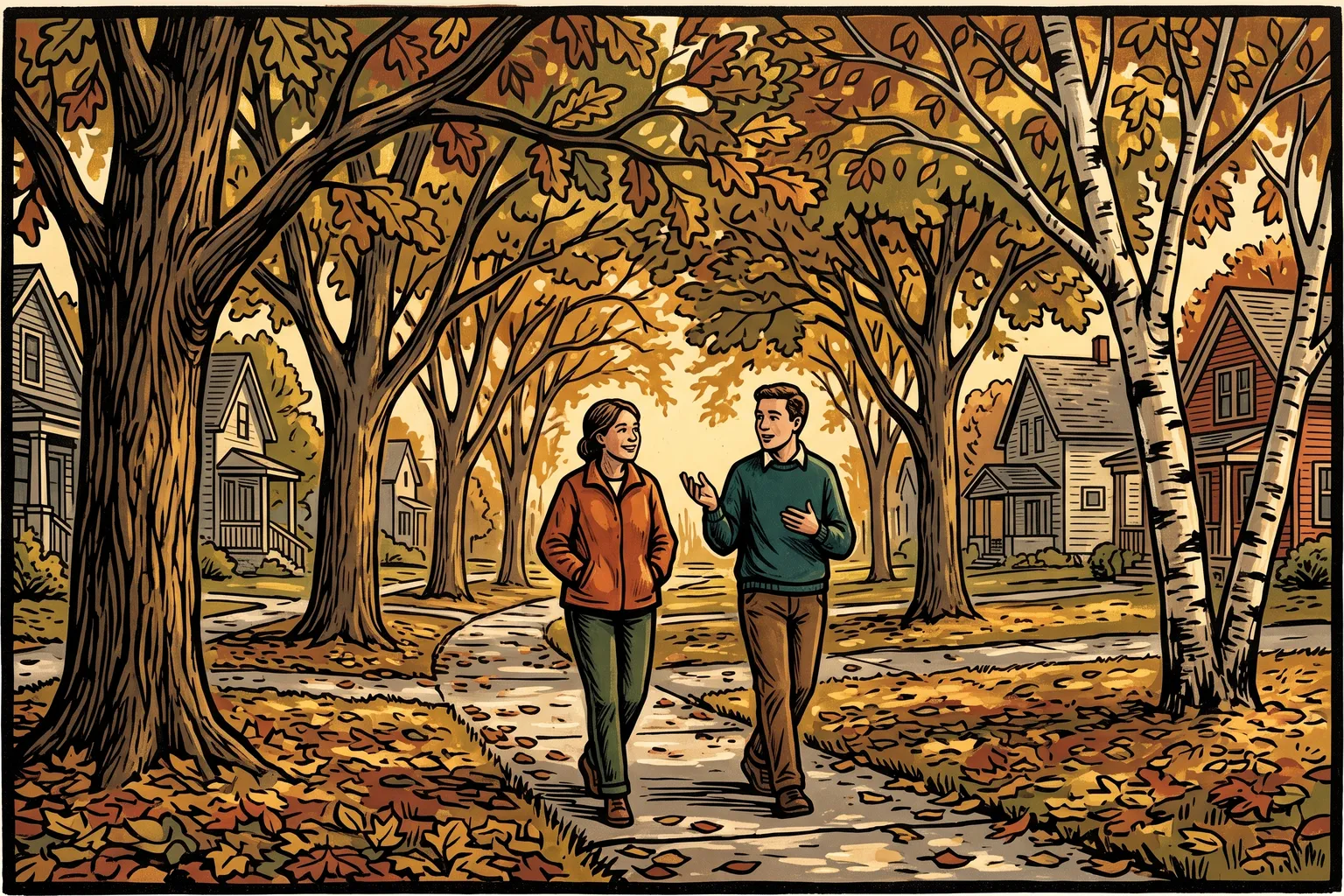
Joanne was sixty-three and had been retired for eight months when she came to see me. Not because she was struggling with the retirement itself. She liked it, mostly. She liked sleeping past six and not checking email. What she was struggling with, and didn’t quite know how to name, was that she didn’t have anyone to call.
She had joined a gym. She had joined a book club. She had started attending a Lutheran church she’d always meant to try. In those eight months, she knew a lot of names. She had a lot of pleasant conversations. Once, a woman at the gym named Christine had suggested they get coffee, and they did, and it was nice, and then three weeks passed and neither of them followed up. The window opened and closed and nobody walked through it.
That’s the thing about how to make new friends as an adult. It’s not the wanting that fails you. It’s the infrastructure.
For most of our lives, we don’t have to choose to be around people. We’re assigned to them. They’re in our office, on our block, at every school pickup, every Tuesday. You complain about the same meeting, see the same face at the same time, and the repetition does the work without you noticing. You become friends without quite deciding to. The friendship forms in the spaces between required contact, and you mistake it for something natural.
Then the requirements change. You retire. You move. Your children grow up and the schools empty out. The structure that was carrying your social life disappears, and you’re supposed to make friends the way you made them at seven: by choosing.
Most adults don’t know how to do this. Not because they’ve become unfriendly. Because choosing requires initiative, and initiative requires tolerating the possibility that the other person might not want what you want.
That’s a real thing to sit with.
I’ve watched people avoid it for thirty years. In grief groups, in counseling offices, in letters from readers who found something I wrote at 2 a.m. and needed to tell someone what they were carrying. The shape of what people describe changes, but the center of it doesn’t. Someone who used to have friends doesn’t have them anymore. They’re not sure when it happened. They know they’re lonely and they know there are people around them, and the gap between those two facts is where the trouble lives.
Asking someone to be your friend, even implicitly, even just by showing up and showing warmth and suggesting lunch, is an admission of need. For a lot of people who grew up being told to manage themselves, to need less and ask less and handle things on their own, that admission feels close to embarrassing. Like something that should be hidden.
So they wait. They join things and hope it unfolds. They’re pleasant at book clubs and walking groups and they go home and wonder why they still feel alone.
There’s something else that complicates this, and I think it doesn’t get named enough.
Some people carry old business into the search for new friendship. There’s a friend from twenty years ago they still think about, someone they fell out with or let drift. There’s something that happened that neither party has addressed. The idea of reaching toward new people while that old door hangs half-open starts to feel dishonest, and so they stall without quite knowing why.
If that sounds familiar: the piece I wrote in June about how to forgive someone applies here. Forgiving an old friend who hurt you, or who simply disappeared, doesn’t mean reopening that relationship. It means putting down what you’ve been carrying so you can walk into new ones without the weight.
This is different from the friendships that were never right to begin with. Not every relationship we’ve lost deserves to be recovered. Some of the people we miss, if we’re honest, weren’t actually good for us. The patterns I wrote about in toxic relationship signs don’t disappear just because the relationship is called a friendship. Knowing the difference between a connection you should repair and one you should quietly release is part of how you clear space for what you actually want.
The loneliest people I’ve known have been men.
I want to be careful about that sentence, because it needs the rest of it to be true. Men often have spouses or partners who maintain the social world for them. Who remember birthdays, who plan the dinners, who say we should have the Hendersons over sometime. The friendship infrastructure is real; it just isn’t theirs. They’ve outsourced it without realizing it, and when the marriage ends, or the spouse dies, or the relationship deteriorates, they find the friendships were never quite theirs to keep.
I’ve sat with men in their seventies who had nobody. Not because they’d done something wrong. Because they’d stopped calling. Work got busy, they moved, someone had a difficult year and the rhythm of contact broke and never restarted. They assumed friendship was something that persisted on its own, like a pilot light. Still there, warm and available, even when no one tended it.
One man told me: I don’t know when I stopped calling. I just did. And then years went by.
He said it with something close to surprise. Like he’d looked up one day and the room was empty.
That’s the shape of adult loneliness. It doesn’t arrive all at once. It accumulates in increments, the same way friendships disappear. Not one dramatic ending. A thousand small non-renewals.
Understanding that is useful, but it’s not the step most people get stuck on. Most people know they’re isolated. They know they should do something about it. The step they get stuck on is what, exactly, to do.
Here’s what I’ve seen work.
It starts with repeated contact. Not one coffee but several. Not one walk but a regular one. A researcher at the University of Kansas studied this question directly and found it takes roughly fifty hours of accumulated contact to move a person from acquaintance to casual friend. Most adults, meeting once a month at a book club, don’t come close to fifty hours in a year. You need more contact than feels comfortable, and you need it consistently, over time.
That means someone has to initiate. Not once. More than once.
This is the actual skill: being the person who asks. Not the person who shows up and waits to be claimed. The person who texts the day after the walk and says that was good, let’s do it again. Who says same time next week. Who extends the invitation a second time even when the first one didn’t catch fire immediately.
It’s uncomfortable. It requires wanting the friendship more visibly than the other person does, at least at first. And some of the people you invite won’t come back. Some people aren’t in a season where they can take on new closeness. That’s not a verdict on you. You keep going.
Joanne eventually figured this out. Not because she was given a strategy. She joined a walking group near her house and kept showing up, and after a few weeks she found herself regularly alongside a woman named Diane, and one morning she said we should get breakfast after this, and they did, and she texted Diane the next day and said that was fun, want to do Thursday? And Diane said yes.
That’s the whole story. That’s how it works. Someone decided they wanted the friendship more visibly than they were comfortable wanting it, and they asked anyway.
I know there are people reading this who’ve tried. Who joined the group, extended the invitation, sent the text, and it went nowhere. Who started to think that maybe friendship at this age isn’t what it used to be. That maybe it’s too late, or they’re too particular, or the window has closed.
I don’t believe that. I’ve watched people make real friends from a standing start well into their seventies. It’s harder than it was at thirty. The habits are more set. The hours feel shorter. But the desire is still there, and the desire isn’t the problem.
The problem is something most of us absorbed somewhere along the way: that needing people is an imposition. That a self-sufficient person asks less. That you should be fine on your own, and if you’re not, that’s your business, and you should handle it quietly.
That belief isn’t wisdom. It’s what loneliness sounds like before you’ve admitted it’s there.
You’re allowed to want a friend. You’re allowed to say so. You’re even allowed to say so twice.