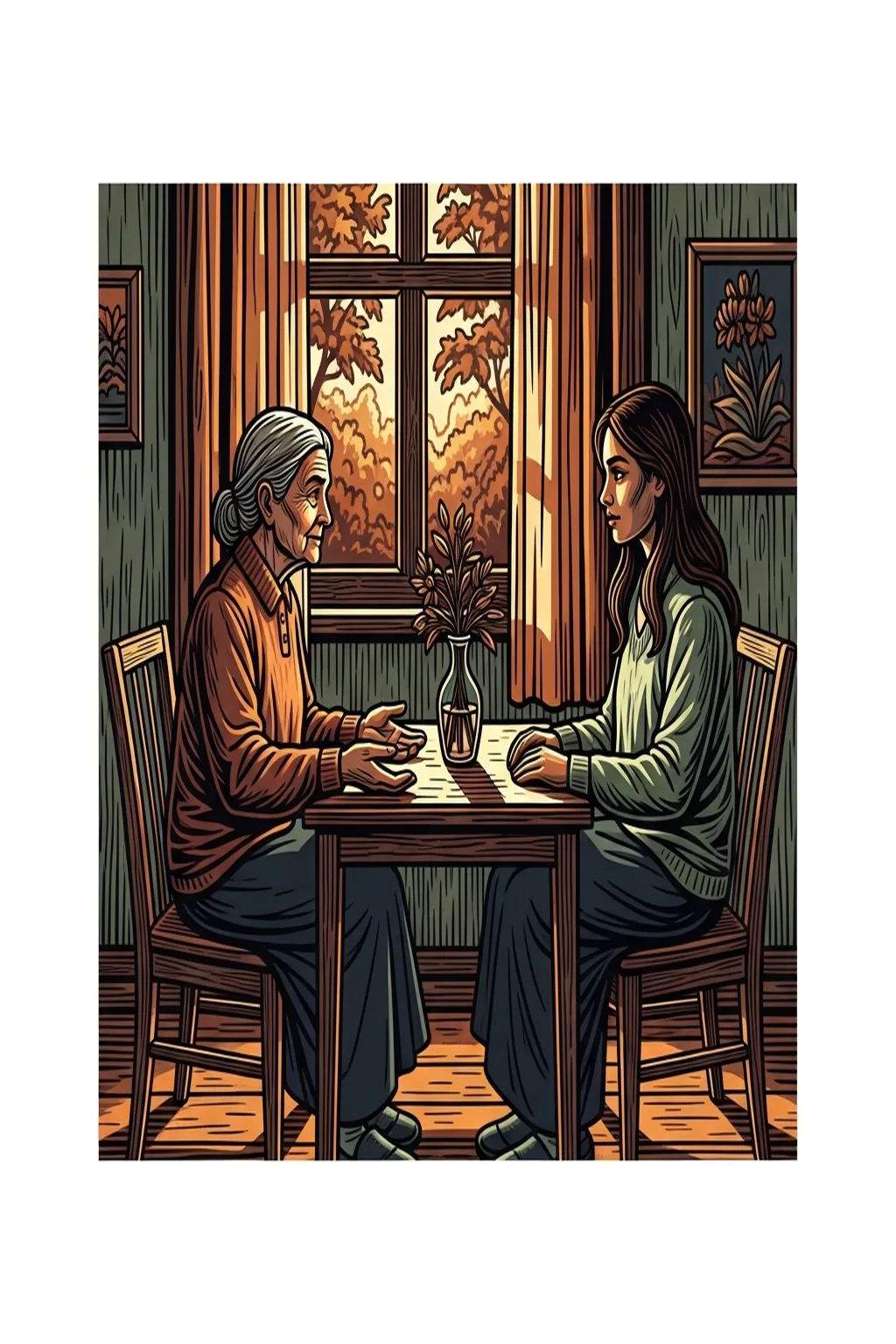
Norma was sixty-eight when she came to see me. Not for the reason most people come. Her husband was alive and in reasonable health, her children were fine. She came because her younger sister Margaret had stopped speaking to her twelve years earlier over their mother’s estate, and Norma had just received a letter from Margaret’s daughter saying Margaret had had a minor stroke.
She hadn’t opened the letter for three days.
When she finally did, the first thing she felt wasn’t grief or fear. It was panic. Not about Margaret. About herself. About what twelve years of not forgiving had cost her, and what it might cost her still.
“I don’t want to need her to call me first,” Norma said. “But I can’t figure out how to want anything else.”
That is, I’ve found, as precise a description of the problem as most people ever get.
The word forgiveness carries a lot of freight most of us never unpacked. It arrives with an implied story: someone wrongs you, time passes, you find it in your heart to forgive them, the story ends. You reconcile, or you part peacefully. Either way, you’re free.
What actually happens is less cinematic and significantly harder. The injury is real. The person who caused it may never acknowledge it. The damage (to a relationship, to a plan, to a sense of who you thought you were in the world) may be permanent. Forgiving them doesn’t reverse any of that. And understanding how to forgive someone, actually forgive them rather than just perform the forgiveness, turns out to be one of the more demanding interior projects a person can take on.
Let me be clear about what I mean, because I think the reason so many people get stuck is that they’re trying to do a thing they’ve never been given an honest description of.
Forgiveness isn’t forgetting. It’s not excusing. It’s not reconciling.
I want to be clear about those three, because people confuse them constantly, and the confusion is why they give up.
Forgetting isn’t possible and probably isn’t desirable. Your memory of what happened is real. It belongs to you. Nothing about forgiving someone asks you to revise your account of events or minimize what occurred. If your brother took money from you and lied about it for years, you’re allowed to remember that clearly. Forgiveness doesn’t ask you to let go of what you know.
Excusing is different from forgiving, and mixing them up creates a kind of moral whiplash that stalls people. To excuse someone is to say what they did wasn’t really that bad, or that they had their reasons, or that maybe you misunderstood. That’s not forgiveness. That’s reconsideration. Forgiveness works differently. It holds what happened fully and chooses something other than the weight of it. You can forgive someone while still knowing, completely and without softening, that what they did was wrong.
And reconciliation, the one people confuse with forgiveness most often, is a separate decision entirely. You can forgive someone and choose not to resume a relationship with them. You can forgive someone and still keep your distance. The door doesn’t have to reopen for the resentment to lift. These are two different choices, and making them separately isn’t a contradiction. It’s clarity.
I sat with Norma for six weeks before she got to this part. Before she could believe it. She had spent twelve years thinking that forgiving Margaret meant calling her and pretending the twelve years hadn’t happened. Once she understood she didn’t have to do that, once she understood she could forgive her sister and still not know what to do about the relationship, something in her posture changed. Not resolved. Just possible.
Here’s why it gets harder the longer you wait, and why it tends to be particularly stubborn when you’ve been carrying something for decades.
An injury from your thirties has had years to become part of the story you tell yourself about who you are. The resentment isn’t just a response to what happened. It’s structural. It’s woven into the narrative of your life: the time your sister betrayed you, the way your business partner disappeared with what was yours, the years your father was simply absent. You’ve organized other memories around it. It shows up in your explanations of why certain things are hard for you. It has become a load-bearing beam in the architecture of your identity.
To forgive, at that point, requires more than goodwill. It requires a kind of renovation. You have to be willing to let the wall come down without knowing what the room will look like after.
That’s not a small ask. People need to hear it named before they can get anywhere with it.
The other thing that makes it harder as the years go by is that you know the real cost now. At forty you might have been able to tell yourself the relationship was saveable, the lost years recoverable, the damage temporary. A decade later you know how much time you don’t have left to spend on this. Forgiving someone you’ve been estranged from for twelve years means sitting with the fact that you lost those twelve years. That’s not a small grief. It deserves to be treated as one.
Which is why I often point people toward grief support groups when they’re working through something like this. Not because estrangement is the same as bereavement, but because both require sitting with a real loss before anything else is possible. The best groups acknowledge what’s gone before they try to move anything.
So what is the internal shift that actually makes forgiveness possible?
Here’s what I’ve seen in thirty years of sitting with people: forgiveness becomes possible when you stop trying to do it for them and start doing it for yourself.
That sounds obvious. It isn’t. Most of us have been taught, consciously or not, that forgiveness is a gift you give to the person who wronged you. A generous act of grace toward someone who may not have earned it. Which is fine as a concept, but as a practical matter it means forgiveness is dependent on them somehow being worth it. And if they’ve never apologized, never acknowledged what they did, never experienced any apparent consequence, it’s genuinely hard to find a reason to give them anything.
When you understand forgiveness as something you do for yourself, the calculation changes. You’re not releasing them from responsibility. You’re releasing yourself from the ongoing cost of carrying it.
That cost is real. I’ve watched people stay in the grip of something that happened twenty years earlier, and what it costs them isn’t abstract. It occupies space. It comes up at dinner tables. It wakes them at three in the morning. It shapes the questions they can’t bring themselves to ask at family gatherings. A long-held resentment becomes a second life running alongside your actual one, and it takes energy you could be spending on things you actually want.
This is why I think of forgiveness as an act of self-respect rather than self-sacrifice. You’re not lowering your standards. You’re refusing to let someone who hurt you continue to live, rent-free, in your interior life. That’s a different relationship to the thing than most people are taught.
What does it look like in practice? Usually not dramatic.
Usually it looks like a morning when you realize you didn’t think about it first thing. Or a conversation where you notice the story doesn’t have quite the same current running underneath it. You still know what happened. You can still tell it exactly as it occurred. But something in you isn’t working as hard to maintain it anymore.
It doesn’t always look like that. Some people have a more distinct moment. But most people I’ve talked to describe it as a gradual loosening rather than a sudden release. Like the difference between a closed fist and an open hand. You still have the hand. It just isn’t closed anymore.
And it’s not a one-time decision. That’s the part nobody tells you.
You decide to forgive, and then a week later something reminds you of what happened and the resentment is back, fully formed, as though you never put it down. This doesn’t mean you failed. It means you’re a person. You decide again. You put it down again. Not because you’ve forgotten. Because you remember what carrying it costs.
That is how to forgive someone, in my experience. Not in one motion. Not once and done. In a practice. In repeated choosing. The way you maintain any relationship worth maintaining, including the one you have with yourself.
Norma never called Margaret. She’s thought about it. She’s written things she hasn’t sent. She’s worked through what she’d say if the circumstances changed, the kind of preparation I sometimes recommend to people who are thinking about how to apologize or who are waiting to receive one.
What she has done is put the story down. Not erased it. Not made peace with what happened, exactly. But stopped paying it monthly rent out of the present tense.
She came in one afternoon and sat down and didn’t say anything for a minute. Then she said: “I don’t know if I’ll ever talk to her again. But I’m not angry anymore. Is that the same thing?”
Close enough, I told her. For right now, close enough.
If you’re trying to find your way to forgiveness in a relationship that’s caused you real harm, it helps to be clear first about what you’re dealing with. The signs of a toxic relationship are often quieter than people expect. Naming what happened clearly can actually help with forgiveness, not because it makes the other person easier to excuse, but because you’re not forgiving something vague anymore. You’re forgiving something specific. The ground is firmer under your feet.
But wherever you are with it: what happened to you wasn’t small. The weight you’ve been carrying is real. And you don’t have to forgive quickly, or neatly, or in a way that looks like warmth.
You just have to decide, again and again, that you’re not willing to spend the rest of your life paying someone else’s debt.
That’s the only thing it actually requires.