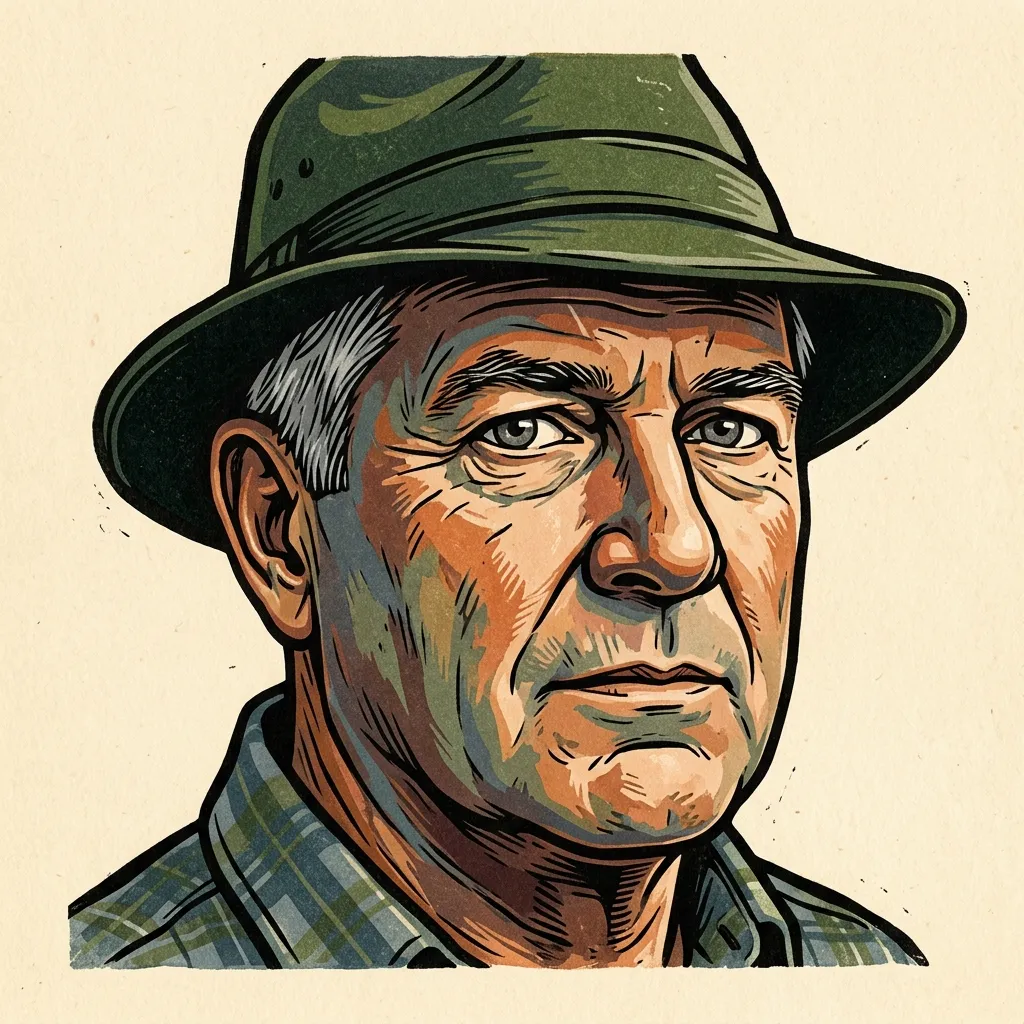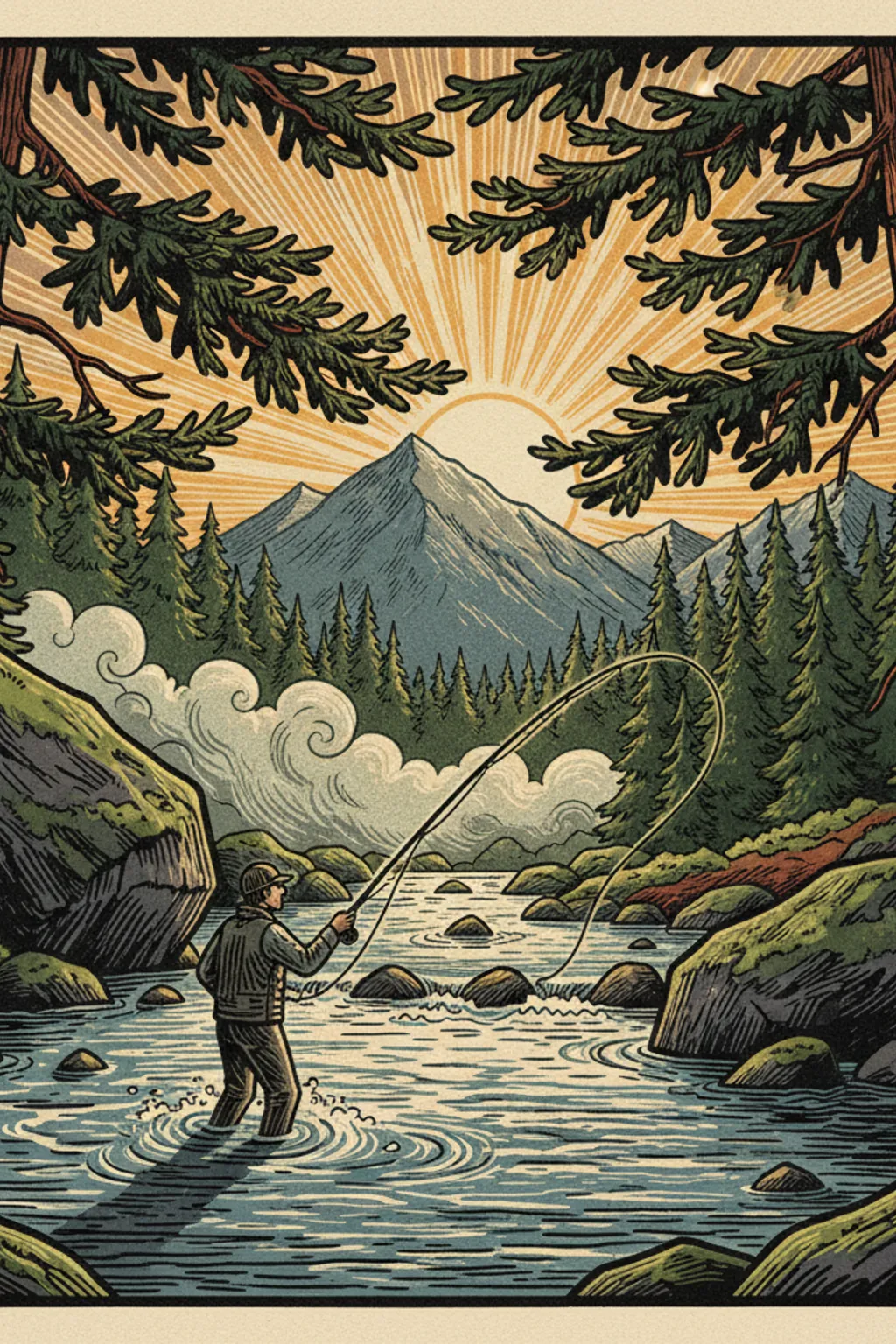
The first thing Connor told me, standing on the bank of the Davidson River in the Pisgah National Forest at six-thirty in the morning in July, was that I was going to throw the line behind me as much as in front of it. He said this like it was useful information. It wasn’t. Nobody who has never held a fly rod can imagine what throwing a line behind yourself looks and feels like until they’ve done it. I have played golf for thirty years. I know how to move my arms. What I did not know was that fly casting has nothing in common with any movement I had ever made in my life.
The rod hit the water behind me on the third cast. Not the line. The rod.
Connor didn’t say anything. He took a breath that I believe was a laugh he decided not to finish.
My daughter Elise married Connor Mays four years ago. He’s thirty-one, works in environmental consulting out of Asheville, and has been fly fishing since he was twelve, which in fly fishing terms means he has been fly fishing since before he knew enough to realize how difficult it is. He fishes the Davidson the way I walk my woodlot: with the proprietary ease of someone who knows exactly where everything is and doesn’t need to think about it.
For years he had suggested I come learn. I had been polite about declining. I write about fly fishing. I’ve covered the Au Sable and the Madison and the Beaverkill, talked to serious anglers all over the Upper Midwest about drift and drag and the importance of a dead drift. I told myself I understood the sport well enough. Writers make this mistake constantly and we’re the last to see it.
The summer I turned sixty-three, Connor asked again. Patty suggested I stop saying no. So in early July I drove nine hours from Traverse City to Asheville and the following morning, before the heat settled into the gorge, I found myself standing knee-deep in thirty-eight-degree water that did not care about my plans.
I should say something about the gear, because the gear is where most beginners talk themselves out of starting. Don’t.
Connor lent me a 9-foot 5-weight Orvis rod with a matching reel. That pairing, a 9-foot rod rated for a 5-weight line, is the standard recommendation for most trout water in this country. It’s standard because it works. Light enough to cast without wearing out your shoulder, heavy enough to feel what the line is doing. You don’t need anything more complicated than this to start. The range of fly rods available runs from about eighty dollars to well over a thousand, and the eighty-dollar rod won’t limit you until you’re far enough along to want something better, which takes longer than you think.
If you buy your own rig before you’ve ever cast, you’ll probably buy more than you need. Borrow or rent first. Every fly shop in trout country rents a full outfit for twenty or thirty dollars a day, and the staff will point you to the local water, hand you the right flies, and tell you more in fifteen minutes than I can cover here. Do that first. Then decide whether you want to spend the money.
The flies I started with were a Parachute Adams in size 14 and an Elk Hair Caddis in the same size. Both are dry flies, which means they float on the surface. Connor said beginners should start with dry flies because you can see them. When the trout takes the fly, something happens that you can actually watch. With nymphs fished underwater, you’re reading the behavior of an indicator or feeling for a tick in the line, and that’s a different kind of attention that comes later.
The Parachute Adams imitates a mayfly. The Elk Hair Caddis imitates a caddisfly. Trout eat both. On most trout streams in this country, one of them will work on any given day. The question of which one, in which conditions, at which hour, is the question that will keep you occupied for the rest of your life. I mean that as encouragement.
Casting is the part that surprises people who come from golf.
In a golf swing, power comes from rotating the body and uncoiling through the ball. In fly casting, the rod does the work, and your job is to stop it. Not accelerate through, the way you do with every other club or racket you’ve ever held, but stop it precisely, in the right position, and let the rod spring forward and load the line. The backcast matters as much as the forward cast. If the backcast doesn’t fully straighten before you come forward, the line collapses, the fly drops short, or the rod hits the water behind you.
What surprised me was how much it was about listening. You can hear when the backcast is right. There’s a whisper, a particular tension in the air, and then you feel the rod load in your hand. If you come forward before that happens, you’ve rushed it. Rushing in fly casting has no upside. None.
Connor spent forty minutes with me on the bank before we waded in, watching my loops and telling me to slow down. I have been told to slow down on the golf course more times than I can count. The instruction did not become useful until I stood in cold moving water with an actual fish in possible range. Then I understood what it cost to rush.
The most useful thing I can tell you about learning to cast: find someone who can watch you in person. Take a casting lesson. Most fly shops offer them, and a couple of hours with someone who can actually see what your rod hand is doing will save you months of confusion. Videos are fine for seeing what a good cast looks like. They cannot see what you’re doing wrong.
Reading water is a different skill, and it’s the one I found more natural from the start.
It’s observation. You’re looking at a river and trying to understand what a trout would want. Trout want three things: cold, oxygenated water; cover from predators; and food brought to them by current. You find all three by looking at where fast water meets slow water. The seam between a riffle and a flat is where food collects. The undercut bank with a root system overhanging the edge is cover. The upstream riffle is what aerates the water.
I had spent thirty years writing about walleyes and smallmouth bass and I had some of this already. But trout are more particular about their lies, more sensitive to temperature, more easily put down by a careless approach. Wade into a pool wrong and the fish you were watching rise won’t rise again for twenty minutes, if then. You learn to approach slowly. You learn to look before you step. The old hunting instincts were more useful than the fishing ones.
Connor called it “thinking like water.” He meant: don’t think about where you want to fish. Think about where the river wants to put things.
The thing about fly fishing that nobody told me, that I couldn’t have understood until I was standing in it, is what the time does.
A round of golf on a familiar course takes about four hours. The holes organize the time. You know where you are in the progression, how many remain, what the scorecard says. Time on a golf course is structured and measurable.
On a river it isn’t. You move upstream slowly, reading each pool, each run. Nothing happens for long stretches. You cast, mend the line, watch the fly drift through the feeding lane, pick it up and cast again. You become very still inside. Not bored, not idle the way waiting in a line is idle, but present in a way that’s hard to find in most other places. The golf course asks for your attention. The river takes it from you, and you don’t mind giving it.
I hooked my first trout two hours into that morning on the Davidson. A rainbow, probably twelve inches, that took the Adams in a shallow riffle and immediately threw the hook. Connor said that was about right.
I didn’t care that it threw the hook. I had been standing in a river for two hours and I hadn’t thought once about anything that wasn’t directly in front of me. For a man who has spent a career worrying about the next piece, the next deadline, the next thing that needed doing, that was a genuinely new experience. That’s not nothing. That’s actually quite a lot.
I’ve been back to the Davidson twice since that July. Last fall I fished the Pigeon River near Waynesville with Connor and a local guide named Jerry who has worked those mountain streams for forty years and has the patience of someone who stopped needing to hurry a long time ago. Jerry watched me cast for about ten minutes, adjusted my grip slightly, told me I was breaking my wrist on the backcast. He was right. He said it matter-of-factly, the way people say things when they’ve been teaching a long time and have no interest in making the subject seem harder than it is.
I’ve since gotten a 5-weight Sage I’m happy with. Probably bought it six months before I actually needed it, but that’s how these things go. I fish Michigan water now when I can get to a river. The Au Sable flows less than an hour from where I’m standing most summer mornings, and it took me until I was sixty-three to wade it. That’s either a comment on stubbornness or on readiness, and I’m not fully decided which.
If you’re thinking about trying fly fishing for beginners, my advice is direct: get in the water before you think you’re ready. The gear decisions sort themselves out. The casting improves with practice and observation. What doesn’t sort itself out is the time, and the attention, and the particular stillness that comes from standing in moving water with a single job.
The physical demands are real but not prohibitive. A good wading staff handles slippery rock. Cleated wading boots handle current. I’ve been paying closer attention to hip flexibility and lower-body stability this past year, work that started as something I was doing for my golf game and turned out to carry over to the water. Staying mobile on uneven terrain is the same problem whether the terrain is a fairway or a streambed. The golf stretches that made the most difference aren’t glamorous work, but they show up everywhere.
I came to fly fishing later than most. Later than golf, later than pickleball, later than most things I now can’t imagine not doing. I came to it with decades of outdoor experience and still had to start at the absolute beginning, which turned out to be worth something. Being a genuine beginner at a physical skill, after years of reasonable competence at things you care about, teaches you things that comfortable competence doesn’t. You stop performing. You start paying attention.
I thought I knew how to be patient. I did not know I had this kind.