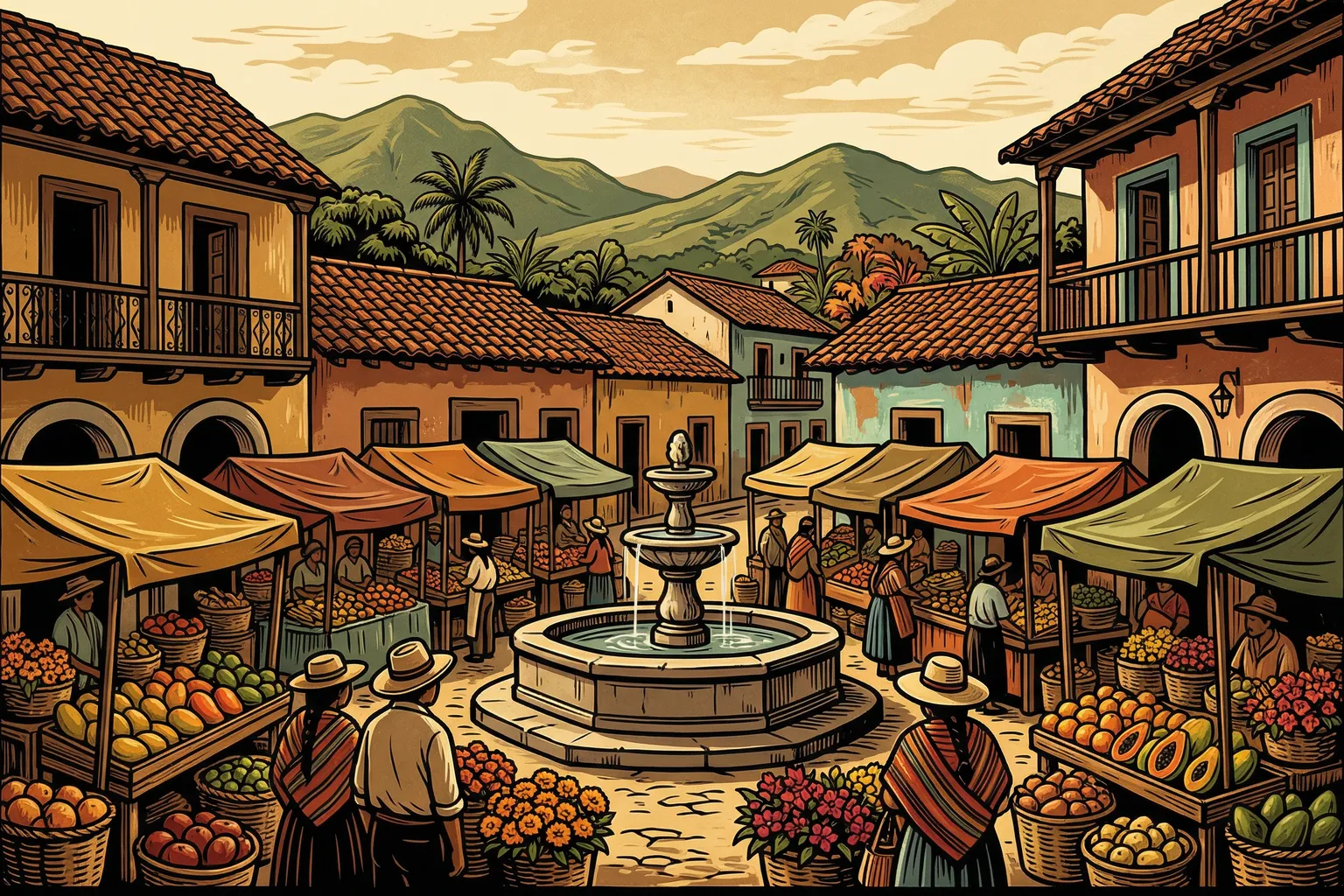
I want to get something out of the way before we go any further. The word “cheap” does a disservice to every place I’m about to describe. Cheap implies cutting corners, settling, making do. And the places I’ve been, the places where your money stretches in ways that will genuinely surprise you, are not that. They are places where the light is extraordinary, where the food is honest, where people sit down to dinner at a real hour and eat slowly and talk to each other. The fact that these places happen to cost a fraction of what you’d pay in San Diego or suburban Boston isn’t the point. It’s the happy accident that makes everything else possible.
I wrote earlier this year about the best places to retire in America, and that piece was about quality. This piece is about a different discovery: the remarkable overlap between quality and affordability. The places where life costs less are frequently the places where life feels like more. Not always. But often enough that the pattern deserves a careful look.
Here is what I’ve found, in six places across two countries and three American states, where a couple with reasonable savings can live well for far less than they’ve been told is necessary.
Tucson, Arizona
I first drove into Tucson in 1987, on assignment for a West Coast magazine, and I remember thinking the desert looked like another planet. I came back in 2019 with George, and then again alone in 2024, and each time the city had grown a little and the Sonoran desert had not changed at all, which is the specific comfort of Tucson. The saguaros don’t care about real estate trends.
A couple can rent a comfortable two-bedroom in a decent neighborhood (Sam Hughes, midtown, the Catalina Foothills) for $1,100 to $1,400 a month. Buy a house and you’re looking at $250,000 to $320,000 for something with a yard and a mountain view that would cost a million in any coastal city. A good meal out for two, at one of the Mexican restaurants where the salsa is made that morning, runs $30 to $40.
Healthcare is strong. The University of Arizona medical campus anchors hospitals and specialists that would satisfy anyone coming from a larger metro.
What makes Tucson actually good, not just cheap, is the light. The quality of desert light at seven in the morning, pink and gold on the Santa Catalinas, changes how you feel about the day ahead of you. There is a reason artists have been coming here for a century. There is a reason the hiking trails at Sabino Canyon are full of people in their sixties and seventies at dawn. The desert isn’t empty. It is full of color and stillness and the kind of quiet that makes you realize how noisy your previous life was.
Who it’s right for: anyone who loves dry heat, hiking, and Mexican food that will ruin you for Mexican food anywhere else. Who it’s wrong for: anyone who needs green. If you need trees and rain and grass, you will feel parched in your soul by February.
The Mississippi Gulf Coast
I know. I can hear you. Mississippi. But stay with me for a minute.
Ocean Springs is a small city on the Gulf Coast, between Biloxi and Pascagoula, and it is one of the most underestimated places I’ve visited in this country. The downtown is walkable. There are galleries, restaurants, a community that actually uses its public spaces. The live oaks along the coast road are enormous, their branches reaching across the street like arms. I sat at the harbor one evening in March and watched shrimp boats come in with the sunset behind them, and I wrote in my notebook that this was as beautiful as anything I’d seen in Portugal.
The cost of living is strikingly low. A two-bedroom house in Ocean Springs runs $150,000 to $200,000. Rentals are $800 to $1,100. A pound of Gulf shrimp, off the boat, is $6. Dinner at one of the locally owned places on Government Street, the kind of meal where the waitress calls you honey and means it, costs less than fast food in Manhattan.
Healthcare is adequate, not exceptional. There are hospitals in Biloxi and Gulfport, but complex medical needs may send you to New Orleans (ninety minutes) or Mobile (an hour).
What I noticed most was the pace. People eat dinner at six. They sit on porches. The Gulf Coast has a rhythm that the rest of America lost somewhere around 1995 and hasn’t found again. The seafood is extraordinary, shrimp and oysters and crab coming out of the Gulf and onto plates within hours.
Mississippi’s tax situation is favorable for retirees. Social Security isn’t taxed. Property taxes are among the lowest in the nation.
Who it’s right for: anyone who wants a small-town Gulf Coast life with real culture, real food, and a genuine community. Who it’s wrong for: if hurricanes keep you up at night (they are real here), or if summer humidity makes you miserable. July in Ocean Springs feels like breathing through a warm towel.
Marietta, Ohio
I’d never heard of Marietta until a reader sent me a postcard showing the Ohio River at sunset, with a paddlewheel boat and Victorian houses on the hill above. I thought she’d made it up. She hadn’t.
Marietta sits at the confluence of the Ohio and Muskingum rivers, in the southeastern corner of the state, and it is a town of about 13,000 people that feels like it was designed for a specific kind of contentment. The downtown is intact. Brick sidewalks, a restored hotel, bookshops, a brewery. There is a small liberal arts college that brings concerts and lectures. The river itself is the thing. I walked along it for an hour one morning in early spring and watched the mist lift off the water and thought about George, who would have loved this place for its quiet engineering of beauty.
A house in Marietta, a real house with a porch and a yard, costs $120,000 to $180,000. I checked the listings while I was there and found a restored Victorian with river views for under $200,000. In any other state, that house would be $600,000.
The trade-off is remoteness. Marietta isn’t close to a major airport. The nearest significant medical center is in Parkersburg, West Virginia, or you drive two hours to Columbus. If you need a Whole Foods, this isn’t your place.
But the quality of daily life, the walks along the river, the Thursday farmers market, the neighbors who bring pie, is something I’ve found in very few places of any price. The specific detail I carry from Marietta is the sound of the river at night, audible from the porch of the house where I stayed. It is a sound that makes you want to sit still, which isn’t something I say often.
Who it’s right for: anyone who wants a quiet, deeply affordable river town with genuine community. Who it’s wrong for: anyone who needs urban amenities or proximity to a major airport.
San Miguel de Allende, Mexico
I have a complicated relationship with San Miguel. It is, objectively, one of the most beautiful small cities in the Western Hemisphere. The light on the Parroquia at sunset turns the pink stone into something that doesn’t look real. The jardin, the central garden, is full of people at all hours, children and old men and women selling tamales and tourists and expats and locals all mixed together in a way that feels genuinely alive.
The expat community is large, well-established, and can be insular if you let it. There is an English-language library, a bilingual newspaper, clubs for everything from bridge to hiking. For some people this is a comfort. For others it is the opposite of why they moved abroad. You should know which kind of person you are before you get on the plane.
A couple can live well in San Miguel on $2,000 to $2,800 a month. That includes rent on a comfortable apartment or small casa in the centro ($800 to $1,200), utilities, food, transportation, and the occasional splurge. Healthcare is the question everyone asks. There are good clinics in town and excellent hospitals in Querétaro, an hour away. Many expats pay out of pocket for routine care, which is dramatically less expensive than in the States. A doctor’s visit runs $30 to $50.
The sensory detail I carry from San Miguel is the smell of the Tuesday market. Roasting corn and fresh cilantro and the particular sweetness of Mexican strawberries piled in crates. It costs nothing to stand in that market and breathe it in and watch the women stack pyramids of avocados with architectural precision.
Who it’s right for: anyone who wants beauty, culture, a ready-made social community, and a cost of living that makes a moderate nest egg feel abundant. Who it’s wrong for: if you don’t want to learn any Spanish (you can survive without it, but you’ll miss most of what makes Mexico worth living in), or if you want the real Mexico rather than the expat-filtered version.
Boquete, Panama
I went to Boquete because three separate people, at three different dinner parties, told me I had to. I don’t usually take travel advice from dinner parties. But Boquete kept coming up, and so I went, and now I am the person at dinner parties who tells other people they have to go.
Boquete is a small town in the highlands of western Panama, at about 3,900 feet elevation. The temperature sits in the mid-seventies year round. No air-conditioning bills. No heating bills. There is coffee growing on the hillsides, some of the best in the world (Geisha coffee, which sells for extraordinary prices in Tokyo and New York, grows ten minutes from town), and there are rivers and cloud forests and the Volcán Barú looming over everything with a kind of benevolent grandeur.
Panama’s Pensionado visa program is one of the most generous in the world. Demonstrate $1,000 a month in pension or Social Security income and you qualify for residency and discounts on everything from meals to medical care. A couple can live comfortably on $1,500 to $2,200 a month. Rent on a two-bedroom house with a garden runs $700 to $1,000. Panama uses the US dollar, which eliminates exchange-rate anxiety entirely.
Healthcare is the caveat. Boquete has clinics, but serious medical care means a trip to David (forty minutes) or Panama City (a flight or a six-hour drive). The quality of care in Panama City is high, and the costs are a fraction of US prices. But you need to be realistic about geography.
The thing I wrote in my notebook and underlined was the birdsong. I woke at five-thirty in a rented casita above town and heard birds I couldn’t identify, a dozen species at least, and the sound was so layered and complex it felt orchestral. I made coffee and sat on the porch and did nothing for an hour except listen. That hour was as good as any hour I’ve spent anywhere.
Who it’s right for: anyone who loves mountain weather, coffee, birds, and a small-town pace in a country that wants retirees to come. Who it’s wrong for: if you need urban energy or a large English-speaking community. Boquete is quiet. Beautifully quiet. But quiet.
The Central Valley, Costa Rica
I have been to Costa Rica four times, and each time I find it harder to leave. The Central Valley, the highland plateau that holds San José and its surrounding towns (Atenas, Grecia, San Ramón, Escazú), sits between 3,000 and 4,000 feet and has what the locals call eternal spring. They’re not wrong. Mid-seventies to low eighties during the day, cool nights, green hills in every direction. The first time I drove up into the valley from the airport, the air through the car window smelled like rain and coffee blossoms and cut grass, all at once, and I thought: this is what people mean when they talk about paradise, except paradise usually costs more than this.
A couple can live well on $2,000 to $2,800 a month. Rent on a furnished two-bedroom in Atenas or Grecia runs $700 to $1,100. Costa Rica’s public healthcare system, the Caja, is available to legal residents for a monthly fee (typically $80 to $200 for a couple), and the quality of care is good. There is also a strong private sector for anything the public system handles slowly. Groceries at the weekly feria, the open-air farmer’s market, are shockingly affordable. A week’s worth of fruits and vegetables for two costs $15 to $20.
Costa Rica offers a Pensionado visa for retirees with at least $1,000 a month in pension or Social Security. The process takes time (budget $1,500 to $2,000 for an attorney), but the country genuinely wants retirees.
What I wrote in my notebook after a week in Atenas: the evenings here feel like the evenings I remember from childhood, before air conditioning sealed everyone inside. People walk. People sit on benches in the town square. The bakery is open until eight and the bread is warm and costs less than a dollar. There is a specific generosity to Costa Rican culture, they call it pura vida and they mean it, that makes you feel welcome in a way that isn’t transactional. You earn it by showing up, learning the language, buying the bread.
Who it’s right for: anyone who wants spring weather year-round, affordable healthcare, and a pace of life that prioritizes actual living. Who it’s wrong for: if Latin American bureaucracy makes you lose your mind (it is real, it is slow), or if you need everything to function with American efficiency. Things take longer here. But you have the time. That is the whole point.
The Pattern I Keep Finding
I’ve written about the best states to retire in and about retiring in Portugal, and the thread that runs through all of it is the same. The places that cost the least are often the places that kept something the expensive places lost: the evening walk, the town square, the meal that takes two hours because the meal is the point. The expensive places paved over their sidewalks and built drive-throughs and called it progress. The affordable places didn’t.
I don’t mean to romanticize poverty. Low cost of living can also mean low wages, underfunded services, and infrastructure that doesn’t always work. I’ve tried to be honest about the trade-offs. Healthcare access, remoteness, hurricane risk, bureaucracy. These are real. You should go look at any place that interests you before you commit, and you should stay for a month before you stay for a year.
But if you’re sitting in a house in California or Connecticut or suburban New Jersey, staring at a retirement calculator that tells you your savings aren’t enough, I want you to know something. The calculator assumes you’ll stay where you are, paying what you’re paying. And that is one option. But there is a town on the Ohio River where you can buy a Victorian house for what you’d pay for a used car in your current zip code. There is a highland valley in Costa Rica where the bread is warm and the evenings smell like coffee blossoms and your savings would last twice as long as any spreadsheet told you.
The cheapest places to retire aren’t the places where you go with less. They are the places where less turns out to be more than you expected. I’ve been to all of them. I wouldn’t steer you wrong.