I have been going to Italy since 1986, when I flew into Rome on assignment for a magazine that no longer exists and spent a week eating food I couldn’t afford on a per diem that assumed I’d eat at the hotel. I didn’t eat at the hotel. I ate at a trattoria in Trastevere where a woman named Maria served cacio e pepe in a bowl the size of my head and charged me the equivalent of four dollars. I went back three more times that week. On the last night she brought me a glass of limoncello without my asking and patted my hand. That was my introduction to Italy, and nothing since has contradicted it.
I’ve been back nine times. George and I went together five of those, and four I’ve gone alone, the most recent trip last autumn. I’m not an Italy expert. I’m a person who has been paying attention to this country for nearly forty years, which is a different thing. What follows is an honest guide to the best places to travel in Italy, based on where I’ve actually been, what I actually think, and what I’d tell a friend over coffee if she said she was planning her first trip. Or her fifth.
Rome Is Worth the Noise
Everyone tells you Rome is overwhelming, and everyone is right. The traffic is chaotic, the tourists thick around the Colosseum, and someone will try to hand you a rose on the Spanish Steps and then ask for money. This is all true. Go anyway.
Rome is the only city I know where you can walk out of a restaurant at ten o’clock at night, turn a corner, and find yourself standing in front of a two-thousand-year-old temple that is just there, lit from below, with a cat sitting on the steps. The Pantheon does this. You come around a corner and it appears, impossibly large, impossibly intact, and you stand there with your mouth open like every person who has stood in that spot for nineteen centuries.
Stay in Trastevere if you can. The streets are still narrow and the buildings still that particular Roman ochre and the restaurants still put tables outside on the cobblestones. If Trastevere is booked, try Testaccio. It’s less polished, more residential, and the food is arguably better because the restaurants are still cooking for the people who live there.
Two days isn’t enough for Rome. Four is right. Give yourself a full morning at the Vatican Museums, and go early, as early as the doors open. By eleven the hallways are a river of human beings. The Sistine Chapel at eight-thirty in the morning, with a hundred people in the room instead of a thousand, is a different experience entirely. You can actually look up.
Florence Rewards a Second Visit More Than a First
The first time I went to Florence I spent three days in lines. The Uffizi line. The Accademia line (for the David, which is worth the line, I will say that plainly). The Duomo line. I saw a great deal of the backs of other tourists’ heads and not quite enough of the city itself.
The second time, ten years later, I skipped the lines. Instead I walked across the Arno to the Oltrarno and spent a morning watching a man restore a gilded picture frame in a workshop on Via Maggio that has been there since the seventeenth century. I ate lunch on Piazza Santo Spirito, where the tables face a church Brunelleschi designed and nobody photographs because it isn’t the Duomo. I climbed to Piazzale Michelangelo at sunset, which every guidebook tells you to do and every guidebook is right about, because the view from that hill, with the light going orange and the Arno turning silver, is one of the finest things I’ve ever seen.
Florence assumes you’ll come back. The first visit is for the museums. The second is for the city. If you can only go once, stay at least four days and spend two of them on the south side of the river, where the artisan workshops and the quieter piazzas are. That’s where Florence breathes.
The Train Is the Way
Italy’s rail system is excellent, and unless you’re planning to drive through the countryside (which I’ll get to), take the train. The high-speed Frecciarossa runs between Rome, Florence, Naples, Milan, and Bologna, and it’s fast, clean, comfortable, and cheap if you book a few weeks ahead.
Sit on the left side of the train going from Rome to Naples. The views of the coast as you approach are on that side, and they are the kind of thing you remember ten years later. Sit on the right side going from Florence to Rome if it’s clear, because there’s a stretch through the Tuscan hills where the light in the late afternoon turns everything golden and rolling, like something from a Renaissance painting, which makes sense because this is exactly what the Renaissance painters were looking at.
Buy tickets on Trenitalia’s website or at the station. The machines accept credit cards and the booking process is straightforward. George and I used to buy our tickets two weeks ahead and he’d calculate the savings over dinner on a napkin. He announced once that we’d saved enough on advance fares to pay for a bottle of good Barolo. This is the kind of thing George did. I miss that.
Puglia in June, If You Can Manage It
If I could send every person I know to one place in Italy at one time of year, it would be Puglia in June. This is the Italy most people never see, and it’s the Italy I think about most often when I’m home.
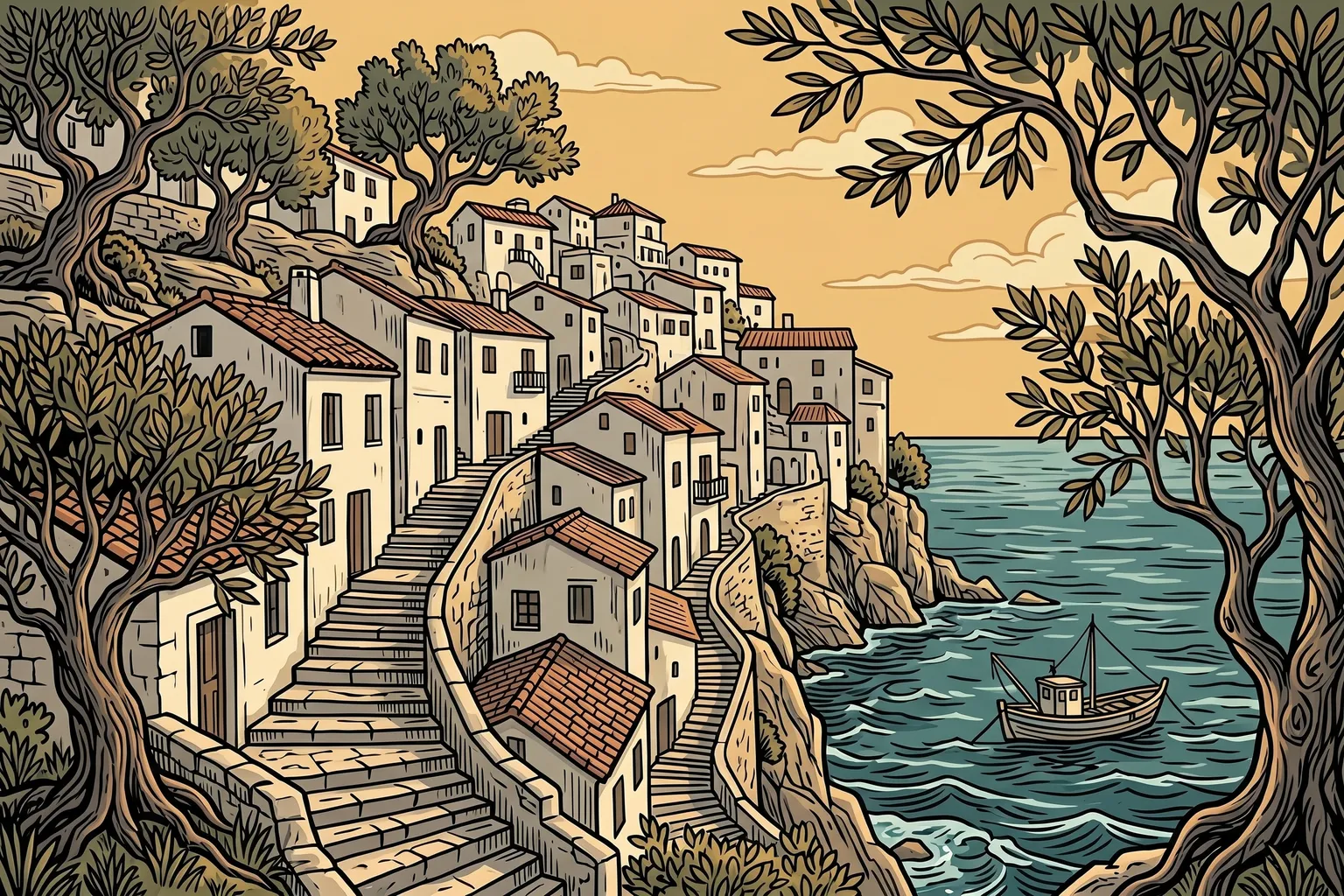
Puglia is the heel of the boot. It is flat where the rest of southern Italy is mountainous, agricultural where the Amalfi Coast is picturesque, and honest where the tourist centers are performing. The olive groves go on for miles, the trees twisted and ancient, some of them a thousand years old. The stone walls along the roads are dry-stacked, no mortar, built by people whose names nobody recorded. The light in June is warm and gold and lasts until nine at night.
Stay in Lecce, which people call the Florence of the South, although I think Lecce would prefer to be called Lecce. The baroque architecture is carved from local limestone so soft it could be cut with a handsaw, and the church facades on Piazza del Duomo look like someone decorated a cathedral the way a pastry chef decorates a wedding cake. Lecce is walkable, affordable, and genuinely surprised to see American tourists, which means the restaurants haven’t adjusted their prices or their portions.
From Lecce, drive south to Santa Maria di Leuca at the very tip of the heel, where the Adriatic meets the Ionian Sea. The town is small and white and windswept, and there is almost nothing to do except sit with a coffee and watch the water change color, which is enough.
Drive north to Polignano a Mare, built on limestone cliffs above the Adriatic. There is a beach in a cove beneath the old town, reached by stone steps, where the water is so clear you can see the bottom at fifteen feet. I sat on those cliffs with a gelato and watched the sun move across the water for an hour and didn’t think about a single thing I was supposed to be doing. This is what Puglia does to you. It slows you down until you stop resisting.
Ostuni is worth the detour, all whitewashed walls and narrow alleys on a hill above the olive groves. Alberobello, with its trulli (those conical stone houses that look like something from a fairy tale) is touristy but real, and it’s worth an afternoon.
The Amalfi Coast, Honestly
The Amalfi Coast is beautiful. I won’t pretend otherwise. The drive along the SS163 from Sorrento to Amalfi, with the road carved into the cliffs and the sea a hundred meters below and the towns of Positano and Praiano clinging to the hillside like something that shouldn’t architecturally be possible, is one of the great drives in Europe.
It is also, between June and September, one of the most crowded stretches of road on the continent. The buses are enormous. The road isn’t. The combination produces a specific kind of terror that’s difficult to appreciate aesthetically while you’re experiencing it.
My advice: go in May or October. May the wisteria is blooming and the crowds haven’t arrived. October the light is softer and the water is still warm enough to swim. Stay in Ravello, which sits above the coast and feels like a different country from the beach towns below. The gardens at Villa Cimbrone have a terrace called the Terrace of Infinity that looks out over the sea and earns its name. I stood there in October with wind coming off the water and thought: yes, this is why people come here.
If you go to Positano, know that the town is essentially vertical. Every beautiful photograph of Positano was taken from the water or from the road above. The town itself is stairs. Hundreds of stairs. It is gorgeous and your knees will have opinions about it. Mine did.
Sicily Is Its Own Country
Sicily deserves its own piece, and I intend to give it one. But I can’t write about Italy and leave it out.
Sicily is louder than the mainland, hotter, more chaotic, and more generous. The food is different (the Arab and North African influences show up in the spices, the couscous in Trapani, the granita for breakfast in Catania that isn’t a dessert but a meal). The architecture is different (Norman, Greek, Moorish, Baroque, sometimes all on the same street in Palermo). The pace is different. Slower. More deliberate. People sit longer at meals. The passeggiata in the evening, that ritual walk through the town center, goes on until eleven o’clock because nobody in Sicily is in any hurry to end an evening.
Go to Palermo for the markets. The Ballarò market is loud and raw and magnificent, with swordfish on tables and vendors shouting prices and elderly women squeezing tomatoes with the seriousness of a diamond appraiser. Go to Taormina for the views (Mount Etna from the Greek theater makes you understand why ancient people built temples on high ground). Go to Syracuse, on the eastern coast, where the island of Ortigia contains a Greek temple converted into a cathedral, a freshwater spring where papyrus grows, and a fish market that has been operating since antiquity. I spent a morning in Ortigia walking with no map and ended up at a waterfront cafe where an old man was feeding bread to seagulls and arguing with them in Sicilian, and that was the best morning of the trip.
The Practical Things
When to go. April through June and September through October. July and August are hot (genuinely, punishingly hot in the south) and everything is crowded and prices double. I once made the mistake of visiting Rome in August and the heat rising from the cobblestones felt personal.
What to pack. Good walking shoes (the difference between a good day and a bad day is shoes). A light scarf for churches, which require covered shoulders. Layers, because the temperature drops at night in the hill towns. A small daypack. Leave the large suitcase at home. Italian hotel rooms are small, Italian elevators are smaller, and Italian cobblestones don’t cooperate with wheels.
What to leave home. Formal clothes (a clean pair of trousers and a decent shirt will take you anywhere). Expectations of efficiency. Things close for lunch. Trains run late sometimes. The restaurant doesn’t have your reservation even though you booked online. None of this matters. You are in Italy.
How long. Two weeks is ideal. Ten days is workable. A week is a tease that will make you come back, which is perhaps not the worst outcome. If you only have a week, pick two cities and go deep rather than trying to see everything. Rome and Puglia. Florence and the Tuscan hill towns. Palermo and the eastern coast of Sicily. Whatever you choose, don’t try to do all of Italy in seven days. You will see nothing and remember less.
Money. Italy isn’t cheap, but it isn’t ruinous. A good meal at a neighborhood trattoria runs thirty to forty-five euros for two, with wine. Espresso at a bar is one euro fifty. A three-star hotel in a secondary city runs eighty to a hundred and twenty euros a night. The budget is manageable if you eat where the Italians eat and resist the restaurants with English menus and photographs of the food.
Why I Keep Going Back
Italy isn’t the only beautiful country in the world. I’ve written about Portugal and could write about it again tomorrow. I’ve spent time in places from Tucson to Costa Rica and found things to love in every one. But Italy does something no other country has done to me in forty years of travel: it makes me slow down and pay attention, not because the sights demand it but because the ordinary life demands it. The way a waiter sets the table. The way the light falls on a stone wall at four in the afternoon. The way a town goes quiet at two o’clock and comes back to life at five as if nothing happened.
George and I went to Italy five times. The last was in 2019, to Puglia, where we rented a masseria outside Ostuni and spent ten days doing very little. He read on the terrace. I walked the olive groves. We ate dinner in town every night at a place where the owner brought whatever he’d cooked that day and you didn’t order, you just ate, and it was always right. George said it was the best trip we’d ever taken. He wasn’t a man who said things like that casually.
I went back to Puglia alone last October. I stayed in Lecce this time, not the masseria, because going back to the exact place felt like too much. The light was the same. The olive trees were the same. I sat in Piazza Sant’Oronzo with a coffee and my notebook and wrote for an hour, and the writing was good because the place was good, and I thought: this is why I keep going. Because Italy, more than anywhere else I know, rewards the person who sits still long enough to see what’s actually there.
If you’re thinking about going, go. If you’ve been once, go back. The second visit is almost always better than the first, because the first time you’re looking at Italy, and the second time Italy is showing you something.
Bring good shoes.