There is a person standing in a liquor store right now, looking at the bourbon aisle, and that person is about to make a mistake. I know because I’ve made it. The mistake is this: they’re going to reach for the most expensive bottle on the shelf, because they assume price is a shorthand for quality, and they don’t have any other information to go on, and the bourbon aisle in a well-stocked liquor store is roughly as navigable as a foreign airport without signs.
I want to stop that person. Not in a dramatic way. Just a hand on the shoulder, a gentle redirect. Put that one back. Try this instead. It costs twenty-five dollars and it’s better for what you need right now, which is a place to start.
That’s what this piece is. A place to start.
I came to bourbon the way I come to most things: through the kitchen door, not the front entrance. I’ve been writing about restaurants and dining for thirty years, and spirits were always at the table, literally, but I treated them the way most diners do. I ordered what someone recommended. I drank what was poured. I didn’t think about it the way I think about a plate of food, with attention to where it came from and what it cost and whether the experience was worth the price.
That changed a few years ago when a bartender in Austin, a woman who could describe a bourbon the way I describe a good tortilla (with specificity, with pleasure, without a single unnecessary word), poured me something and asked me what I tasted. Not what I thought of it. What I tasted. And I realized I’d been drinking without paying attention, which is the same sin I accuse restaurant-goers of when they eat without tasting.
So I started paying attention. And what I learned is that bourbon, especially at the entry level, is one of the great bargains in American drinking. You can spend twenty-two dollars on a bottle that will teach you more about what you like than a seventy-dollar bottle ever could, because the twenty-two-dollar bottle isn’t trying to impress you. It’s trying to be good. Those are different projects.
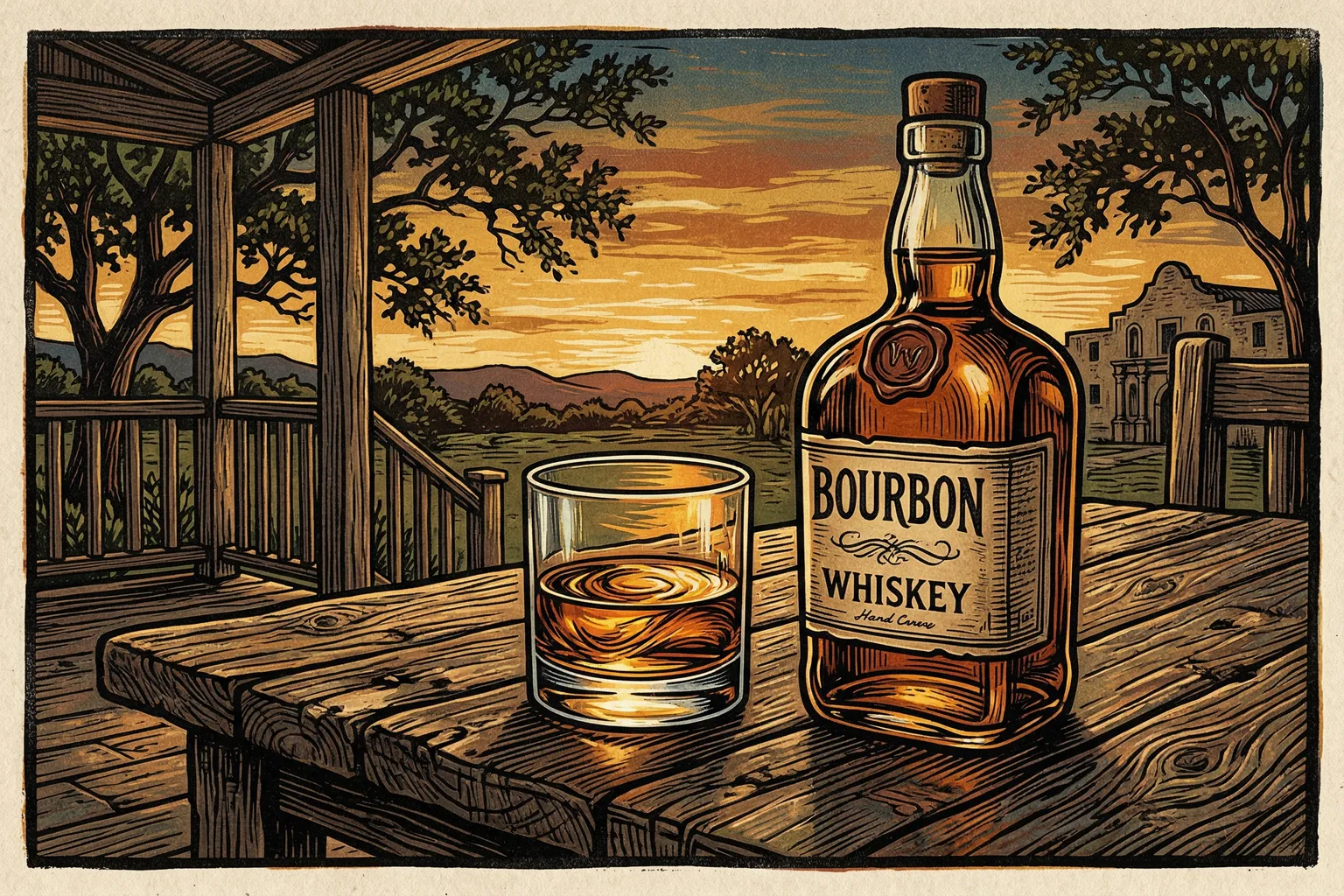
Here are five bottles. I bought them all. I’ve poured them all on my porch in San Antonio, for Elena, for friends, for my brother-in-law who thinks all brown liquor tastes the same (he’s wrong, and two of these bottles proved it). Every one is real. Every price is approximate, because liquor stores price like airlines, but these are what you’ll find within a few dollars at most stores in most states.
Four Roses Yellow Label, around $25
This is the cheapest bottle on this list and it might be the one I’d hand someone first. Four Roses Yellow Label is a Kentucky straight bourbon blended from ten different recipes, which sounds complicated but what it means in the glass is balance. Nothing sticks out. Nothing hides.
Pour it and the first thing you get is a softness that surprises people who think bourbon is all fire and oak. There’s a sweetness up front, not sugar-sweet but the sweetness of ripe fruit, like a pear that’s been sitting on a windowsill in the sun. Behind that, a little spice, the kind you feel on the sides of your tongue, warm and brief. The finish is clean. Short. It doesn’t linger and make speeches. It says what it came to say and leaves.
At twenty-two dollars, this bottle is almost unfair to its competition. I’ve poured it next to bourbons that cost three times as much and watched people reach for the Four Roses again. Not because it’s better, exactly. Because it’s friendlier. And when you’re starting out, friendly matters more than complex.
Wild Turkey 101, around $25
Wild Turkey 101 is the bottle that bourbon people argue about, not because it’s controversial but because it’s so good at its price that it makes people uncomfortable. It’s 101 proof, which means it’s stronger than most of the others on this list, and I want to be honest about that: if you’ve never had straight bourbon, the first sip of Wild Turkey 101 will let you know it’s there. This is not a whiskey that whispers.
But give it a minute. Let it sit on your tongue. What comes through after the initial warmth is caramel, deep and toasted, the kind of caramel that happens when you brown butter in a pan and it goes from golden to amber and the kitchen smells like something your grandmother would approve of. There’s vanilla, and underneath that a nuttiness, almost like pecan, that I haven’t found in any other bourbon at this price.
The thing about Wild Turkey 101 is that it doesn’t pretend to be smooth. It’s honest about what it is, which is a full-flavored, full-proof bourbon made by a distillery that has been doing this since 1869 and doesn’t feel the need to apologize for the heat. I respect that. I respect it the way I respect a restaurant that doesn’t dim the lights to hide the food. If you can handle the proof, this is arguably the best value in American whiskey.
Buffalo Trace, around $35
Buffalo Trace is the bourbon that everyone recommends to beginners, and for once, everyone is right. It’s the bottle equivalent of a restaurant that has a line out the door and deserves every person in it.
The nose is warm and inviting in a way that puts people at ease before they’ve taken a sip. Vanilla, caramel, a hint of something darker underneath, like brown sugar that’s been heated until it just starts to turn. The first taste is sweet and round and approachable, without any of the harsh edges that scare beginners away from bourbon. There’s a touch of spice on the finish, cinnamon and a faint pepper, but it arrives gently, like a friend tapping you on the shoulder rather than grabbing your arm.
The problem with Buffalo Trace, and I’ll be honest about this, is that it can be hard to find. The distillery in Frankfort, Kentucky, makes a staggering amount of bourbon, but demand has outpaced supply for years, and in some markets it disappears from shelves the day it arrives. If you see it, buy it. If you don’t see it, don’t pay sixty dollars for it from someone who’s marked it up. Move to the next bottle on this list. Buffalo Trace is worth twenty-eight dollars. It is not worth sixty.
Maker’s Mark, around $32
Maker’s Mark is the bourbon that taught me what wheat does to whiskey, and what wheat does is this: it softens everything. Most bourbons use rye as their secondary grain, which gives them spice and edge. Maker’s Mark uses wheat instead, and the result is a bourbon that feels rounder, gentler, almost creamy in the way it moves across your palate.
The first thing I noticed when I actually paid attention to a glass of Maker’s Mark was how it smelled. Not like a liquor store. Like baking. Specifically, like the inside of a bakery on a cold morning, bread and butter and a trace of something sweet that you can’t quite identify. In the mouth, it’s soft. Caramel again (bourbon loves caramel the way Tex-Mex loves cumin, it’s the baseline, the foundation everything else is built on), but a lighter, more buttery caramel than Buffalo Trace. There’s a faint fruitiness, cherry or maybe plum, that comes and goes quickly.
Maker’s Mark is the bourbon I pour for people who tell me they don’t like bourbon. I’ve changed minds with this bottle. Not because it doesn’t taste like bourbon. It does. But it tastes like the gentlest version of bourbon, the version that sits down next to you instead of standing over you.
Elena once described Maker’s Mark as “the bourbon that has manners,” which is exactly right and which I wish I’d written first.
Woodford Reserve, around $40
Woodford Reserve is the most expensive bottle on this list and the one I’d call the graduation gift. If you’ve tried the others and you want to understand what bourbon can do when it gets a little more ambitious, this is where you go.
It’s made in Versailles, Kentucky (pronounced “ver-SALES” by the people who live there, which tells you something useful about bourbon country), and it’s a small-batch bourbon that takes itself seriously without being pretentious about it. The flavor is richer and more layered than anything else here. Dark chocolate, not the sweet kind but the kind that’s seventy percent cacao and slightly bitter in a way that makes you take a second bite. Dried fruit. Toasted oak. A spice that builds slowly and stays, like the warmth from a good meal that you feel for an hour after you’ve finished eating.
Woodford Reserve is the bourbon I bring to dinner when someone else is cooking and I want them to know I thought about what to bring. It’s generous that way. It’s also the bottle that taught me there’s a ceiling on how much you need to spend: the difference between Woodford Reserve at thirty-five dollars and the premium bottles at sixty or seventy is real, but it’s the difference between a very good restaurant and a slightly different very good restaurant. You’re not crossing a quality boundary. You’re just exploring variations.
What You Don’t Need
You don’t need a special glass. A rocks glass works. A coffee mug works. I’ve had excellent bourbon out of a ceramic cup on a camping trip and it tasted like bourbon.
You don’t need ice, at least not the first time. Pour it neat, take a small sip, let it sit. If it’s too much, add a splash of water, just a little, enough to open it up without drowning it. You can always add ice later. But the first time, give the bourbon a chance to introduce itself without a chaperone.
You don’t need anyone’s permission or approval. The bourbon world has some of the same gatekeeping problems I wrote about in the scotch piece, people who will tell you you’re drinking the wrong thing, or drinking it wrong, or that you need to “develop your palate” before you can appreciate what they appreciate. Ignore them. Your palate is fine. It got you this far. It knows what it likes. Trust it.
And you don’t need to spend more than thirty-five dollars. I’m serious about this. The five bottles I’ve described here cover the full range of what bourbon can be at the entry level: soft and wheated, bold and full-proof, balanced and clean, rich and layered. If you try all five, you’ll know what you like. You’ll know whether you prefer the gentleness of Maker’s Mark or the honesty of Wild Turkey 101, the balance of Four Roses or the richness of Woodford Reserve. And that knowledge, which costs you about a hundred and forty dollars spread across five bottles, is worth more than any single expensive bottle could teach you.
Where to Start Tonight
If you’re going to the store tonight and you want one bottle, buy Buffalo Trace if they have it. If they don’t, buy Four Roses Yellow Label. Both are under thirty dollars. Both are good enough that you’ll want a second glass and smart enough not to make the second glass a mistake.
Pour it when the day is done. On the porch if you have one. At the kitchen table if you don’t. The setting matters less than the attention. Just taste it. Notice what you notice. You don’t need vocabulary for it. You don’t need to identify the “tasting notes.” You just need to pay attention, which is the same thing I ask of anyone who sits down to eat. The food is better when you’re present for it. The bourbon is too.
I’ve spent thirty years writing about the experience of being fed by another human being, about what it means when someone makes something and puts it in front of you and asks you to try it. Bourbon is the same act, stretched across years, performed by people you’ll never meet, in a place you may never visit, with grain that grew in a field you’ll never see. Someone made this. Someone put it in a barrel and waited. And now it’s in your glass, and it costs twenty-five dollars, and it’s good.
That’s where you start. Right there.