Dear Lorraine,
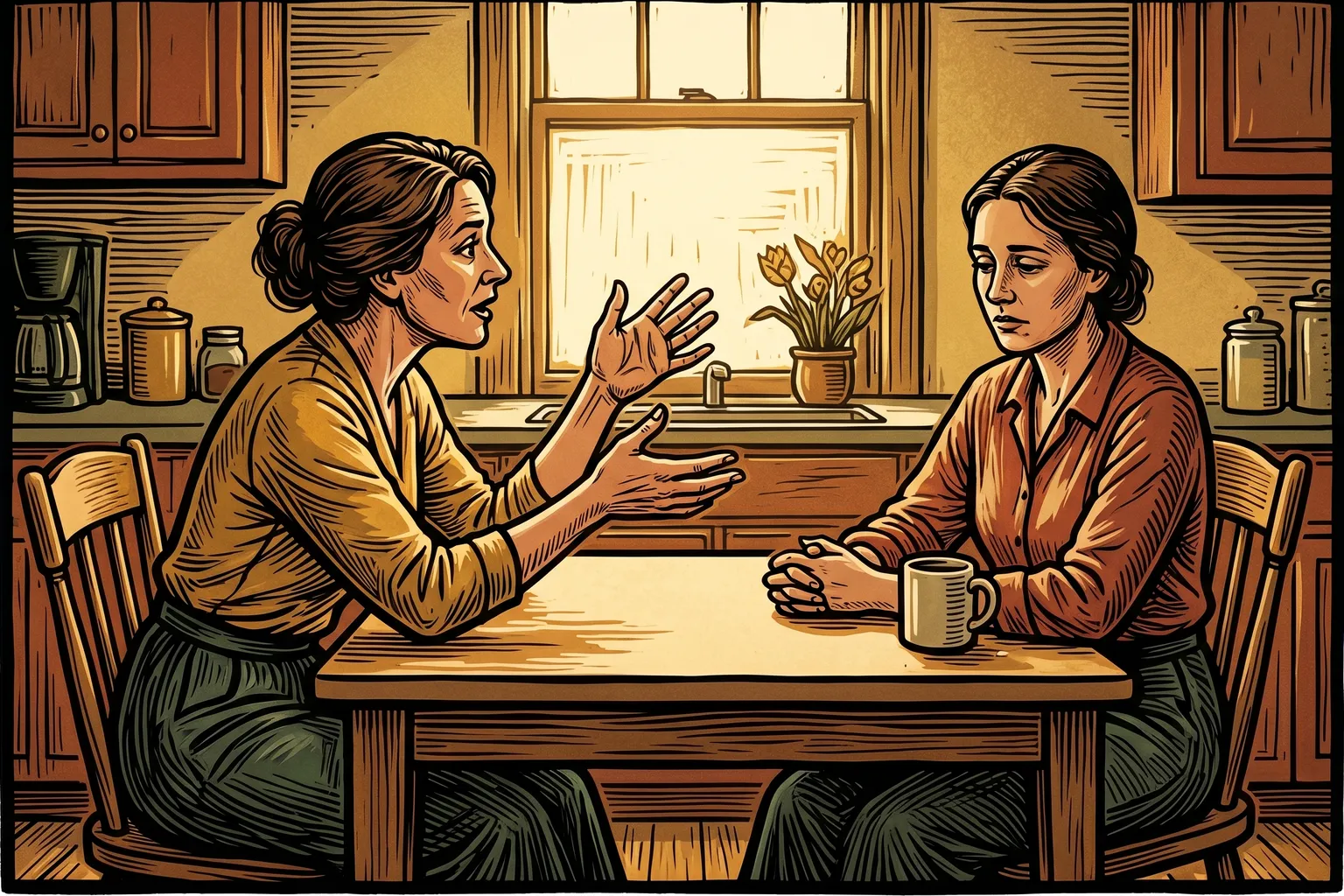
My sister Patricia has been my best friend for sixty-two years. Or I thought she was. Over the last decade or so I’ve started to track something I can’t un-see: every conversation, within two minutes, turns back to her. Her neighbor. Her health. Her opinion about whatever is happening in the world.
Last spring I called her to tell her my husband’s cardiologist had found something that needed a second opinion. She said “Oh, that’s scary” and then pivoted to a forty-minute account of her HOA dispute. I sat in my kitchen afterward feeling hollowed out. I hadn’t told her anything that mattered, and I didn’t know why.
My daughter said I should look up “narcissist” online. I did. I cried.
I’m sixty-seven. I’m tired. I love Patricia the way you love someone who has been in every photograph of your life. But these conversations leave me lonelier than before I picked up the phone. Is there anything to do? Or do I just accept this?
Done in Denver
Dear Done in Denver,
Let me stay with that sentence for a moment. “Lonelier than before I picked up the phone.” That is not a small thing to say about someone who has been in every photograph of your life. That sentence tells me you already know something important, and you are hoping I’ll find a way around it. I’m not going to be able to do that.
Here is what I notice about Patricia, based on your letter. She responds to your news in the register of acknowledgment without actually receiving it. “Oh, that’s scary” is a sound a person makes when a conversation has arrived at the doorstep of their attention. It isn’t listening. And then she pivots. Forty minutes on the HOA dispute, while your husband’s cardiologist appointment sits there unremarked on. This isn’t a bad day. You’ve been tracking it for a decade.
What this pattern produces is specific. You arrive at the call carrying something real, and you leave with it still in your arms, untouched, because the person on the other end doesn’t have the capacity to take it from you. That’s what produces loneliness. Not the absence of conversation, but the absence of reception.
Now I want to tell you the actual choice in front of you, because I think you already sense it and are hoping it’s something gentler.
You can’t change Patricia. Not at sixty-seven, not at any age. People who turn conversations back to themselves don’t do it strategically. It’s simply how they inhabit a room. They’re not withholding attention on purpose. The attention is just not available. And you can’t reason, wait, or love someone into becoming available when they aren’t. You know this. The decade of tracking is you coming to terms with what she is.
So the choice you’re actually facing is about what kind of relationship you’re going to have with her now that you see it clearly.
Here is what I would do. Stop bringing Patricia your tender things. Not as punishment, not in anger, but because she can’t hold them. Bringing your real moments to someone who can’t receive them doesn’t connect you to that person. It just leaves your real moments out in the cold. Save those for the people in your life who can take something from you and hand something back. Your daughter, maybe. A friend who asks follow-up questions. Someone whose “that’s scary” is followed by “tell me more.”
What you can give Patricia is the surface. Family news. Weather. What you watched on television. She can handle those, and they aren’t nothing. A sixty-two-year history isn’t nothing, even when it has limits you didn’t ask for.
One more thing. You asked if you can just accept this. You already are accepting it. What you’re deciding now is whether acceptance means showing up the same way you always have, or whether it means protecting yourself a little more carefully inside the relationship you’re not willing to leave. Those are different choices, and both of them are yours.
You’re allowed to love her for what she is and grieve what she isn’t. Those two things can live in the same room.
Lorraine Kessler is a retired clinical social worker who spent thirty years in private practice in Doylestown, Pennsylvania, specializing in midlife and later-life transitions. Write to her at letters@sundayeveningreview.com.