Dear Lorraine,
My husband and I have been married for forty-one years. We have two daughters, both married, both with children of their own. For as long as I can remember, Thanksgiving meant everyone at our house. Christmas morning meant everyone at our house. The years piled up around those two dates, the same recipes, the same argument about the same rule in the same board game, the same drive home in the dark.
In September, our older daughter called to tell me that she and her sister had worked out a holiday schedule. She presented it the way you might present a dental appointment, as a fact rather than a conversation. My husband and I would have the Sunday after Thanksgiving and Christmas on even-numbered years. Her in-laws would have Thanksgiving itself and Christmas on odd-numbered years.
Nobody asked us. Nobody asked my husband’s family either, though they’re smaller and I suspect that was part of the calculation.
I have a draft email sitting in my outbox. It is, I will admit, not kind. I’ve looked at it three times this week. I know I probably shouldn’t send it. I’m writing to you to ask whether I should, though I already suspect what you’ll say.
Passed Over in Peoria
Dear Passed Over,
You know you shouldn’t send the email. You said so yourself, which is how I know your better judgment is still working. It’s been temporarily overpowered by your hurt, which is real and which deserved a conversation your daughters did not have with you before they announced their decision.
But before we get to the email, I want to name what is actually happening here, because your letter dances around it without quite landing on it.
Your daughters built a schedule to manage two families. This is what adult children do when they have built families of their own. They have two sets of parents, two holiday histories, two mothers who make the same board game happen at the same table every year. They needed a system that didn’t require a full renegotiation every October, and they made one. They aren’t wrong for wanting that. They are wrong in how they did it, presenting it to you as a completed fact rather than asking your opinion, treating you like a logistics item rather than a person who deserves to be consulted. That part is worth addressing.
But the thing underneath, the part that has you looking at that draft email three times this week, isn’t really about how they told you. It’s about what they told you.
Your children have their own families now. Those families have their own gravity. And Thanksgiving belongs to your sons-in-law’s mothers too.
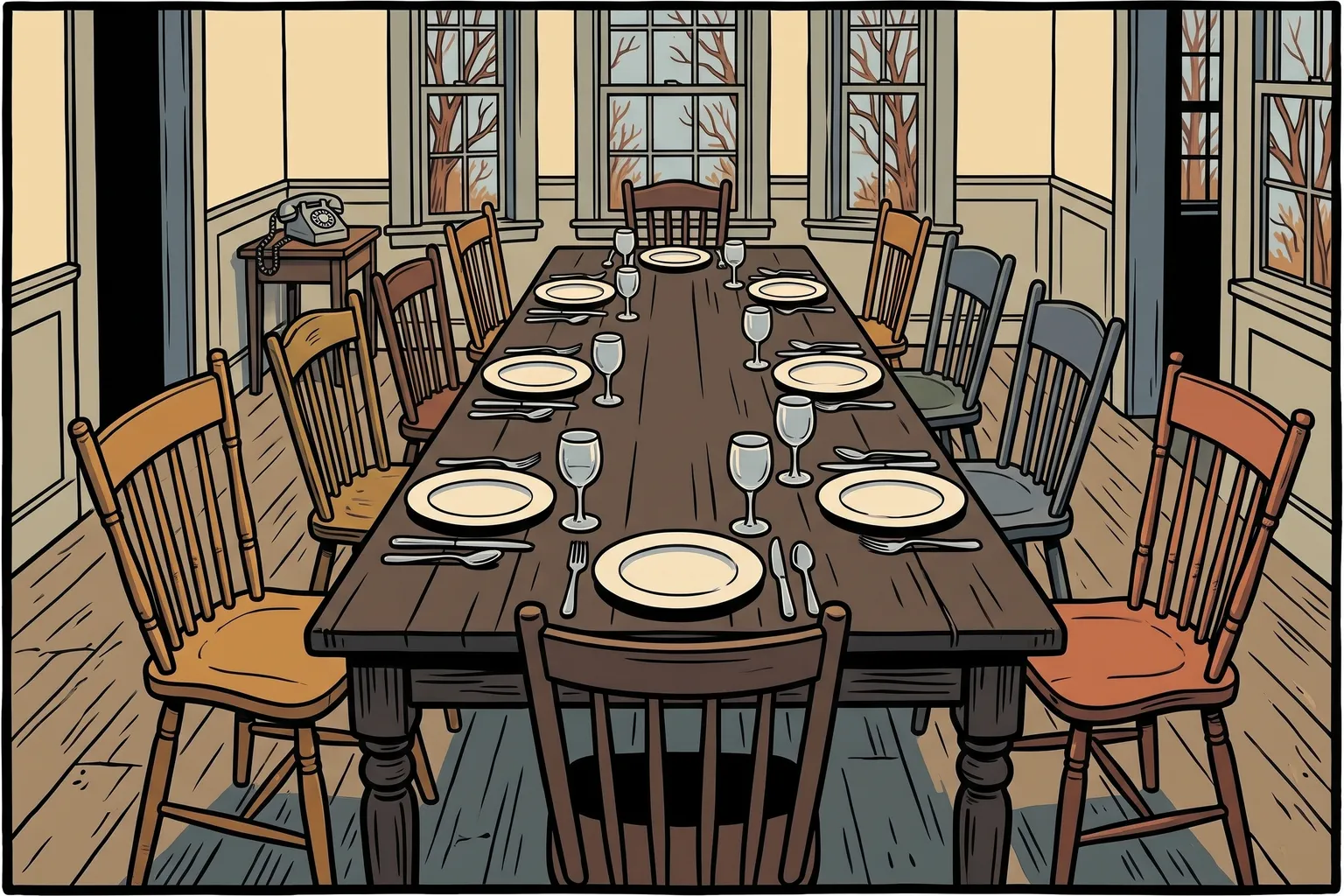
That last sentence is the one that stings. I know it does. You have spent forty years building a holiday table that felt necessary, central, irreplaceable. Two daughters who knew the way home in their sleep. Recipes that had to be the same or the holiday wasn’t the holiday. A game with the same argument about the same disputed rule, ending the same way it always ended. And now you’ve been informed, without the courtesy of a real conversation, that the main holiday comes to you only every other year, and that the other years you get the Sunday after, the quieter slot, the one no one else wanted. The Sunday after Thanksgiving. Christmas on even numbers. You understand what those words mean. They mean you are no longer the default center. You are one of several.
This is a real loss, and I’m not going to call it something smaller. The version of family life you carried, the one where the whole apparatus kept arriving at your door twice a year without fail, that version is over. Your daughters didn’t take it from you. It ended the way these things end, gradually and then all at once, when the grandchildren started arriving and the in-laws needed to be accounted for and everyone needed a system. Which doesn’t make the news any less jarring when it lands as a telephone announcement with no room for discussion.
Here is what I want you to do. Don’t send the email. Not because the email is wrong on the facts, but because an email full of grievance will make your daughters defensive, and defensive people can’t hear you. What you need right now is for them to hear you.
Call your older daughter instead. Not to challenge the arrangement, not to negotiate the calendar, but to tell her plainly how it felt to find out this way. Something like: I felt managed rather than consulted, and that surprised me. I’m not asking you to tear up the schedule. I want to understand how you two made this decision without me in the room. That conversation, done plainly and without the draft email’s accumulated injury, has a real chance of landing. It tells her you are someone who can be spoken to directly. That matters more, in the long run, than winning any argument about Thanksgiving, which you are not going to win anyway.
The second thing I want you to do is take a harder look at what you’ve actually been handed. The Sunday after Thanksgiving. Christmas on even years.
I won’t tell you these are equivalent to Thanksgiving itself and Christmas every year. You already know they’re not. But here is something worth sitting with: the Sunday after Thanksgiving is a day nobody else is fighting over. The in-laws are home. The pressure of the big day is behind everyone. What’s left is the exhale. Several people have told me over the years that the gathered-after holiday, the slower one, the one without the centerpiece roasted and rested since Wednesday afternoon, turns out to be the occasion where everyone finally sits down and says the thing they didn’t have time to say two days before. Your grandchildren running on fumes and willing to be still. Your daughters released from production. That Sunday could become something real on its own terms. I won’t promise you it will. I am saying it’s possible, and what you build around it is more up to you than it feels right now.
One thing I’m asking you not to do. Don’t say out loud, to your daughters or to anyone else, that the schedule feels like a ranking. Even though it does. The moment you say it, the conversation becomes about the schedule rather than about you, and you’ll spend the next five Novembers relitigating something you cannot change. What you want is to stay close to your daughters and present in your grandchildren’s lives. That isn’t a fight about who gets Thanksgiving. That is a relationship that requires tending, the same way it always has, on terms that are different now.
Send the email to no one. Draft a different one in your head, the short version that simply asks how this got decided without you. Then put down the email and call your older daughter.
What she does with that call will tell you what you need to know.
Lorraine