Dear Lorraine,
My brother Danny is sixty-one. I am sixty-five. We’ve been in each other’s lives our whole lives, the two oldest kids in a small house in the same town where we both still live.
Danny has always been difficult. Even at twenty-five, he needed to be the one who was right, who was wronged, who deserved more recognition than he got. We worked around it. Our mother called it “just how Danny is.” I had other names for it that I kept to myself at family dinners.
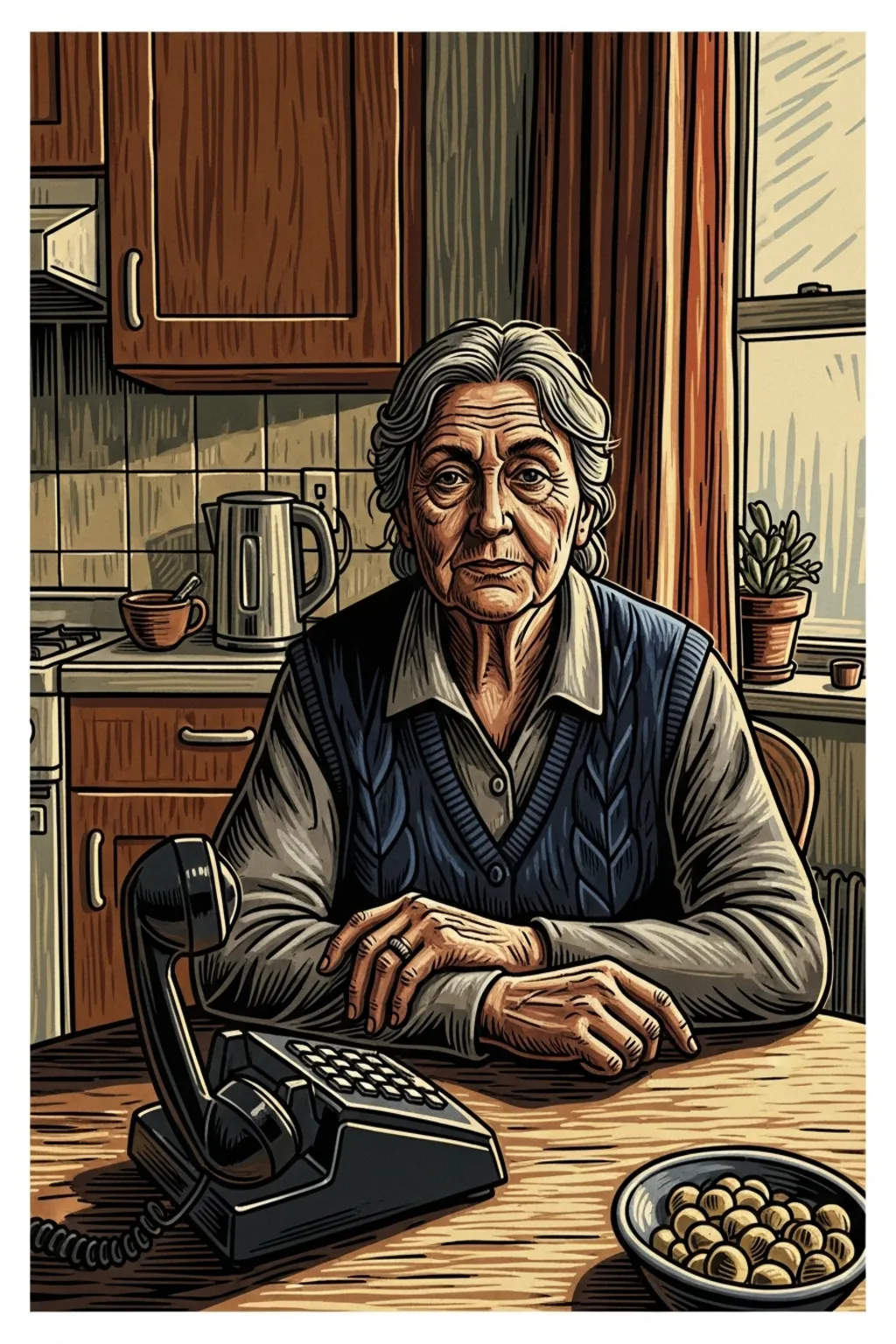
For years that was fine enough. You make room for the people you love, and I did. But lately my patience for “just how Danny is” has shrunk to almost nothing. When I called to wish him happy birthday last March, I spent forty minutes listening to him relitigate a slight from our cousin’s wedding in 2019. I couldn’t get a word in. When I finally got off the phone, I sat at my kitchen table for a while.
Here’s what I felt: nothing. Not frustrated. Not angry. Just empty.
I don’t think Danny is going to change. I’m pretty sure I’ve known this for a long time. But I feel guilty even writing this: at sixty-five, is it okay to stop trying? Not to cut him off. Just to stop showing up the same way, hoping for something different.
Still Hoping in Hartford
Dear Still Hoping,
The detail I want to stay with is this: you sat at your kitchen table and felt nothing. Not frustrated. Not hurt. Nothing. You included that word almost in passing, but I want to make something of it, because it matters.
Frustration means you still expect something. Anger means you want things to be different. Nothing means the part of you that was doing the hoping got tired and sat down. That’s what forty years of “just how Danny is” eventually produces. Not a breaking point. A numbness. And you’re asking me whether you’re allowed to feel it.
You are.
Now here is the distinction that matters, and I think it’s the one you’ve been circling without quite being able to name: there is a difference between someone who is difficult and someone who is genuinely not able to be different. Both are hard to be around. But you manage them differently, and knowing which one you’re dealing with changes what you owe them.
The signs of emotional immaturity are usually recognizable once you name them plainly. Someone who always has to be right. Someone who hears a simple disagreement as a personal attack. Someone who can’t let a thing go, even years later, even at a birthday call that belongs to him. Someone who apologizes, if they apologize at all, in a way that returns to themselves within minutes, the kind of apology that lowers the temperature without changing anything. Ruth Ann Pemberton wrote something for this publication about what a real apology actually requires, and reading it is useful partly because it shows you what it looks like when someone actually can give one. Danny’s version, from what you describe, sounds like the other kind. You’ve been naming these things silently for decades. “Just how Danny is” was your family’s way of saying: we see it too, and we don’t know what to do with it either.
If this pattern sounds familiar from other relationships in your life, not just Danny, there’s an earlier column on what it costs to love someone who can’t make room in a conversation for anyone else. That situation is different from yours, but the exhaustion has the same shape.
Here’s what I’d ask you to notice: the difference between difficult and genuinely incapable doesn’t show up in the behavior itself. It shows up in what happens when you carefully, honestly say something true. Can this person hear “that hurt me” and stay in the room? Can they get defensive and then come back? Do they have any real curiosity about what you’re carrying, even if it takes them a while to get there? Or do they go cold, pivot, minimize, and then act the following week like nothing happened?
You have sixty-five years of data on Danny. You’ve run this test without realizing that was what you were doing, probably dozens of times. And I think you already know the answer, or you wouldn’t be sitting at your kitchen table feeling nothing.
Here is what stopping actually means, and what it doesn’t. It doesn’t mean cutting Danny off. It doesn’t mean a confrontation or a declaration or a door closing with drama on both sides. It means stopping the particular thing you’ve been doing that has never once worked: showing up and hoping this time is different. Calibrating what you bring to him to match what he can actually hold. He can probably hold some things. Family news. The logistics of each other’s lives. The small talk that doesn’t require him to be curious about anyone but himself. You can keep your brother in your life and stop expecting depth from someone who doesn’t have it. Those aren’t the same decision.
The guilt you feel about even writing this letter is worth naming too, because it’s what keeps people in positions that cost more than the relationship gives back. The guilt says: good people don’t give up on family. What I’d say back to that guilt is this: you’re not giving up on Danny. You’re giving up on the version of Danny that doesn’t exist. Those are different things entirely. You’re allowed to love a sibling exactly as much as he makes possible and stop punishing yourself for not being able to love him more than that.
You asked whether it’s okay to stop trying. I’d ask you to reframe the question slightly. It isn’t whether to stop, but what to stop. Stop bringing him your real things. Stop hoping the next call will be the one where he asks how you are and actually wants to know. Stop sitting at your kitchen table afterward waiting for the emptiness to lift.
That isn’t abandonment. It’s finally acting on sixty years of information.
Lorraine Kessler is a retired clinical social worker who spent thirty years in private practice in Doylestown, Pennsylvania, specializing in midlife and later-life transitions. Write to her at letters@sundayeveningreview.com.