Dear Lorraine,
I retired six months ago. I was an electrical engineer with the same regional utility company for thirty-eight years. Dispatch management, outage coordination, the person on the other end of the phone at two in the morning when something big went down. I was good at it.
I thought I’d love this. I had a list. Golf more. Fix the deck. Help my wife with the garden.
What I’ve actually done is wander around the house picking up hobbies for a week and then putting them down again. Started woodworking, stopped. Bought a road bike, rode it twice. I stand in my kitchen sometimes and just look at it. My wife says I need to commit to something, and she’s not wrong, but I can’t seem to make myself care.
Three weeks ago she left an article on the counter about retirement and identity. I read it over my coffee. It described me exactly. I didn’t say anything to her about it.
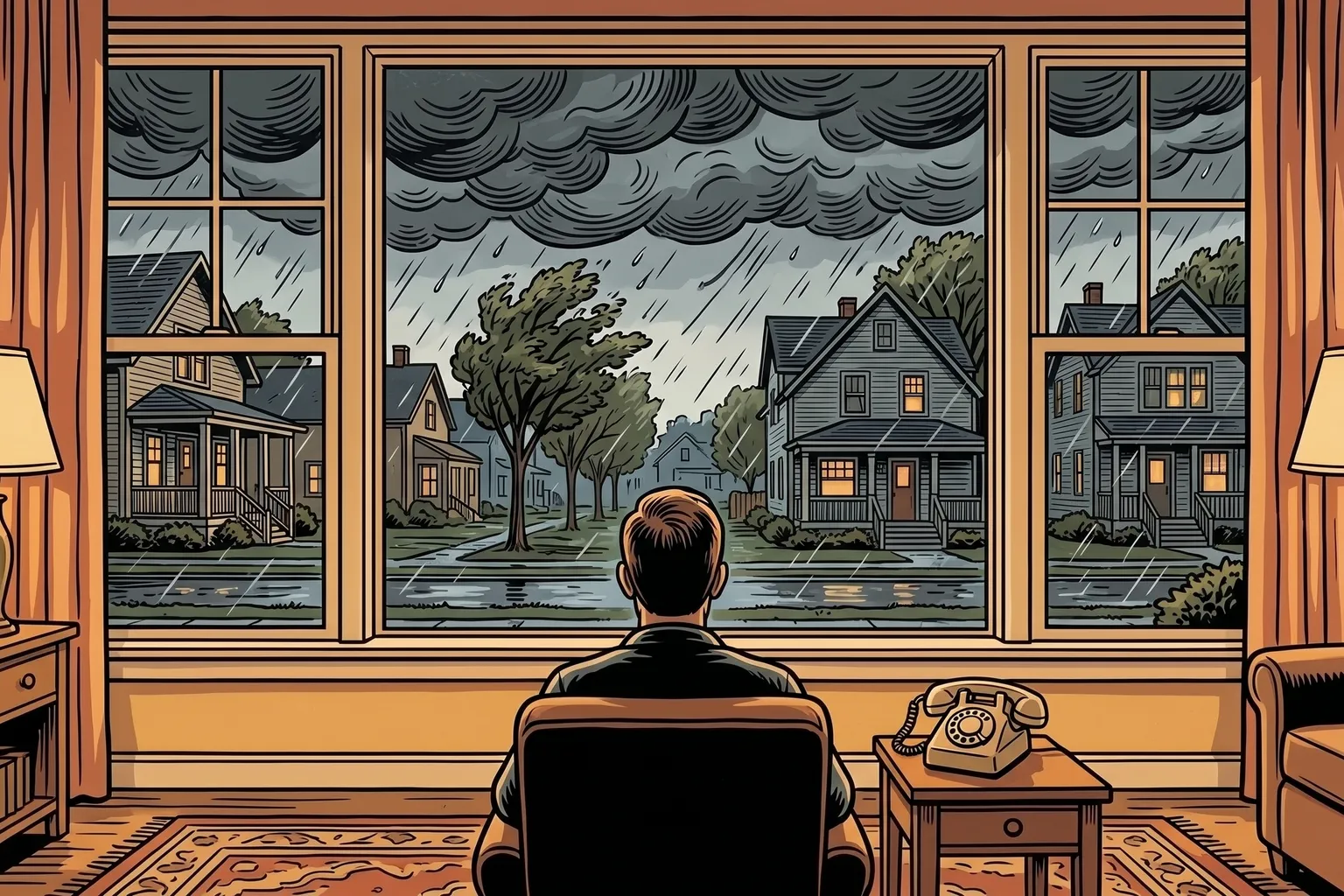
Here’s what I can’t shake: for thirty-eight years, I knew who I was. I was the guy who showed up when things broke. Last month we had a bad storm. My phone never rang. I sat in the living room and watched it pass through the window, and I didn’t know what to do with myself.
I have never felt invisible in my life until now.
Frank in Fort Wayne
Dear Frank,
The storm.
That’s what I want to stay with. Not the woodworking, not the road bike, not even the article your wife left on the counter. The storm.
You sat in the living room and watched it come through the window. The power stayed on. Your phone didn’t ring. And you didn’t know what to do with yourself. You included that almost as an aside, but it isn’t an aside. It’s the whole thing.
For thirty-eight years, when something broke, people called Frank. Not just any engineer. Not the next name on a list. They called you, specifically, because you were the one who knew what to do when the problem was too big to wait until morning. You were the person the emergency needed. That isn’t a job description. That’s an identity. And six months ago you handed in your badge and nobody told you the identity was also in the box.
Here is what I want you to hear, and I want you to hear it plainly: you are grieving. What you’re describing is grief. Not boredom, not restlessness, not a project-management problem that a road bike will solve. You lost something real, and you haven’t let yourself call it a loss because nobody died. There’s no service, no casserole, no card in the mail. The losses we don’t have rituals for are the ones that go unnamed the longest, and unnamed grief is the kind that just sits in you and waits.
Your generation of men was trained to solve problems, not to sit in the living room of one. You were trained to be useful, and being useful was proof that you were worth something, and that equation ran for almost four decades and then stopped mid-sentence. The fact that you chose to stop, that you signed the paperwork and made the plan and had the list, doesn’t make the stopping any less real. You can be glad you retired and grieve what you lost in the same breath. Both things are true.
Now. Stop trying to fix it.
I talked with a lot of retired professionals in my years of practice, more than I can count, and the ones who struggled longest were the ones who treated being lost as a problem to be solved on a schedule. They’d find the article, the one your wife left, or one like it, and decide they’d have themselves sorted out by spring. They’d take the classes, join the organizations, commit to the bikes. The bike, to be clear, has done nothing wrong. The bike is exactly what it’s supposed to be. The problem isn’t the bike.
The problem is that grief doesn’t move on a timeline you set. You can’t manage it into submission. You move through it, which takes longer than six months, and anyone who tells you otherwise is selling something. You’re six months in. You’re, by any honest measure, in the early part of this. That isn’t a failure. That’s accurate information.
Now let’s talk about your wife.
You said she’s frustrated. I believe that’s how it looks from where you’re sitting. I want to offer you a different way to read what she’s actually doing. She found an article and left it on the counter without saying anything. She didn’t lecture you. She didn’t hand it to you with an explanation. She just put it there, where you’d find it, and waited. That isn’t a frustrated woman. That’s a worried one.
There’s a difference between frustrated and worried, and it matters. Frustrated means she wants you to change. Worried means she wants to understand what’s wrong and doesn’t know how to ask. Ruth Ann Pemberton has written about what it looks like to love someone through a hard transition when you can’t get to where they are. Her piece on aging parents is a different situation, but the particular loneliness of watching someone you love go through something while being kept on the outside of it looks the same. Your wife has been reaching toward you for six months in the only ways she knows how, and she’s been getting “it’s fine” back. “It’s fine” in a voice that isn’t fine is its own kind of transmission, and she’s been receiving it.
You read that article and didn’t say anything to her. She left it there for you and got nothing back. I’d guess she doesn’t know whether to push or step back, and so she does both at different moments, and from the inside that registers as frustration. It isn’t. It’s worry looking for a door.
Here is the one thing I want you to do.
Tonight, or tomorrow, when it feels like the right moment, tell your wife what happened when you read that article. Not the plan going forward. Not what you’re going to do about it. Just this: I read what you left me. It described exactly what I’ve been feeling. I didn’t know what to say then. I still don’t, really. But I wanted you to know I read it.
That’s all. Not a solution, not a roadmap, not a commitment to the woodworking. Just one honest sentence to a person who is worried about you and doesn’t know what to do with the worry. She can’t help with something she isn’t allowed to see.
You’re not broken, Frank. You’re in the part nobody talks about, and you’ve been trying to get through it alone, which is the hardest possible way to go. Give yourself time. Give her something real to hold onto. The storm will come around again.
Lorraine Kessler is a retired clinical social worker who spent thirty years in private practice in Doylestown, Pennsylvania, specializing in midlife and later-life transitions. Write to her at letters@sundayeveningreview.com.