Dear Lorraine,
I moved to Charlotte, North Carolina eighteen months ago to be near my daughter and her family after I retired from thirty-one years of teaching art in a middle school in Ohio. I knew starting over would take adjusting. What I didn’t expect was how completely lost I would feel about something as basic as making friends.
Back in Ohio, I had the same close friends for twenty years. I met them through the school where we taught, or through our kids’ activities, or they lived down the block and we ended up in each other’s driveways enough times that something just took root. I never thought much about how those friendships happened. They just did.
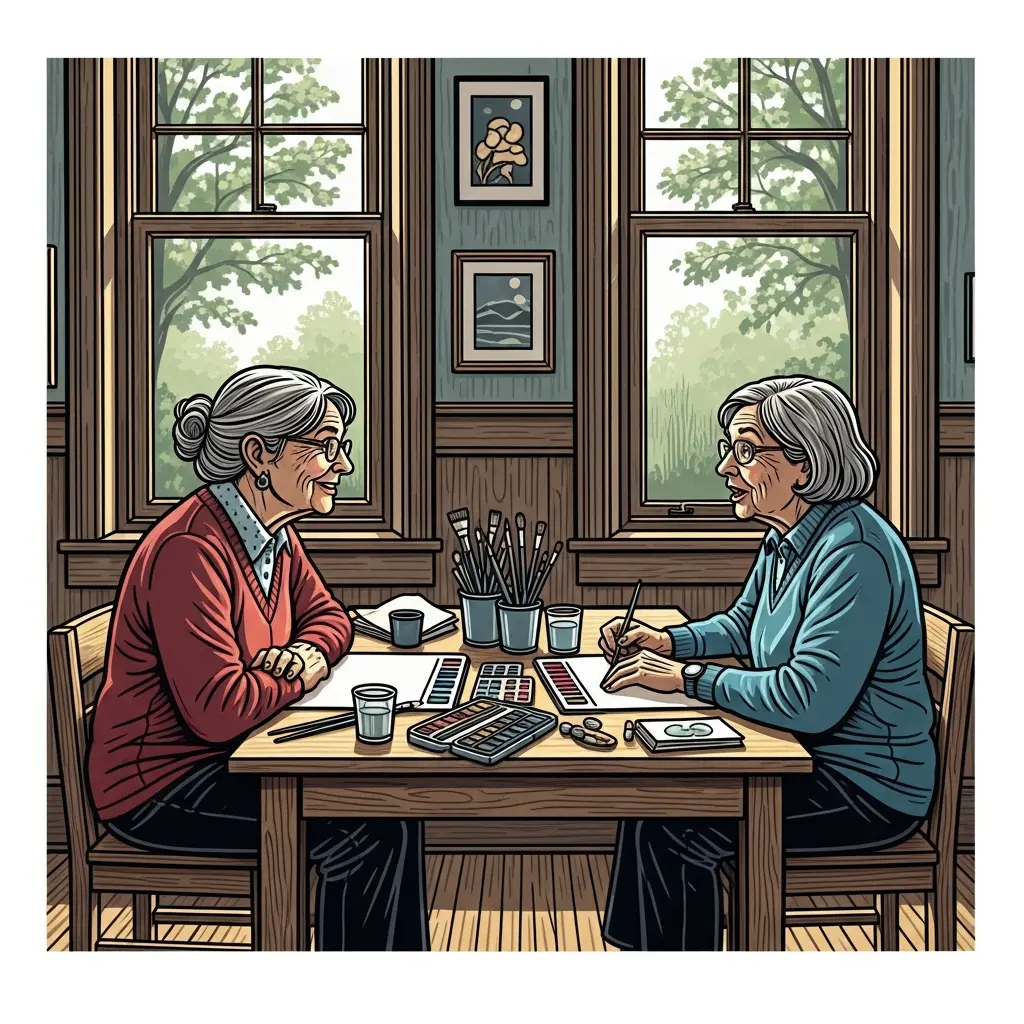
I’ve joined a watercolor class at the community center. I go to a walking group on Tuesdays and Thursdays. I’ve been to three neighborhood association meetings. I like these people fine. But eighteen months in, I don’t have a single person I could call if something went wrong. Not one person who actually knows me.
Is it too late? Or is this something I simply have to learn how to do?
Wishing I Knew in Charlotte
Dear Wishing I Knew,
You’re not too late. But you are, for the first time in your adult life, starting from nothing, and that’s harder than anyone tells you. I want to be honest about that before I say anything practical.
The friends you made in Ohio came to you through structures. School. Work. A shared geography and thirty years of accumulated proximity. You didn’t build those friendships so much as they grew up around you, the way things grow when conditions are right. The scaffolding was already there, the carpool, the staff lounge, the Fourth of July party down the street, and you showed up and the friendship assembled itself in the spaces in between. That is how most adult friendships form. It works beautifully until you step away from every structure that made it possible.
What you’re doing now, the watercolor class, the walking group, the neighborhood meetings, is the right category of activity. You’re in the right rooms. But you haven’t crossed the line from acquaintance into something real yet, and that crossing is exactly the part nobody teaches you, because for most of your life you didn’t need to be taught. The circumstances did the work. Now you have to do it yourself.
Here is the most common mistake people make when they’re trying to figure out how to make friends as an adult: treating each new activity like a single test. You try the book club once, it feels awkward, nobody lingers afterward, and you drive home deciding the group isn’t for you. What you don’t see is that the second meeting is different. The third time, someone remembers your name. The fifth time, someone saves you a seat. That stilted first gathering wasn’t a failure. It was the first rehearsal of something that needs many rehearsals before it becomes real. Consistency matters more than finding the right group, because any group eventually becomes the right group once you’ve been in it long enough to stop being a newcomer.
Watercolor classes, for what it’s worth, have a specific property: everyone stares at their own paper for ninety minutes. The real talking happens while you’re packing up, or when someone asks to borrow a brush, or in the parking lot afterward. The class isn’t where the friendship starts. The class is what gives you a reason to be in the same place with the same people on a regular basis. The friendship, if it’s going to happen, starts in the margins.
This is the thing I want you to hold onto: you won’t feel it forming, not at first. In your previous life the circumstances were creating it for you. Now you have to decide to keep showing up before you feel any particular reason to, which requires faith in something that hasn’t proved itself yet. That’s uncomfortable. Do it anyway.
There’s also a meaningful difference between attending a class and being the person who sets up the tables, or coordinates the supply list, or brings the painter’s tape on the first day. A role inside a group gives you contact with people outside the formal meeting time, and that’s where real friendship actually starts. Being needed is a short walk from being known.
Ruth Ann Pemberton wrote a piece for this publication a few months back about men in their sixties who discover they have no one to call. The loneliness she describes isn’t particular to men. It’s the specific loneliness of people who were well-connected their whole lives and then found themselves back at the beginning with none of the structures that made connection feel natural. You’re not unusual. You’re not doing anything wrong. You’re in a situation that is genuinely hard for almost everyone who lands in it, and most of them have no idea it’s supposed to be this hard.
One more thing, and I’ll be direct: try to lower your expectation of what a friend has to be right now. You wrote that you don’t have a single person you’d call if something went wrong. That’s the bar, and it’s a meaningful bar. But the woman you walk with on Tuesdays isn’t nothing, even if she isn’t the person you’d call in a crisis yet. Connection builds in layers. The casual layer comes first. You’re already there. The real layer comes after time and repetition and one conversation that went deeper than either of you planned.
You asked me if it’s too late. It isn’t. But I’d be failing you if I said it was going to be easy or fast. It will take longer than it should, and some attempts won’t work out, and there will be Tuesday walks where you drive home thinking none of this is going anywhere. That is not the friendship failing. That is the friendship taking the time it needs.
Keep going to the Tuesday walks.
Lorraine Kessler is a retired clinical social worker who spent thirty years in private practice in Doylestown, Pennsylvania, specializing in midlife and later-life transitions. Write to her at letters@sundayeveningreview.com.