Dear Lorraine,
I’ve been friends with Deborah for twenty-three years. We met in a quilting circle, and she was the friend who called when my father died, who drove me to the hospital the morning of my gallbladder surgery, who I have trusted in the way you trust someone you’ve watched handle their own hard things.
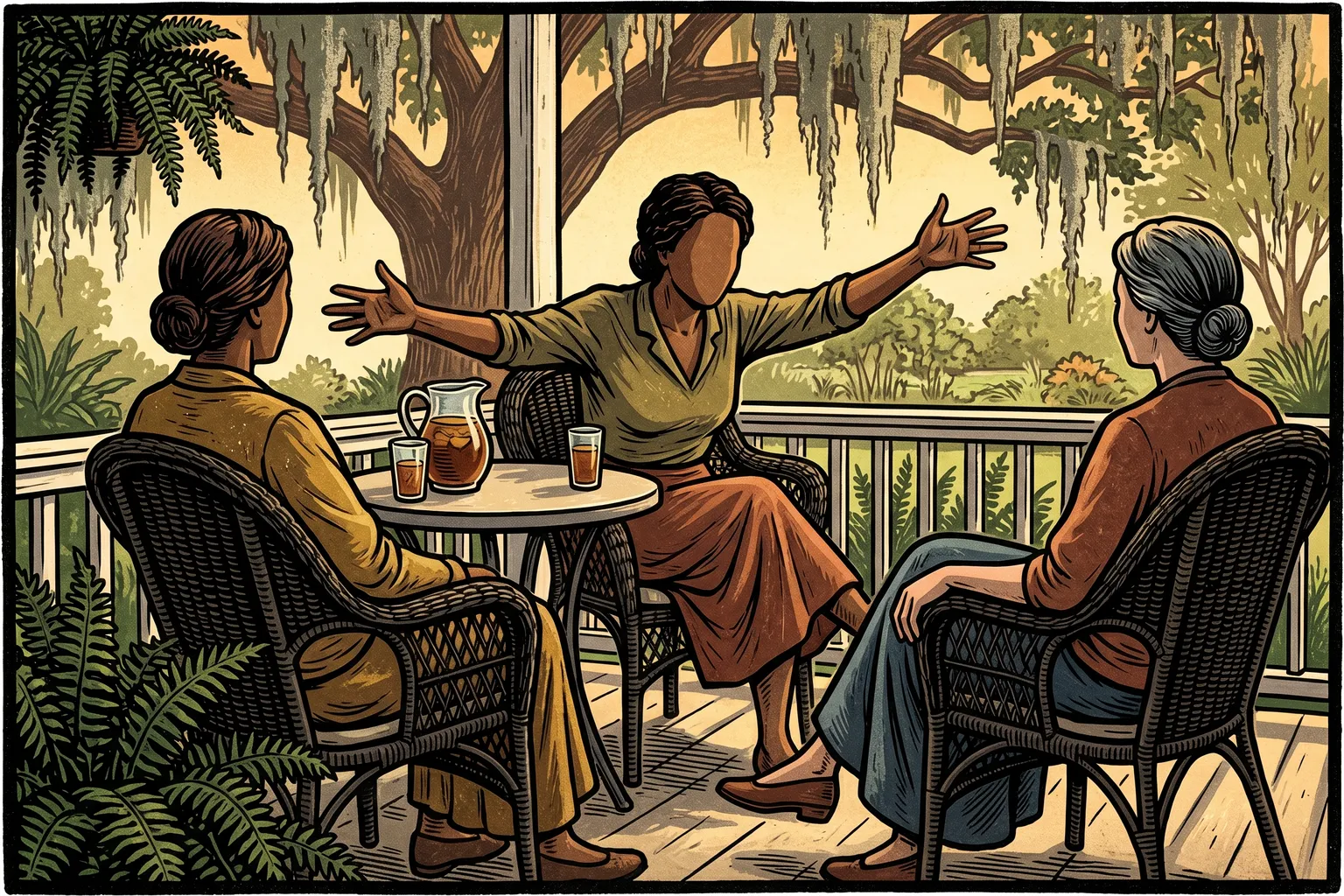
Over the last few years, though, I’ve started noticing something I can’t stop noticing. Every situation, every gathering, every conversation eventually comes back to her. Not cruelly. She doesn’t do it to wound anyone. She does it the way some people hum without knowing they’re doing it: reflexively, without apparent awareness. When I told her about my first grandchild last October, she turned within a minute to her own daughter’s fertility struggles. When our group of friends went to Savannah for a long weekend, she steered every dinner conversation until the rest of us had mostly stopped trying. Two women in our circle have quietly stopped coming to things Deborah attends.
I love her. I have twenty-three years of love for her. But I leave every conversation feeling like a supporting character in someone else’s story. And lately I find myself wondering: was it always this way, and I just didn’t see it?
I don’t want to end the friendship. But I also can’t keep showing up and expecting something different.
Second Fiddle in Savannah
Dear Second Fiddle,
Here’s the detail I want you to sit with for a moment: two women in your circle have quietly stopped coming to things Deborah attends. You wrote that almost in passing, like it was background information. It isn’t. It tells you that what you’ve been seeing is real, that others can see it too, and that some of the people in your life have already decided how much of it they’re willing to carry. You haven’t decided yet. That’s why you wrote to me.
Now I want to address your actual question, which isn’t whether you’re imagining this. You’re not. The question that matters is the one you buried at the end: Was it always this way, and I just didn’t see it?
Probably yes. And I don’t say that to be hard on you. I say it because I want you to understand what you’re grieving. It isn’t a friendship that changed. It’s the version of the friendship you believed you had for twenty-three years, which turns out to have been something slightly different than you thought. That’s a real loss. It’s also something you can come through.
There’s a kind of person who can only sit in the driver’s seat. Even in someone else’s car. Deborah isn’t withholding attention from you and giving it to someone else. The attention isn’t being diverted. It isn’t really available. People who pull every conversation back to themselves aren’t making a choice in the moment. They’re operating from something much older and deeper than a dinner in Savannah. That doesn’t make it less exhausting to be around. It just means that waiting for her to grow out of it isn’t a plan.
So what do you do with twenty-three years and a person who can’t fully be present with you?
You don’t have to leave. You can stay in this friendship. But you’ll need to be honest with yourself about what it is and what it isn’t, because the part that’s been wearing you out is expecting what she can’t give and feeling let down when she doesn’t give it.
What Deborah can offer you is probably real: history, loyalty, showing up in a crisis. Those calls and hospital drives happened. She meant them. She just can’t ride in the passenger seat of your story for long before she needs to be driving. Once you stop handing her your tender things and waiting for her to hold them, the friendship gets considerably less painful. Not perfect. Considerably less painful.
Save your real news for the people who ask follow-up questions. Bring Deborah your humor, your twenty-three years of shorthand, the things she can handle. There’s something worth keeping there, even if it isn’t everything you thought it was.
You asked whether deciding to live with this is lying to yourself. That’s the wrong distinction. You’re lying to yourself when you pretend it’s something it isn’t. You’re not lying to yourself when you stay in something with clear eyes. Those are different things entirely.
You’re allowed to love this friendship for what it is. You just have to stop expecting it to be what it isn’t. That isn’t settling. That’s seeing.
Lorraine Kessler is a retired clinical social worker who spent thirty years in private practice in Doylestown, Pennsylvania, specializing in midlife and later-life transitions. Write to her at letters@sundayeveningreview.com.
This column runs alongside an earlier one about a similar pattern in a sister. If that version of the problem sounds familiar, The Person Who Takes Up All the Room covers it.