Dear Lorraine,
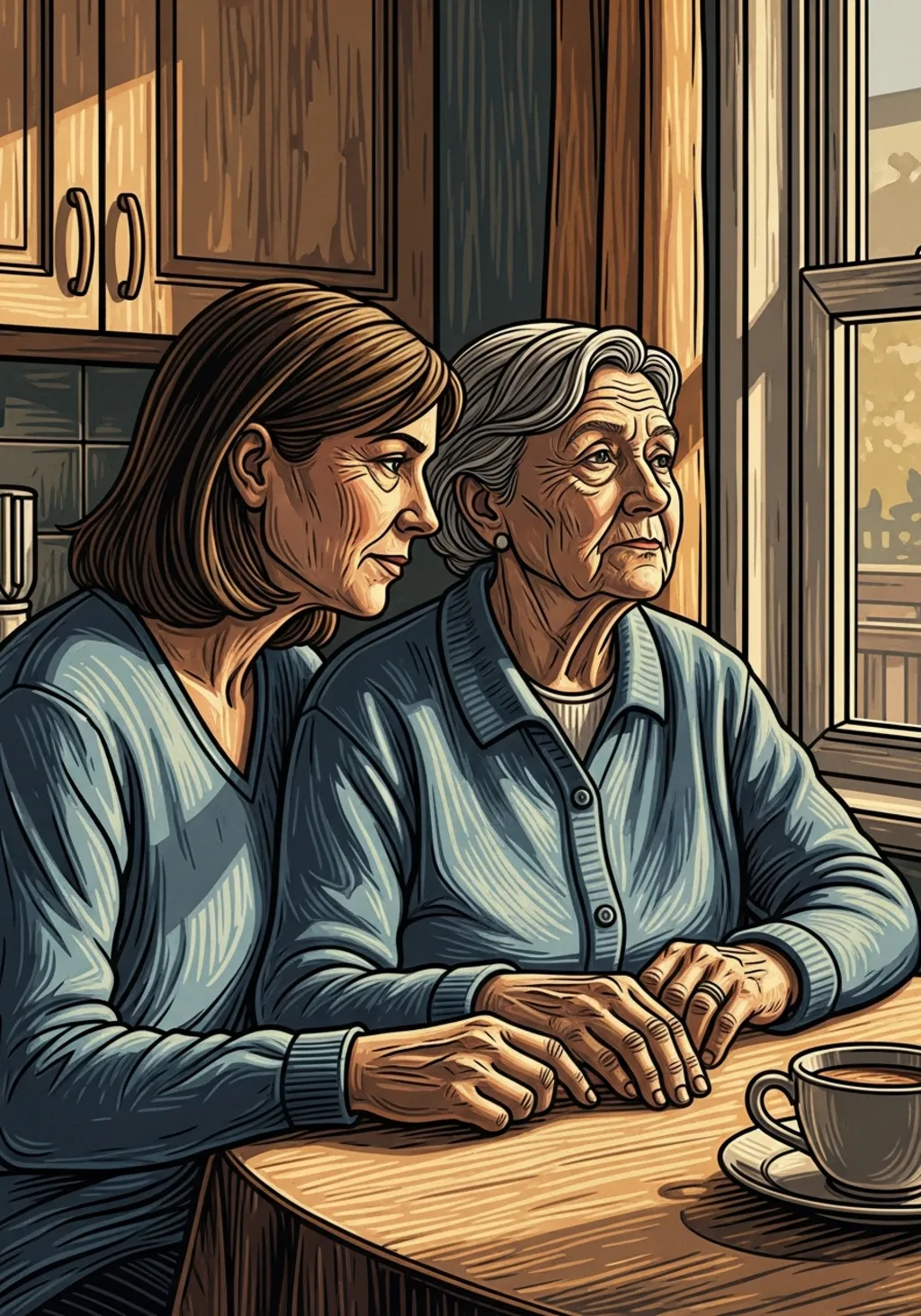
My mother was diagnosed with dementia two years ago. I am her primary caregiver. I drive to her apartment every morning, I call her every afternoon, and I spend every evening wondering if I did enough.
Here is what nobody told me: she is disappearing in layers, and I am losing her in a way that has no name. Last week she asked me where her sister Ruthie was six times in the same hour. Ruthie died in 1984. The first time I said, Ruthie died a long time ago, Mom. By the sixth time I snapped at her. I told her to stop asking me that. She looked at me like I was a stranger.
She calls me “that woman” now when she talks to the other residents in her building, and I’m standing right there when she does it. Her apartment used to smell like her. Now it smells like a place where someone old lives.
She was the warmest person I knew. She is still warm sometimes, for a few minutes in the morning. Then she goes somewhere I can’t follow.
I love her. I am furious at her. I am furious at myself. I don’t know how people do this.
Trying in Tulsa
Dear Trying,
There’s something you mentioned almost in passing. Your mother calls you “that woman” when she talks to her neighbors, and you’re standing right next to her when she does it. You included it on the list of things that have changed, between the smell of the apartment and the afternoons when she goes somewhere you can’t follow.
That’s not on the list. That’s the whole thing.
You’re caring for a person who no longer recognizes, in those moments, that you are hers. You drive there every morning. You call every afternoon. You spend your evenings reviewing your own performance, running the tape back on the Tuesday when you snapped. And while you’re doing all of that, she is introducing you to neighbors as a stranger.
There’s a word for what you’re living with, and it isn’t stress and it isn’t burnout, though you have those too. It’s grief. Not the kind that waits until the end, the kind with a service and cards in the mail. The kind that runs alongside a person who is still breathing, still asking about Ruthie, still sometimes warm in the morning. The death hasn’t happened and the grieving has been going on for two years. There’s no ceremony for it, no date on the calendar, no moment where the world pauses to acknowledge what you’re carrying. You are losing your mother in slow pieces while you’re still taking care of her, and both of those things are exhausting in ways that are very hard to explain to someone who hasn’t done it.
You are allowed to say that out loud.
Now let me tell you what actually helps. Not the inspirational kind. The practical kind.
Stop correcting her about Ruthie. I mean this specifically, so let me explain why. When your mother asks where her sister is, she isn’t asking a factual question. Her brain has lost access to the year and the memory of the loss, but what she’s feeling, the wanting, the reaching toward someone she loved, is completely intact. What she’s actually saying, in the only language available to her right now, is something closer to: is there someone here who loves me? When you tell her Ruthie died a long time ago, you’re asking her to process a loss she’s no longer equipped to hold. She’ll forget you said it and ask again in three minutes, and you’ll say it again, and by the sixth time you’ll be back in the Tuesday. Instead, try answering the feeling underneath the question. “You’re thinking about Ruthie. She loved you so much.” You’re not lying to her. You’re meeting her where she is. This sounds like a small adjustment. It isn’t small. It’s the difference between an hour that grinds you down and an hour that leaves a little air in it.
Mornings are yours. You already know this. You said she’s still warm for a few minutes in the morning before she goes somewhere you can’t follow. Protect those minutes. That’s when the real visits happen, the real conversations, even when they’re brief. Dementia tends to follow a pattern where afternoons and evenings are harder, more confusion, more agitation, more of what caregivers call sundowning. Her brain gets tired as the day wears on, the same way a radio loses its signal as you drive away from the tower. Close the blinds before the afternoon light shifts. Play music she knew when she was young. Keep the routine as predictable as you can, because routine is the scaffolding her memory still uses to move through the day. Don’t schedule the hard things for two in the afternoon. If you can arrange your visits to stay consistent, the same days, the same time, you’re working with her brain instead of against it.
Ask for help before you’re desperate. You’re past that point already, I think, but I’m saying it for the next stretch and the one after. Adult day programs give her time with other people in a structured setting while you’re somewhere else, not managing the afternoon, not being the only thing standing between her and confusion. Respite care exists so you can have a day that belongs to you without it being an abandonment. Asking for help isn’t giving up on her. It’s keeping yourself functional enough to still be the daughter she needs when you walk through the door. Ruth Ann Pemberton has written about what it looks like when families finally stop trying to carry everything alone; her piece on aging parents covers that moment and what becomes possible when other people are finally let in.
You also need people who understand what you’re carrying. Not people who say “I can’t imagine” and change the subject. People who know exactly what you mean when you say she goes somewhere you can’t follow. There are grief support groups specifically for families living through dementia, and I’d encourage you to find one near you. The isolation of this kind of caregiving is one of the things that doesn’t get talked about enough. You’re with her every morning, on the phone every afternoon, thinking about her every evening, and you’re doing it completely alone in a way that’s almost impossible to explain to anyone outside of it. You don’t have to do it that way.
About the Tuesday when you snapped at her.
You’ve been carrying it, I can tell. She asked about Ruthie for the sixth time. You told her to stop. She looked at you like you were a stranger.
You’re not a bad daughter. You’re a person who hit a wall at the moment when the wall was right there. Every caregiver I’ve ever worked with has a version of that Tuesday. The guilt is a sign that you still care, which was never in question. If you want to carry anything useful forward from it, ask yourself this: what would have helped me not be in that position? More sleep the night before. Someone else to do the Tuesday morning. A day off the week before that. Those are practical answers to a practical problem, and they’re more useful than the guilt.
What I want you to hear is this. Those morning minutes when she’s still warm and still yours, even briefly, they’re real. They’re not a tease. They’re what’s left of the relationship, and it is still the relationship. She has changed and she is still your mother, and you can love her in the form she’s in right now and grieve the form she was in at the same time. You don’t have to choose.
The most useful dementia caregiver tips aren’t complicated: meet her where she is, protect the mornings, build other people into the caregiving so you’re not the only one carrying it. But underneath all of that is the thing I want to say most directly. You are allowed to need your own life. Not as a reward for being a good caregiver. Now. You’re allowed to walk out to the parking lot sometimes and sit there for ten minutes before you go back in.
She still has you. You show up every morning. She may not remember every visit, but the steadiness of you is something she still feels, even when the names are gone.
That’s not nothing. That’s everything.
Lorraine Kessler is a retired clinical social worker who spent thirty years in private practice in Doylestown, Pennsylvania, specializing in midlife and later-life transitions. Write to her at letters@sundayeveningreview.com.