In 1952, a woman named Ethel Percy Andrus was trying to solve a problem that should not have existed. She was sixty-eight years old, a retired high school principal from Los Angeles, and she had recently discovered that a former colleague, a woman who had spent thirty years teaching, was living in a chicken coop. Not metaphorically. An actual chicken coop, converted to something barely habitable, because the woman’s pension was almost nothing and she had no other income and no family who could help.
Andrus had been retired for eight years by then. She had not planned to become an activist. She had planned to garden and read and travel modestly and live the quiet, orderly life of a person who had spent three decades running a school building. But the chicken coop changed the plan. She started investigating the conditions of retired teachers in California and found, with the particular fury of a woman who had spent her career solving problems, that the situation was not an anomaly. It was a pattern. Retired teachers, retired civil servants, retired anyone with a small pension or none at all, living in conditions that the country they had served would not have tolerated for its dogs.
She founded an organization. She lobbied. She wrote letters and gave speeches and did the relentless, unsexy work of political organizing on behalf of people the political system had finished thinking about. And somewhere in the process, in the speeches and the pamphlets and the correspondence with legislators, she needed a word for the people she was fighting for.
The word she reached for was not “old people.” It was not “the aged” or “the elderly,” which were the standard terms of the era, clinical and slightly chilly, the words you’d find in a government report filed between actuarial tables. Andrus wanted something that carried weight. Something that sounded like it belonged in the same sentence as “rights” and “dignity” and “contribution.”
The phrase she used, the phrase that was already circulating in pension advocacy circles by the late 1930s and that Andrus helped push into the national vocabulary, was “senior citizen.”
It’s worth pausing on the construction, because the engineering of it reveals the intention.
“Citizen” is a political word. It implies membership. It implies rights. It implies that the person being described belongs to the republic and has standing in it. This was deliberate. The pension advocates of the 1930s and 1940s were not merely asking for money. They were making a claim about status. The people they represented had worked, paid taxes, raised families, built the infrastructure of American civic life, and were now being treated, in their final decades, as a problem to be managed rather than a constituency to be served. “Citizen” was the corrective. You don’t manage citizens. You represent them.
“Senior” was the modifier that turned it into a category. And this is where the trouble started, though nobody noticed at the time.
The word had been used before in various combinations. Newspaper databases show scattered appearances of “senior citizen” in the late 1930s, usually in the context of pension campaigns and old-age assistance debates. The Townsend Movement, which had organized millions of older Americans behind Dr. Francis Townsend’s plan for a two-hundred-dollar monthly pension, had used various phrases to describe its constituency: “old folks,” “the elderly,” “our older Americans.” The Townsend Plan itself peaked around 1936, and though it failed as policy, it succeeded at something more durable. It demonstrated that older Americans could be organized as a political bloc. They had numbers. They voted. They could be addressed as a group.
“Senior citizen” was the phrase that crystallized all of this into two words. By the late 1940s it was appearing regularly in newspaper editorials and political speeches. By the 1950s, when Andrus was building what would eventually become the American Association of Retired Persons, it was standard vocabulary. By the 1960s, it was everywhere: in legislation, in marketing materials, on the signs at restaurants offering a ten-percent discount, on the placards at community centers and public swimming pools.
The phrase had done exactly what its creators intended. It had conferred dignity. It had replaced “the aged” with something that sounded like belonging.
And then it kept going.
Here is the thing about categories: they are never neutral, even when they are built with the best of intentions. The moment you name a group, you have drawn a line. On one side of the line are the people inside the category. On the other side is everyone else. The line creates a distinction that did not exist, or did not exist in that form, before the naming.
Before “senior citizen” entered the language, there were old people. This is not the same thing. An old person is a person who happens to be old, the way a tall person is a person who happens to be tall. The adjective describes an attribute. It does not define a class. But “senior citizen” is a noun phrase. It is a thing you become. You are not a citizen who is older. You are a senior citizen, a distinct category of person, separate from the unmarked category of people who are simply “citizens.”
I don’t think Andrus saw this coming. I don’t think anyone in the pension advocacy movement of the 1940s and 1950s sat down and considered the possibility that a phrase designed to elevate might eventually be used to segregate. But that is what happened. The category, once it existed, became a container. And containers, in a bureaucratic society, get filled.
By the 1960s, “senior citizen” had migrated from political advocacy into administrative language. Medicare, signed into law in 1965, didn’t use the phrase in its statutory text, but the public discourse around it relied on “senior citizens” as the understood beneficiary class. The Older Americans Act of 1965 created a federal infrastructure for services to older adults, and “senior citizen” became the shorthand that connected all of it: the centers, the meal programs, the transportation services, the discounts, the designated housing, the special hours at the grocery store.
Each of these was, individually, a kindness. Collectively, they built a world.
The world they built is one in which, at some point between your fifty-ninth birthday and your sixty-sixth, you cross an invisible line and become a different kind of person. Not legally, exactly, though the tax code and Medicare eligibility enforce their own version of the border. Culturally. You become someone who is expected to eat dinner early and play golf slowly and get ten percent off on Tuesdays and be grateful for the bus that runs between the community center and the pharmacy.
I am fifty-nine years old. I do not feel like a different kind of person than I was at forty-eight. I feel like the same person with more information. My knees are louder. My reading is better. The idea that sometime in the next six years I will become a “senior citizen,” that this phrase will be applied to me by restaurant hostesses and government agencies and the woman at the movie theater, fills me with something I can now name precisely: I bristle.
I’ve been trying to understand why. It isn’t vanity. I don’t mind being fifty-nine, and I won’t mind being sixty-five. What I mind is the category. I mind being moved, without my consent, from the unmarked group of people who are simply people into the marked group of people who are a special kind of people. The modifier is the problem. “Senior” does to “citizen” what a warning label does to a bottle. It changes the way you handle it.
The pension advocates of the 1930s were solving a real problem. People were living in chicken coops. People who had worked for decades were being discarded by an economy that had no mechanism for supporting them once they stopped producing. “Senior citizen” was a phrase of protest, a way of insisting that these people still counted. The dignity was genuine. The need was urgent. The intention was honorable.
But the phrase outlived its occasion. The emergency it was coined to address, the utter abandonment of older Americans by the economic system, has not been solved, but it has been institutionalized. We have Social Security, Medicare, the Older Americans Act, a sprawling network of services and programs and discounts and designated parking spaces. The emergency became a system. And the system needed a label for its clients.
“Senior citizen” became that label. It stopped meaning “a citizen who has earned special recognition” and started meaning “a person who qualifies for this particular set of services.” The dignity drained out of it one form at a time. Every time you check the box on a government form, every time a cashier asks if you’d like the discount, every time a sign directs you to the “senior” entrance or the “senior” menu or the “senior” rate, the phrase moves a little further from Ethel Andrus standing in front of a chicken coop, furious on behalf of a woman who deserved better, and a little closer to a sorting mechanism.
I keep coming back to the construction. “Senior citizen.” A word of rank welded to a word of belonging. The people who built this phrase were trying to say: these people matter. They are not discards. They are citizens of the first rank.
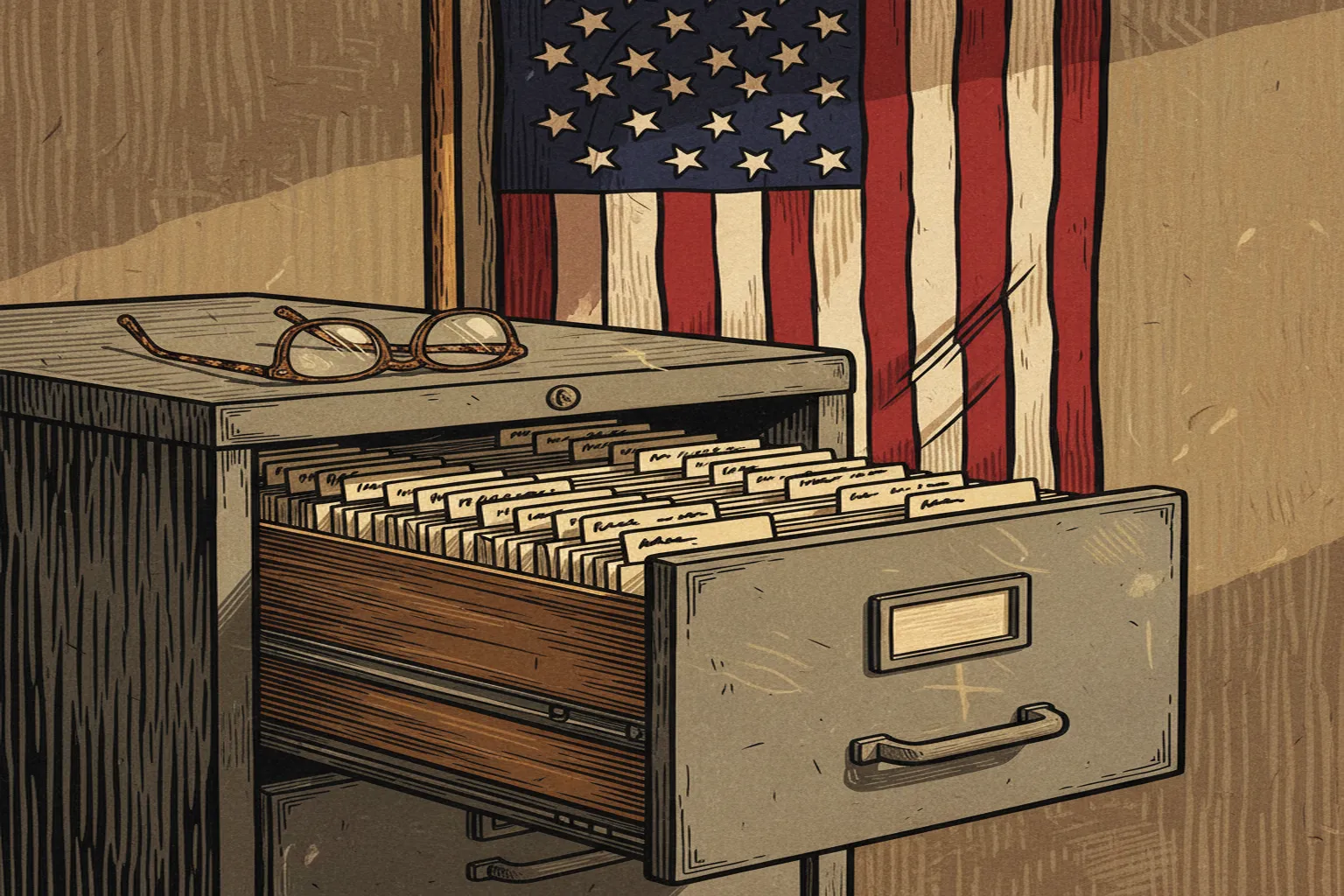
What we hear now, when someone calls us that, is something different. We hear: you have been reclassified. You are no longer in the main file. You have been moved to a special drawer, and the special drawer has a label on it, and the label is permanent, and you did not ask to be filed there.
Andrus was trying to open a door. The phrase she helped build has become, for many of the people it describes, something closer to a fence.
She would not have wanted that. But someone decided this, and here we are, sorted.
Warren Holt writes about ideas and culture for The Sunday Evening Review. He is the author of two books, including “The First Answer Is Usually Wrong.”