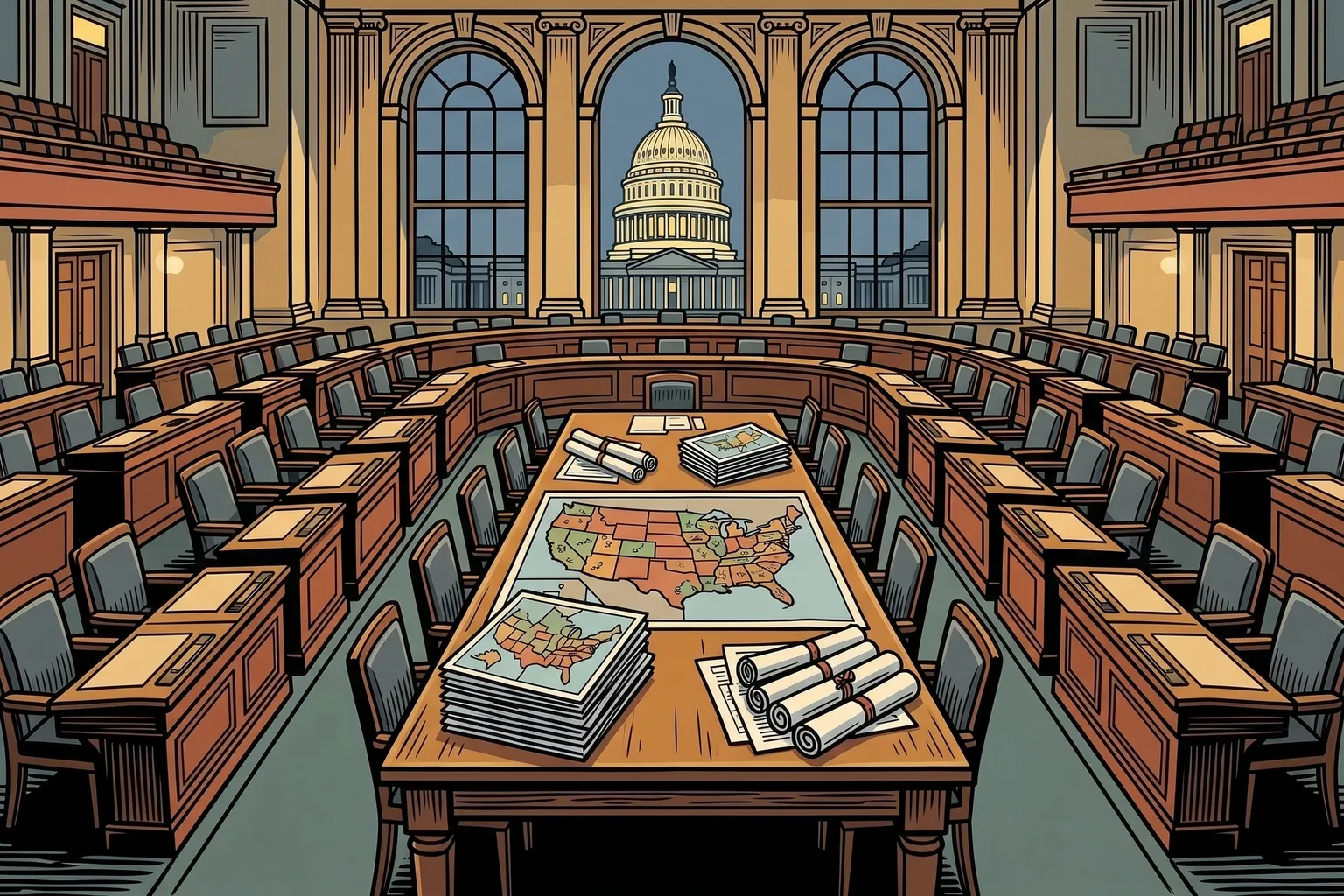
On Tuesday afternoon, the Supreme Court published its opinion in Louisiana v. Callais. Six to three. Justice Alito wrote for the majority. Justice Kagan dissented and read portions of it from the bench, a gesture reserved for moments when the disagreement runs deeper than the legal reasoning. She left out the word “respectfully.” If you’ve spent any time around institutions that run on decorum, you know what that omission costs.
The ruling didn’t strike down Section 2 of the Voting Rights Act. It changed what Section 2 requires. Since 1982, when Congress amended the law specifically to fix a gap the Court had opened two years earlier, a voter challenging a redistricting map didn’t have to show that legislators intended to discriminate. It was enough to show that the map had the effect of diluting minority voting power. Forty-four years of voting rights litigation ran on that standard. On Tuesday, the Court replaced it. Now you have to prove intent. Anyone who has tried to establish what was in another person’s mind in a courtroom understands what that means in practice.
One hour after the opinion was published, the Florida House of Representatives passed a new congressional map. Eighty-three to twenty-eight. The map had been drawn before the ruling came down. It was sitting in a drawer, waiting. Under the new lines, four congressional seats held by Democrats would tilt Republican. The governor took a victory lap before the day was over.
One hour. I keep coming back to that.
Not because it’s surprising. Because it tells you something about how power works when it’s been patient. That map didn’t materialize in sixty minutes. It was built in advance by people who understood what the ruling would permit and were ready to move the moment the permission arrived. The speed wasn’t reckless. It was prepared.
I’ve been watching the Voting Rights Act for most of my career. Not as a legal specialist. As someone who covered Congress and then spent the decades since watching what happens in specific places when federal protections thin out.
The original Act passed in 1965. Johnson signed it five months after Bloody Sunday in Selma. It was the most muscular piece of civil rights legislation since Reconstruction, and it worked in ways you could measure. Black voter registration in Mississippi went from six percent to nearly sixty percent within three years. Districts drawn to ensure that Black communities could never assemble a majority were redrawn. The Act didn’t end racism in American elections. It ended the most visible and mechanical forms of it, the ones that operated through law rather than through culture.
Those tools have been removed one at a time. In 2013, the Court gutted Section 5 in Shelby County v. Holder, eliminating the requirement that states with a history of discrimination get federal approval before changing their voting laws. Chief Justice Roberts said Congress could write a new oversight formula. Congress hasn’t written one. It’s been thirteen years.
Now Section 2. The last major enforcement mechanism. The provision that let voters challenge maps based on results rather than motive. It still exists in the statute books. But a law that requires you to prove what was inside a legislator’s mind when they drew a line on a map is a very different instrument than one that asks you to look at what the line did.
I should be honest about the complication, because there is one.
Race-conscious redistricting was never clean. Drawing districts to ensure minority representation sometimes produced strange geographies, shapes that looked more like gerrymandering than like justice. Safe seats insulated incumbents from accountability. Both parties used the legal requirements strategically, with map-drawing done in back rooms by consultants who understood Section 2 well enough to bend it. The effects test worked. It wasn’t elegant. Pretending otherwise doesn’t serve anyone.
Alito’s opinion isn’t wrong when it notes that using race as a factor in redistricting creates constitutional tension. It does. The question has always been whether that tension is worth the protection it provides. For forty-four years, the answer was yes. On Tuesday, six justices decided it wasn’t.
Here’s what I find myself thinking about, sitting at my desk on a Wednesday morning, reading three newspapers’ accounts of the same opinion.
In 1980, the Supreme Court decided Mobile v. Bolden. It ruled that proving discriminatory intent was required under Section 2. Two years later, Congress disagreed. The 1982 amendments passed the Senate eighty-five to eight. Bob Dole, a Republican from Kansas, led the floor effort. Not one senator from either party argued that intent alone was a sufficient standard. The country looked at what the Court had set and said: that isn’t enough.
It has been forty-four years since that correction. The mechanism that produced it still exists. The Constitution still grants Congress the power to enforce the Fourteenth and Fifteenth Amendments through legislation. None of that changed on Tuesday.
What changed is the attention. And attention, in a democracy, is the raw material that makes the mechanism work.
Kagan’s dissent quoted the 1982 legislative record. She called Section 2 “one of the most consequential, efficacious, and amply justified exercises of federal legislative power in our Nation’s history.” Past tense. Was. She wasn’t arguing with six colleagues. She was writing a record for whoever comes next.
The Florida map is real. The four seats are real. The shift in what plaintiffs must prove will matter in state after state, in every redistricting cycle for the next decade. I won’t pretend the damage isn’t significant.
But Congress responded to the Court before. Eighty-five to eight. A Republican from Kansas led the effort. The country has done this. The question isn’t whether it can. The question is whether enough people are paying attention to insist on it.
That’s the only question that has ever mattered, in forty years of watching this country. Not what the Court decides. What the rest of us decide to do about it.