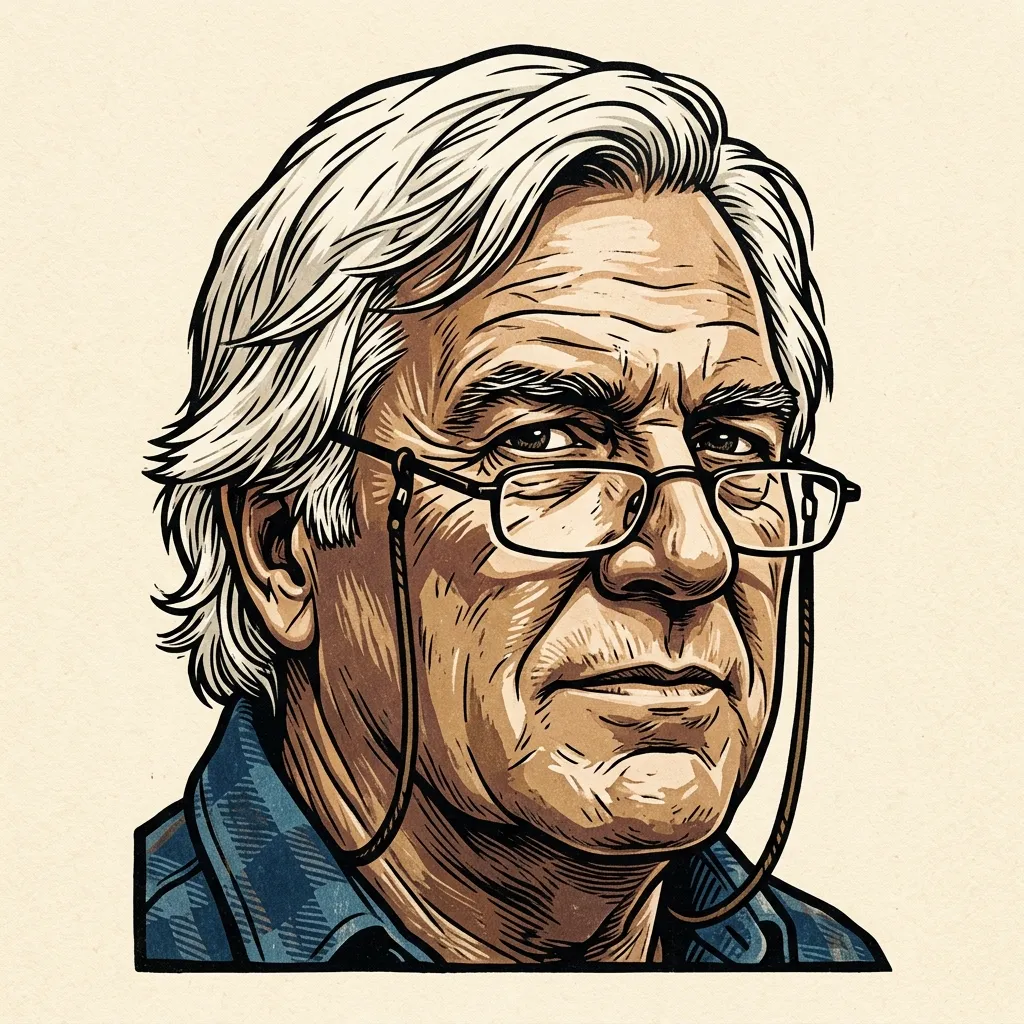
Scott Pelley stood up in a CBS News staff meeting on Tuesday and used the word “murdered.” Not “damaged.” Not “diminished.” Not “redirected toward a different editorial vision,” which is the phrase you’d reach for if you were still being careful. He said the program was being murdered, and then he said it publicly, and then CBS fired him.
I’ve been in enough newsrooms to know what it takes to choose that word about the institution where you’ve spent your career.
Pelley had been at CBS for nearly forty years. He’d anchored the Evening News. He’d sat across from heads of state and witnesses to catastrophe and, more times than I can count, the people who get left out of every other broadcast because their ZIP codes don’t test well with advertisers. He spent his career at one of the handful of programs in American journalism with the resources, the institutional backing, and the accumulated credibility to do work that actually costs someone something. Not costs the reporter something. Costs the powerful person on the other end of it something.
He used the word “murdered.” Precision matters. When a man with forty years of tenure reaches for the most irreversible word available, he’s not being theatrical. He’s telling you exactly what he sees.
He was the fourth correspondent to leave 60 Minutes since February. Four departures in four months from a program that has been running since 1968. I’ve covered enough organizational stories to know what that pace means. Those aren’t departures. That’s a pattern. Something at the center of the institution has stopped holding, and the people who were inside it long enough to know what it was supposed to feel like are telling you so with their feet.
I want to be careful about what I’m defending, because I’ve spent too many years watching journalists write perfect obituaries for institutions that deserved harder scrutiny while they were still alive. 60 Minutes wasn’t a perfect program. It had disputed segments, stretches of celebrity journalism dressed up as something more serious, moments when the stopwatch at the top of the broadcast was the most substantive thing in the hour. Any institution that has been running for fifty-eight years accumulates all of that. The length of the run is both the source of the credibility and the weight that eventually makes dismantling it easier to justify.
But here’s what it also had, at its best: time, resources, and a brand that could get someone on the phone who wouldn’t take the call otherwise. You can’t do a ten-month pharmaceutical investigation on a podcast. You can’t protect a source when you’re a freelancer with no institutional backing. You can’t put a story on the air that requires a network lawyer, a standards editor, and an executive willing to take the call from the subject and say: “We’re running it anyway.” The kind of journalism that held powerful institutions accountable required powerful institutions to produce it. That combination took fifty years to assemble.
Here’s the part I keep coming back to.
The argument that something needed to change at CBS News isn’t entirely wrong. The network news model has been under pressure for a generation, losing audiences who’ve scattered to a hundred smaller and faster competitors. 60 Minutes held out longer than most, but holding out and being immune aren’t the same thing. I’ve covered enough Washington institutions to know what it looks like when history gets mistaken for protection. It’s a dangerous mistake, and it doesn’t become less dangerous because the institution in question is one you respect.
What I’ve watched in other newsrooms as they went dark is that it never announces itself as the end. It looks like a series of personnel changes and editorial adjustments and gradual realignments, each one defensible on its own terms, none of which admits that the thing has stopped being what it was. The people who leave are the signal. When the correspondents start counting departures, count with them.
What’s harder to hold is the idea that this is a problem confined to one program or one network. What 60 Minutes produced, at its best, required editorial independence not as a principle but as a method. The story you can’t pursue because of what it’ll cost the third floor is a story that doesn’t get done. The source who won’t talk without institutional protection is a source who stays quiet. The investigation that can’t run for business reasons is an institution that doesn’t get held accountable.
That’s not a story about television. That’s a story about power and who gets to escape it.
Karen and I were talking about it Thursday evening. She spent thirty-five years as a court reporter, watching what happened to the professionals who tried to do their jobs in rooms where the rules kept changing. She said: “The thing you want to know isn’t what they changed. It’s what they stopped doing.”
That’s the thing that’s hardest to measure and hardest to get back.
Somewhere in a broadcast studio right now, a producer is deciding what not to pursue. Not because someone told her not to. Because the room changed. Because the people who modeled what the work was supposed to look like left or were removed, and the room heard their words on the way out and made its own calculations. That’s what a chilling effect looks like from the inside of an institution. The confrontations don’t have to happen. The story gets quietly revised between Monday and Wednesday. The source doesn’t get called. Nobody has to say anything out loud.
Scott Pelley stood up in a meeting and chose the most precise word he had. I keep thinking about the story that won’t be pursued because someone else in that room decided the cost was too high.
That’s the one we won’t know about. And that’s the one that matters most.