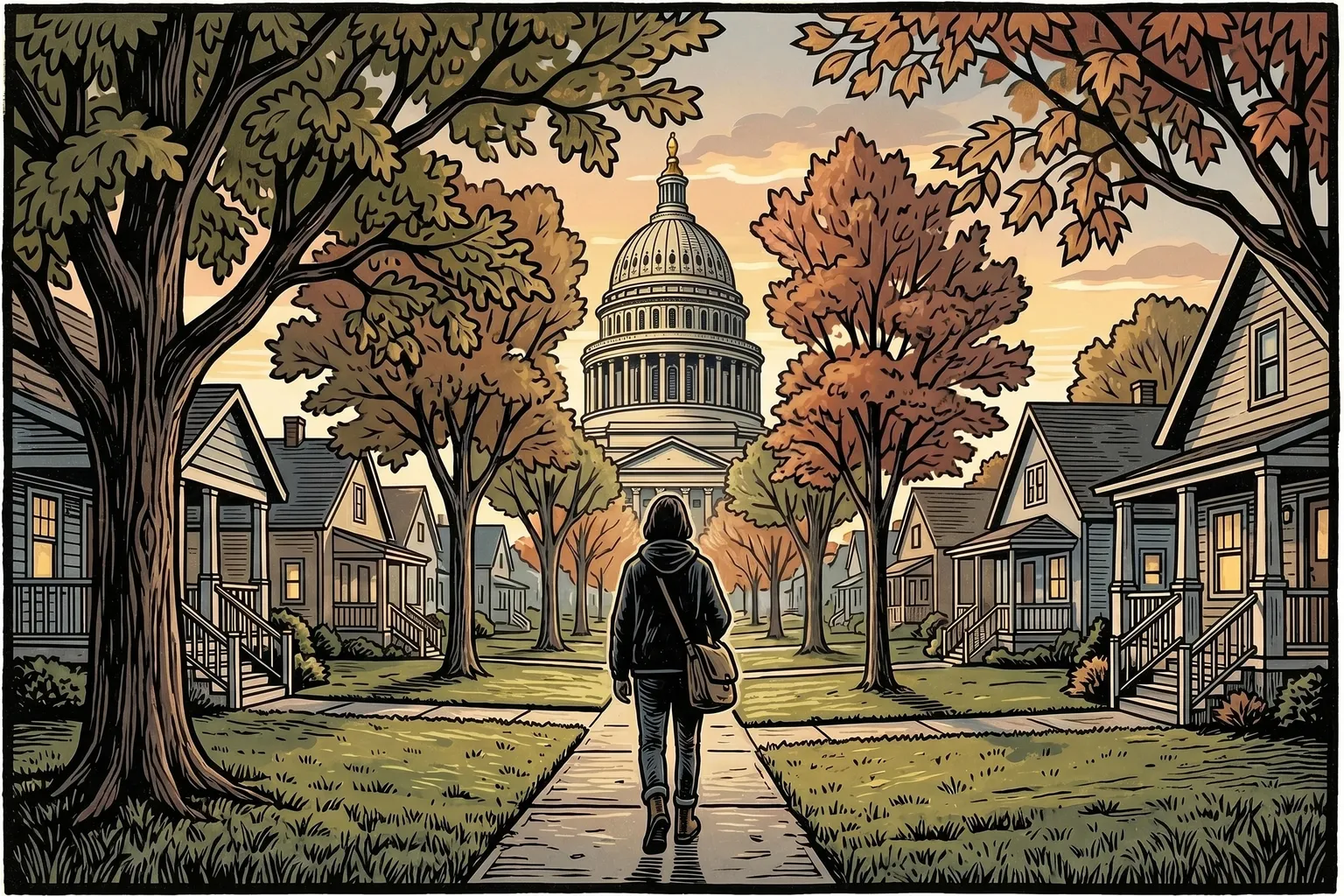
On Tuesday evening in Markle, Indiana, a small town in Huntington County, Travis Holdman watched the returns come in from a primary he had expected to survive. He has held his state Senate seat since 2008. He’s the third-most powerful Republican in the Indiana Senate, the chairman of the Tax and Fiscal Policy Committee, the kind of lawmaker who knows where the decimal points are in the state budget because he put them there. By nine o’clock, his challenger Blake Feichter had taken sixty percent of the vote, and the Associated Press had called the race.
Before the polls closed, Holdman told the Indiana Capital Chronicle, “I’m at peace with however it goes.” After it went, he told supporters that revenge and retribution “is not a Christian value.”
He wasn’t alone. Five of the seven Indiana state senators who faced Trump-backed challengers lost their seats on Tuesday. Jim Buck of Kokomo. Linda Rogers of Granger. Dan Dernulc of Highland. Rick Niemeyer of Lowell. Combined, they represented decades of institutional knowledge, committee chairmanships, and the kind of granular statehouse experience that doesn’t arrive with a presidential endorsement.
Their shared offense: last December, they voted no.
The “no” was on House Bill 1032, a mid-decade congressional redistricting map that would have positioned Republicans to sweep all nine of Indiana’s U.S. House seats. The president wanted it passed. On December 11, twenty-one Republican senators joined all ten Democrats and killed it, 31 to 19. It was one of the most direct rebukes a Republican legislature had delivered to a sitting Republican president in years.
It didn’t go unanswered.
The president endorsed primary challengers in seven of those races. Outside groups spent roughly twelve million dollars on advertising across them, according to the ad-tracking firm AdImpact. For context: these are state senate seats. A typical state senate primary in Indiana draws the kind of money you’d associate with a competitive school board race. Twelve million dollars isn’t a state senate number. It’s a message.
The message was received.
The easy version of this story is that a president punished lawmakers for exercising independent judgment, the punishment worked, and this should alarm anyone who cares about representative government. That version has appeared in several forms this week. It’s accurate as far as it goes.
It doesn’t go far enough.
Here is the part that makes the story harder. Holdman didn’t lose by three points. He lost by twenty. That isn’t a race where outside spending tipped the balance. That’s a race where the voters of Senate District 19 were presented with a choice between a man who had served them for eighteen years and a man endorsed by the president, and they chose, decisively. You can call it manipulation. You can point to the twelve million dollars. But twenty points is twenty points.
I grew up in Indiana, not far from some of these districts, and I have enough respect for the people in towns like Markle and Kokomo and Granger to believe they knew what they were doing on Tuesday. That respect is inconvenient, because what they were doing was removing legislators who voted their conscience. But it was their vote. That’s the mechanism. That’s the whole mechanism.
Go back to December for a moment. Before the redistricting vote, at least eleven Indiana Republican lawmakers were targeted with swatting attacks and violent threats, according to NBC News. Senator Greg Goode was swatted hours after the president singled him out in a social media post. On the eve of the vote, Representative Ed Clere received a pipe bomb threat at his home. These are state legislators. They don’t have security details. They go home to the same streets where they pick up their mail.
They voted no anyway. Thirty-one to nineteen.
Five months later, the ballot box confirmed the price.
This is a different kind of problem than the ones we usually argue about. Nobody stole an election on Tuesday in Indiana. Nobody suppressed a vote. The primaries were open, the ballots were counted, and legislators who had done something difficult were removed from office by the people they represent.
That’s democracy working. It’s also democracy saying something about itself that’s worth hearing.
I don’t know what the lesson should be. I know what I don’t want it to be. I don’t want it to be that you shouldn’t vote your conscience because the voters will punish you. I also don’t want it to be that the voters were wrong, because the moment you start sorting the electorate into people whose choices count and people whose choices don’t, you’ve left the building entirely.
What I think Indiana told us on Tuesday is simpler than either of those, and harder. Courage in public life has a price, and the price isn’t abstract, and the people who pay it aren’t always thanked by the people they serve. Travis Holdman will go home to Markle. He’ll be at peace with it, the way a man in public life long enough learns to be at peace with what he can’t change. He cast a vote in December that cost him his seat in May. He knew it might. He voted no anyway.
That isn’t nothing. In a week crowded with diplomacy and market records and the usual noise, a handful of state senators in Indiana showed us what it looks like when the job matters less than the reason you took it. They lost for it. The principle, for what it’s worth, survived the night.