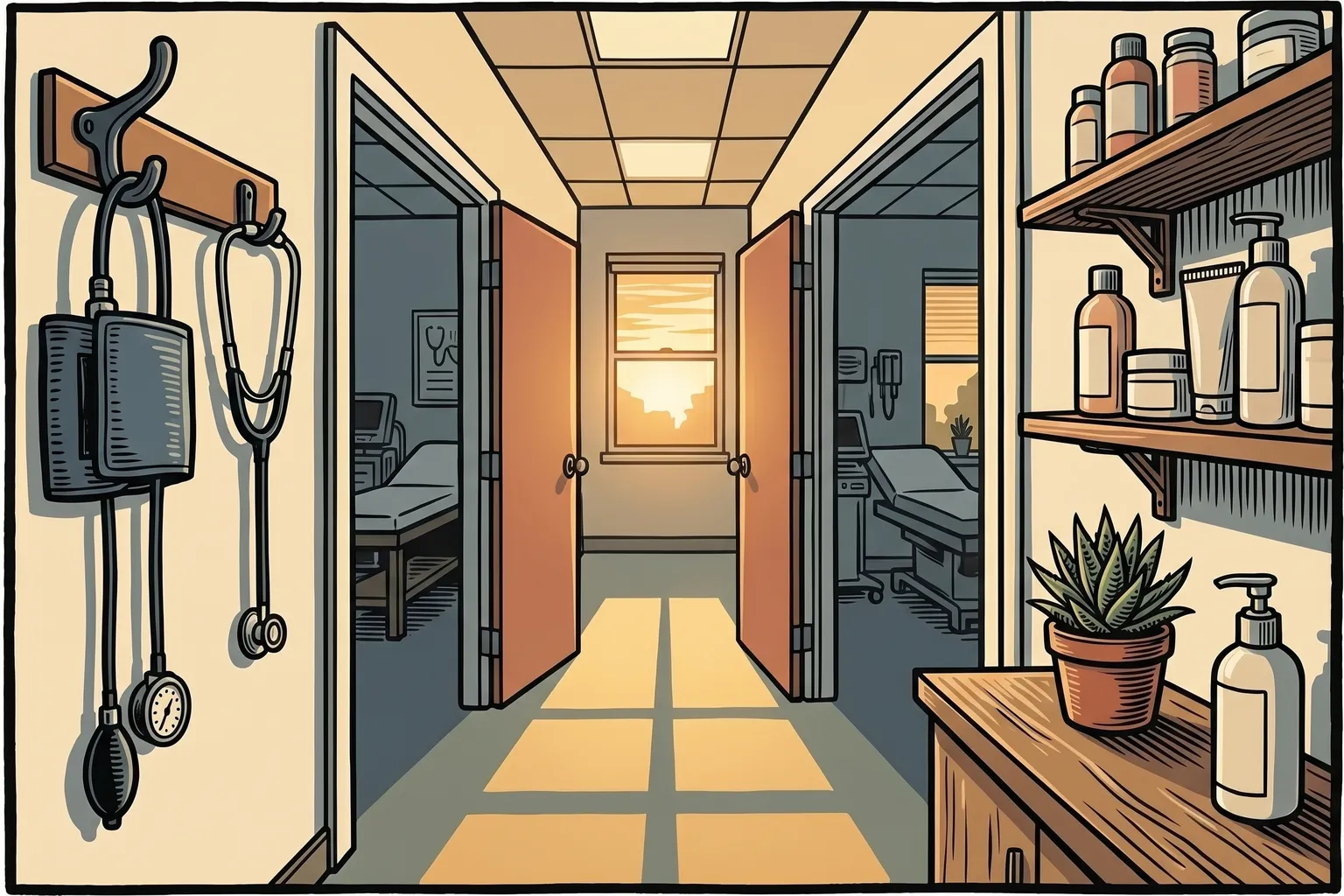
On a Saturday morning in Sacramento, a woman can walk into a Planned Parenthood clinic and get Botox. Nine dollars a unit. Twenty-five to fifty percent cheaper than a med spa, depending on where you live. Down the hall, in the same building, another woman is waiting for a cancer screening or a contraceptive prescription. The Botox patients pay cash. The healthcare patients, most of them, are on Medi-Cal.
Same building. Same staff. Same parking lot on a Saturday.
Planned Parenthood Mar Monte is the largest Planned Parenthood affiliate in the country, covering most of Northern California and parts of Nevada. Last July, President Trump and Congress signed a law preventing organizations that perform abortions from accepting Medicaid reimbursement for any services, including the ones that have nothing to do with abortion. Seventy-five to eighty percent of Mar Monte’s patients are on Medi-Cal. The shortfall hit a hundred million dollars, more than half the affiliate’s annual budget.
Since then, Mar Monte has closed five clinics. It cut its family medicine program. It laid off nearly fifteen percent of its workforce. Nationally, twenty-three of Planned Parenthood’s more than five hundred health centers have shut their doors since the law took effect.
And then it started selling Botox.
I’ve been covering American institutions for forty years, and the thing that still catches me off guard isn’t when they collapse. It’s when they adapt. The adaptations almost always tell you more than the collapse would have.
A clinic built to provide reproductive healthcare now offers IV hydration drips for a hundred and fifty dollars a bag. “Hangover helper” is on the Saturday menu alongside immunity boosters and wellness packages, available at the Sacramento and San Jose locations. The affiliate is exploring cosmetic fillers and GLP-1 weight-loss treatments. Nobody drew up this business plan because they wanted to. This is what happens when an institution decides that staying open matters more than staying tidy.
If you’ve spent any time in small-town America over the last twenty years, you’ve seen this pattern before. A rural hospital can’t cover the cost of its emergency room, so it converts to urgent care and hopes nobody has a heart attack on a Tuesday night. A church rents its fellowship hall to a yoga studio because the offering plate doesn’t cover the heating bill. A local newspaper that once employed forty reporters now runs sponsored content and calls it “community partnerships.” A school nurse becomes the de facto counselor because the district can’t afford to hire both.
None of these institutions wanted to become what they became. They did the math. They kept the doors open. And in doing so, they revealed something about the distance between what we say we value and what we’re willing to pay for.
I should be careful here, and I know it.
Planned Parenthood isn’t a neutral subject. It hasn’t been one in my lifetime. People who oppose it will see the Botox story and conclude that the organization was never really about healthcare, now confirming their suspicions by becoming a cosmetics shop. People who support it will see a political attack forcing a vital institution into humiliating contortions just to survive. Both reactions arrive fast. Both are clean. Both leave out the most important part of the story.
What the Sacramento clinic is actually doing is harder to sit with than either of those versions. It’s running two businesses in the same building because one can’t survive without the other. The Botox revenue keeps the lights on so that the Medi-Cal patients, the seventy-five percent who have nowhere else to go for a cancer screening or a contraceptive prescription, still have somewhere to go. The nine dollars isn’t the point. The exam room down the hall that closes if the Botox doesn’t sell is the point.
This is where the politics fall away and the arithmetic takes over. An institution staring down a hundred-million-dollar hole doesn’t have the luxury of ideological purity on either side. It has a building. It has staff. It has patients who lose access to basic healthcare if it shuts down. The Botox is the patch. The patients are the reason for the patch.
I don’t think it matters much, in the end, where you stand on Planned Parenthood’s broader mission. The pattern is bigger than any single institution. It’s about what happens to the places where regular people receive basic services when the funding underneath them gives way.
I talked to Karen about this one over dinner. She spent thirty-five years as a court reporter in Hamilton County, watching the court system do more with less, year after year, until “more with less” became the permanent condition instead of the temporary emergency it was always described as. She said something that stayed with me. She said: “The people who work in those places don’t think about the politics of it. They think about Tuesday.”
She’s right. There’s a nurse in Sacramento who administers Botox at ten in the morning and a contraceptive injection at ten-thirty. She isn’t making a political statement. She isn’t an argument for or against anything. She’s doing Tuesday. And when Tuesday comes again next week, she’ll do it again.
That’s what institutional survival looks like in this country right now. Not a grand rescue. Not a policy solution. Somebody in a building, doing the math, keeping the doors open with whatever tool is at hand. A librarian running a job fair. A teacher buying classroom supplies with her own money. A clinic selling cosmetic injections so it can keep providing cancer screenings.
You can look at that and see decline. I understand the impulse. I’ve felt it myself. But I’ve been watching this country for four decades, and what I keep coming back to isn’t the decline. It’s the stubbornness. The people inside these institutions, the ones doing the actual work, refuse to let the doors close. They find the patch. They do the math. They show up on Tuesday.
That stubbornness doesn’t fix the structural problem. It doesn’t replace the funding that was cut. It doesn’t settle the political argument. But it keeps the lights on while the rest of us are still arguing about it. And in a week when most of the noise was about the argument, I find myself thinking about the nurse, the building, and the nine dollars.