The word hobby comes from hobbyhorse. This is not a metaphor. In the sixteenth century, a hobbyhorse was a stick with a cloth horse’s head on it, a child’s toy, something small and not quite serious that a person rode around on for reasons that had nothing to do with getting anywhere. By the eighteenth century, the word had migrated to describe any activity pursued for pleasure rather than profit, which in a culture that valued profit above pleasure was not exactly a compliment. Laurence Sterne used it in “Tristram Shandy” in 1759 to mean an obsession, a private fixation, something a person did that other people found mildly puzzling.
Nobody told Tristram Shandy’s Uncle Toby he needed a hobby. He had one because he couldn’t stop himself from having one. He built model fortifications in his garden because the siege of Namur had lodged itself in his mind and wouldn’t leave, and building was the only way to process it. His hobby was a form of therapy before the word existed. It wasn’t prescribed. It wasn’t recommended by a pamphlet or a personnel department or a magazine article titled “Fifty Hobbies for Your Best Years Ahead.” It happened to him the way things happen to people who have a fixation and the time to follow it.
I keep coming back to Uncle Toby because what happened to the word hobby between 1759 and now is a story about how a private impulse became a public prescription. Someone decided, at a particular moment in the twentieth century, that retired people needed hobbies. Not wanted them. Needed them. The word shifted from describing something a person chose to do to describing something a person was supposed to do, and the shift happened so gradually that by the time you encountered the idea, probably in a magazine or a retirement seminar or a conversation with a well-meaning relative, it felt like common sense rather than an invention.
It was an invention. Here is who invented it.
For most of human history, the question of what retired people should do with their time didn’t exist, because retired people, as a demographic category, didn’t exist. I’ve written before about who invented retirement and who invented the phrase that sorts us into a separate species. The short version: retirement was a political invention of the late nineteenth century, the word was a marketing invention of the mid-twentieth, and neither emerged from the study of what older human beings actually need. They emerged from what governments and institutions needed older human beings to do, which was, primarily, to move aside.
But once you’ve moved a large population of capable adults aside, you’ve created a problem. The people are still there. They’re still awake in the morning. They have opinions, energy, habits, and twenty or thirty years of consciousness ahead of them. They need to do something with the hours that work used to fill.
The question of what they should do arrived in American culture around 1950, and it arrived with the force of a social emergency.
The first generation of mass retirees hit the system in the late 1940s and early 1950s. Social Security was fifteen years old. Corporate pensions were expanding. The war was over. For the first time in American history, large numbers of men (it was overwhelmingly men, because the workforce was overwhelmingly male and the pension system followed the workforce) left their jobs at sixty-five and found themselves in possession of something previous generations would not have recognized: decades of health without an occupation.
The social scientists noticed what happened to them. It was not, in many cases, good.
Studies from the early 1950s began documenting a pattern that would later be given clinical names but that at the time was described more simply: men who retired and did nothing deteriorated. Their health declined faster than expected. Depression was common, though the word was used less freely then. Marriages strained under the weight of proximity that neither partner had negotiated for. The men who had been foremen and accountants and machinists and engineers, men whose identities were organized entirely around what they did from eight to five, were now home before lunch with no particular reason to be anywhere.
The personnel departments noticed too. By the mid-1950s, major corporations had started offering pre-retirement planning programs, typically three-session affairs covering finances, health, and what the pamphlets called “the problem of leisure.” The problem of leisure. The phrase tells you everything about how the culture understood retirement: as a problem to be solved rather than a condition to be lived.
The academic framework arrived in 1961, when a gerontologist named Robert Havighurst published what became known as activity theory. The argument was straightforward: successful aging requires maintaining the activities and social connections of middle age. The person who stays busy, who replaces work with other structured activities, who fills the calendar, ages well. The person who withdraws does not.
That same year, two other researchers, Elaine Cumming and William Henry, published a book called “Growing Old” that argued the exact opposite. Their disengagement theory proposed that withdrawal from social roles is a natural and healthy part of aging, that the older person and the society mutually benefit when the older person steps back. It wasn’t a depressing argument, exactly. It was a descriptive one. They were saying: this is what we observe.
Both theories were based on limited evidence, small samples, and the particular biases of researchers studying a population they were not yet members of. Neither would survive modern peer review without significant revision. But one of them won.
Activity theory won. Not because it was better supported by evidence. It won because it was more useful to the industries that were forming around retirement. If successful aging requires activity, then someone needs to provide the activities. If the retiree needs hobbies, then someone needs to sell the hobbies.
The machinery assembled itself quickly.
AARP, founded in 1958 by Ethel Percy Andrus (who appears elsewhere in this story for related reasons), became the dominant cultural institution telling retirees what a good retirement looked like. And a good retirement, in AARP’s framing, looked busy. It looked active. It looked, in a word that would become inescapable, “engaged.” The magazine ran features on retirement hobbies. The organization built an entire apparatus around the idea that the well-adjusted retiree is the occupied retiree. The message was consistent across decades: you are retiring from work, not from activity.
The adult education industry expanded. Community colleges began offering courses aimed specifically at retirees: watercolor painting, woodworking, conversational Spanish, genealogy. The courses were good, many of them. The instructors were often excellent. But the underlying assumption was fixed: you need this. You need to be doing something. The idle retiree is the failing retiree.
The hobby industry followed the theory the way retail follows demand. Craft stores, workshop kits, birdwatching guides marketed to beginners over sixty, pickleball paddles reviewed by people who came to the sport reluctantly. The entire infrastructure assumes that the retiree arrives at the door of their new life with a hole where work used to be and needs someone to hand them something to fill it.
I want to be careful here, because I’m not against hobbies. I have hobbies of my own, though I dislike the word. I keep a vegetable garden that the groundhogs take a third of every year. I walk the Flatrock River trail most afternoons, not for exercise but because my brain works better in motion than at a desk. I read things that aren’t useful to anyone, including myself, because I can’t stop, and I’ve been this way since I was nine years old in the South Bend Public Library, pulling books off shelves that no one had told me to read.
These aren’t retirement hobbies. They’re just things I do. The distinction matters.
A retirement hobby, in the way the culture uses the phrase, is an activity adopted specifically to fill the void left by work. It’s an answer to a question: what will you do? And the question itself contains an assumption so deep that most people never examine it: that you must be doing something, that a life organized around activity is the correct life, and that the person who reaches sixty-five without a plan for staying busy has failed a test they didn’t know they were taking.
Activity theory built this test. The retirement industry administers it. And the rest of us take it without asking who wrote the questions.
The research that has accumulated in the sixty-plus years since Havighurst is more complicated than the prescription it produced. There is solid evidence that social connection matters for health and longevity. There is good evidence that certain forms of cognitive engagement are protective. There is almost no evidence that the specific mechanism of the hobby, the structured leisure activity, is the thing that produces these benefits. The benefits come from the connection, the purpose, the reason to be somewhere at a particular time. The hobby is one delivery system. It is not the only one.
But the hobby is the one we prescribe. It’s the answer we give to the question of what retirement is for, and the answer has hardened into a mandate so universal that a person who retires and doesn’t acquire a hobby is treated, by family and friends and the culture at large, as someone who is failing at retirement.
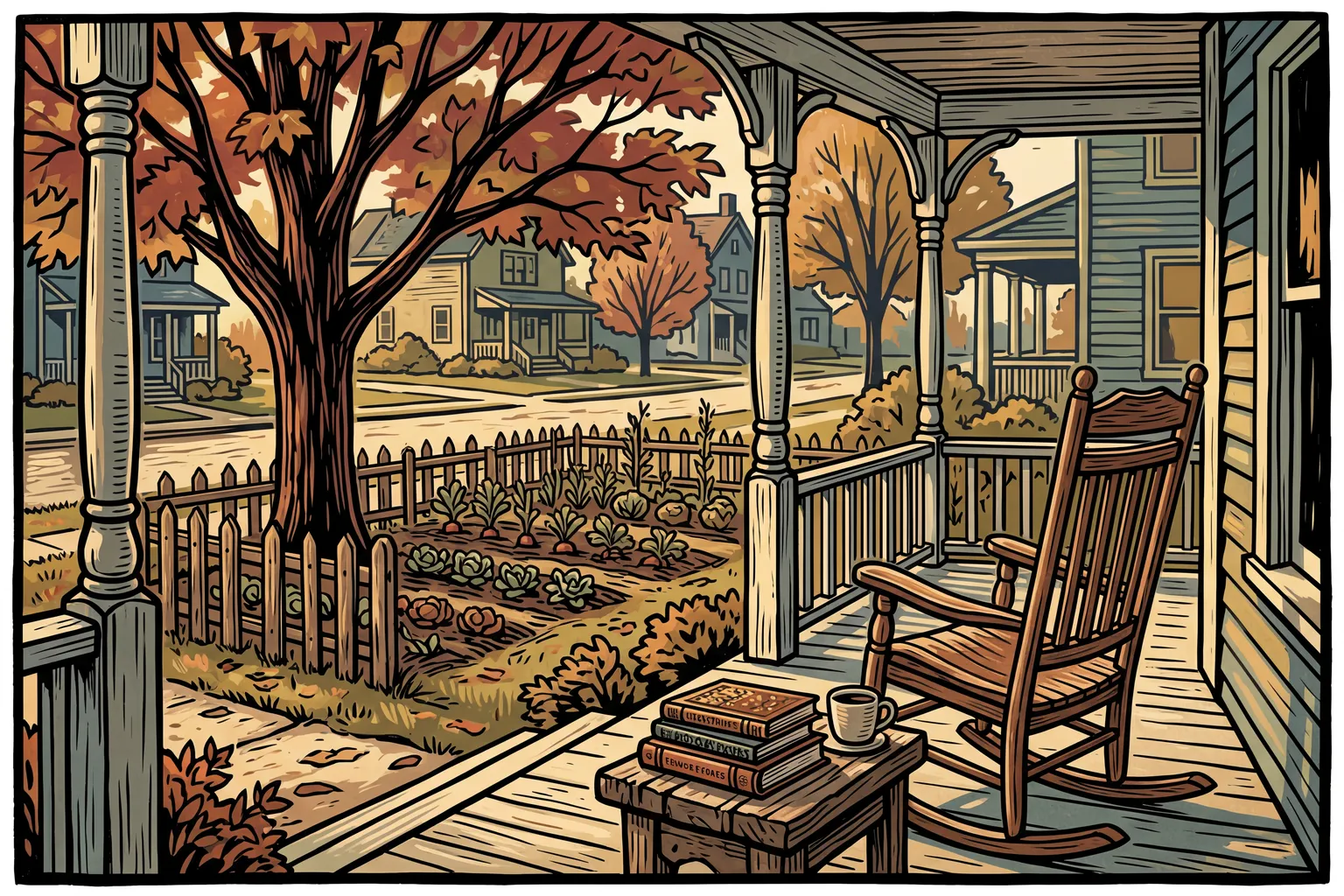
Think about what that phrase means. Failing at retirement. As if retirement were a performance. As if the person who has worked for forty years and wants, genuinely wants, to sit on a porch and watch the light change is doing something wrong. As if stillness, in a culture that worships productivity, requires a diagnosis.
The word hobby, in its original sense, described something a person couldn’t help doing. Uncle Toby’s fortifications. The birdwatcher who is out the door before dawn not because a magazine told her to go but because the birds are there. The hobby was the thing that grabbed you. It wasn’t prescribed. It wasn’t optimized. It wasn’t part of a successful aging strategy. It was just the thing you did when nobody was telling you what to do.
What the retirement hobby industry sells is something different. It sells the simulation of that impulse, the appearance of purpose, in a culture that can’t tolerate the absence of purpose even for a single afternoon. It sells activity as identity, busyness as health, engagement as the only acceptable mode of being alive.
I’m not sure who first decided that every retiree needs a hobby. It was probably not one person. It was Havighurst’s theory and AARP’s magazine and the first corporation that put “the problem of leisure” in a pamphlet title and every well-meaning child who has ever asked a retiring parent, with real concern in their voice: but what will you do?
The question isn’t wrong. The assumption behind it is worth examining. What we’re really asking, when we ask what someone will do in retirement, is whether they can justify their continued existence through activity. And the honest answer, the one that the hobby prescription exists to avoid, is that existence doesn’t require justification. It never did.
Someone decided it did. That is the invention. The hobbies are just the product.
Warren Holt writes about ideas and culture for The Sunday Evening Review. His prior work in this series includes “Who Invented Retirement” and “Who Invented the Senior Citizen.”