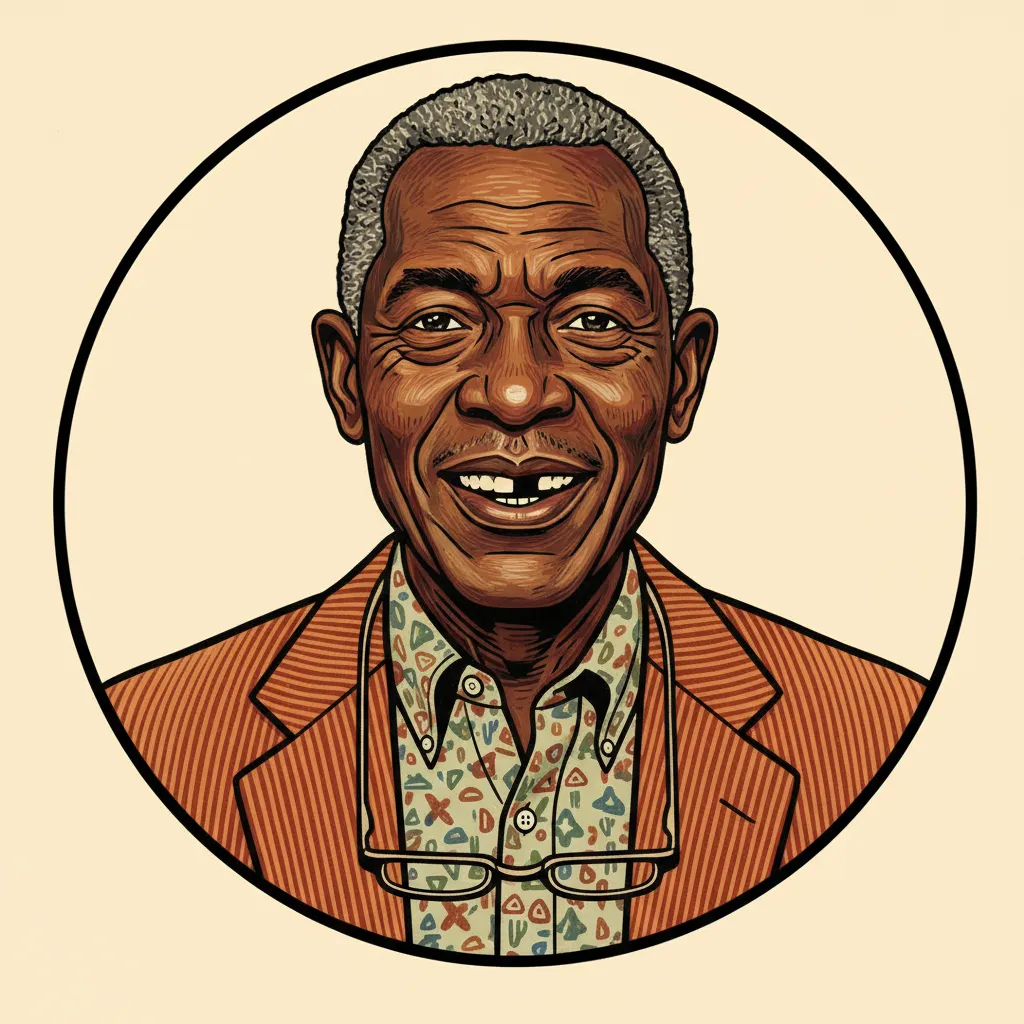
I grew up in Greensboro, North Carolina, the second of five children in a house where books were serious objects. My mother taught sixth grade and handed all five of us library cards before we could see over the checkout desk. My father pastored a Baptist church for thirty-six years, which meant language in our house was not casual. You either meant what you said or you held your tongue.
I started reading southern history at fifteen, working my way through the stacks at the Greensboro Public Library. And what I found there confused me for a decade. The books I was reading about the place I lived did not match the place I lived. The history on those shelves described a South that was orderly, tragic in a manageable way, and above all, inevitable. The things that had happened here had happened because of deep forces no one could have stopped. The suffering had meaning. The people responsible were complicated. Look at it from all sides.
I couldn’t have named the problem then. I can name it now: those books were wrong. Not all of them. But enough to mislead a reader who didn’t yet know what questions to ask.
The history of the American South is one of the most contested terrains in American letters. It has produced some of the finest historical scholarship of the twentieth century and some of the most deliberate distortion. Sorting one from the other is the work of a reading life. Here is where I’d tell you to start.
W.E.B. Du Bois, Black Reconstruction in America (1935)
If you haven’t read this book, you haven’t read southern history. You’ve read versions of southern history written by people who had specific reasons to tell it a certain way.
Du Bois spent years on this book, writing against a historical consensus that treated the Reconstruction period (the decade-plus after the Civil War when formerly enslaved Black Americans held political power in the South) as a catastrophic failure. That consensus had a name: the Dunning School, after William Archibald Dunning of Columbia University, whose students had produced dozens of state-by-state studies arguing that Reconstruction was a disaster imposed on a proud people by corrupt Northern politicians and unqualified Black men who couldn’t govern. Those books shaped textbooks. They shaped films. D.W. Griffith’s The Birth of a Nation (1915) is the Dunning School in celluloid, and Woodrow Wilson screened it in the White House.
What Du Bois did was go back to the actual record. He found what Black legislators accomplished during Reconstruction: public school systems built where none had existed, legal protections written into state constitutions for the first time, labor coalitions between Black and white poor farmers. He showed that what the Dunning School called “misrule” was, in many instances, the most democratic governance the South had seen. And then he showed, chapter by chapter, why the history had been written to say otherwise. Because the people writing it had interests in the conclusion.
Mainstream American historiography took thirty-plus years to catch up. Black Reconstruction was largely dismissed and ignored for decades after it was published. If you want to understand why history is not simply what happened but who gets to write what happened, there is no better teacher than this book and its reception.
C. Vann Woodward, The Strange Career of Jim Crow (1955)
I’d recommend this one with a word of preparation, because it’s a book that earns its complications.
Woodward, an Arkansas-born historian, argued something that felt radical in 1955: Jim Crow segregation was not ancient. It was not the natural order of southern race relations, the way things had always been and would always be. It had been built, deliberately and relatively recently, beginning in the 1890s. The rigid separation of the races at water fountains and railroad cars and courthouse steps was a political choice made by specific people with specific interests, not an eternal condition. Martin Luther King Jr. called it “the historical Bible of the civil rights movement,” and you can understand why: if it was built, it could be dismantled.
Later scholars have complicated Woodward’s picture considerably. The pre-Jim Crow South was not as open as he suggested, and the fluidity he saw in the decades after the Civil War had real, violent limits. But the core argument, that segregation was a historical construction and not some deep geological feature of southern life, remains important. Read it knowing the scholarship has moved past some of his specific claims. Read it anyway.
Eric Foner, Reconstruction: America’s Unfinished Revolution, 1863-1877 (1988)
This is the definitive account. Foner spent a decade writing it, and it is the kind of history that reshapes a field and stays there.
It’s long, over seven hundred pages, and every page earns its place. What Foner shows is how close it came to working. Reconstruction was not a naive experiment or a cynical power grab. It was a genuine attempt to build a biracial democracy in a region that had just fought a war to preserve slavery. It failed not because Black men were unfit to govern. Foner’s evidence removes that claim from serious consideration. It failed because of sustained, organized, murderous violence by white supremacist organizations, and because the federal government, under increasing political pressure, chose not to stop them.
That story, the story of what was nearly possible and how it was prevented, is the story the books in my school library either distorted beyond recognition or didn’t tell at all. Foner tells it with the archival rigor of someone who has been inside the primary sources for decades and the clarity of someone who wants you to actually understand what you’re reading.
David Blight, Race and Reunion: The Civil War in American Memory (2001)
Once you’ve read Du Bois and Foner, read Blight’s book, which explains how the history Du Bois was writing against got built in the first place.
Blight tracks how the Lost Cause narrative, the idea that the Confederate cause was noble, the war was about “states’ rights,” the South had fought with honor against impossible odds, wasn’t simply a regional consolation story that emerged organically from grief. It was a cultural project. The reconciliation between North and South in the decades after the Civil War was achieved at the expense of Black Americans. White Northerners and white Southerners found common ground by setting aside what the war had actually been about. Confederate veterans were celebrated alongside Union veterans. The “Blue-Gray” reconciliation was purchased by abandoning the memory of the war as a fight for emancipation.
You’ll finish this book and understand why Confederate monuments stood in southern courthouses for a century. They weren’t erected right after the war. They went up in the early twentieth century, during the height of Jim Crow, and again in the 1950s and 1960s, when the civil rights movement was challenging the racial order those monuments were there to affirm. Blight makes the timing impossible to ignore, and impossible to explain away.
Douglas Blackmon, Slavery by Another Name (2008)
This book won the Pulitzer Prize and it will ask you to revise your understanding of a word you think you know. That word is “freedom.”
What Blackmon documents, in extraordinary archival detail, is the system of convict leasing and debt peonage that spread across the South after Reconstruction was dismantled. Black men, and sometimes women and children, were arrested on minor or invented charges and leased out to coal mines, steel mills, turpentine farms, and lumber camps, where they worked in conditions that approximated slavery and couldn’t legally leave. This was not a rogue regional practice. It was a system, supported by state legislatures, policed by law enforcement, and contracted to major American corporations.
It continued into the 1940s. Blackmon has the documents. He has the contracts, the company records, the sheriff’s invoices. He traces specific families through this system, puts names on people who were erased from history, and shows you exactly what happened to them and who profited.
When I was running the bookshop in Durham, I pressed this book on a customer who told me he’d always thought of Reconstruction as the story of what went wrong after the war. He came back three weeks later and said he hadn’t thought about the postwar period the same way since. That’s what the book does. It closes a door you didn’t know was open.
Clint Smith, How the Word Is Passed (2021)
This is the book I’d hand to a reader who’s new to all of this. Smith is a poet and journalist, and he writes about history the way a poet writes about anything: attending to texture, to the weight of specific words, to what a place feels like when you stand in it and know what happened there.
He visits sites connected to American slavery: plantations, Angola Prison in Louisiana, Galveston Island in Texas, Blandford Cemetery in Virginia. At each one he asks how the site tells, or refuses to tell, the story of what happened. What makes this a doorway rather than a lecture is that Smith is genuinely curious about the people he meets who see these places differently than he does. He listens. Then he tells you what he heard and what it means.
A reader who has never thought much about how history is shaped by what we choose to commemorate will come away unable to walk past a historical marker the same way again. For readers who want the fiction side of the southern story, there’s a case to be made for pairing this with the best of southern gothic literature, but Smith’s book is where I’d start anyone on the non-fiction.
Those are the six books I’d put in your hands first. There are others. Isabel Wilkerson’s The Warmth of Other Suns (2010), about the Great Migration of Black Americans from the South to the North and West, deserves a list of its own. If you want the broader American history frame, I’ve written about where to start with American history generally, and some of those titles pick up threads this list begins.
But these six, read in roughly this order, will give you the bones of an honest southern history and the tools to evaluate everything else you read about the South afterward. They’ll help you see what the history books you grew up with left out, and why.
I’ve been reading this material for more than fifty years. I’m still having the experience of understanding something I thought I already knew. Patricia thinks this makes me impossible at dinner parties. She’s not entirely wrong. But that experience of revision, of having a fixed picture crack open to let more light in, is the best argument I know for starting if you haven’t, and continuing if you have.