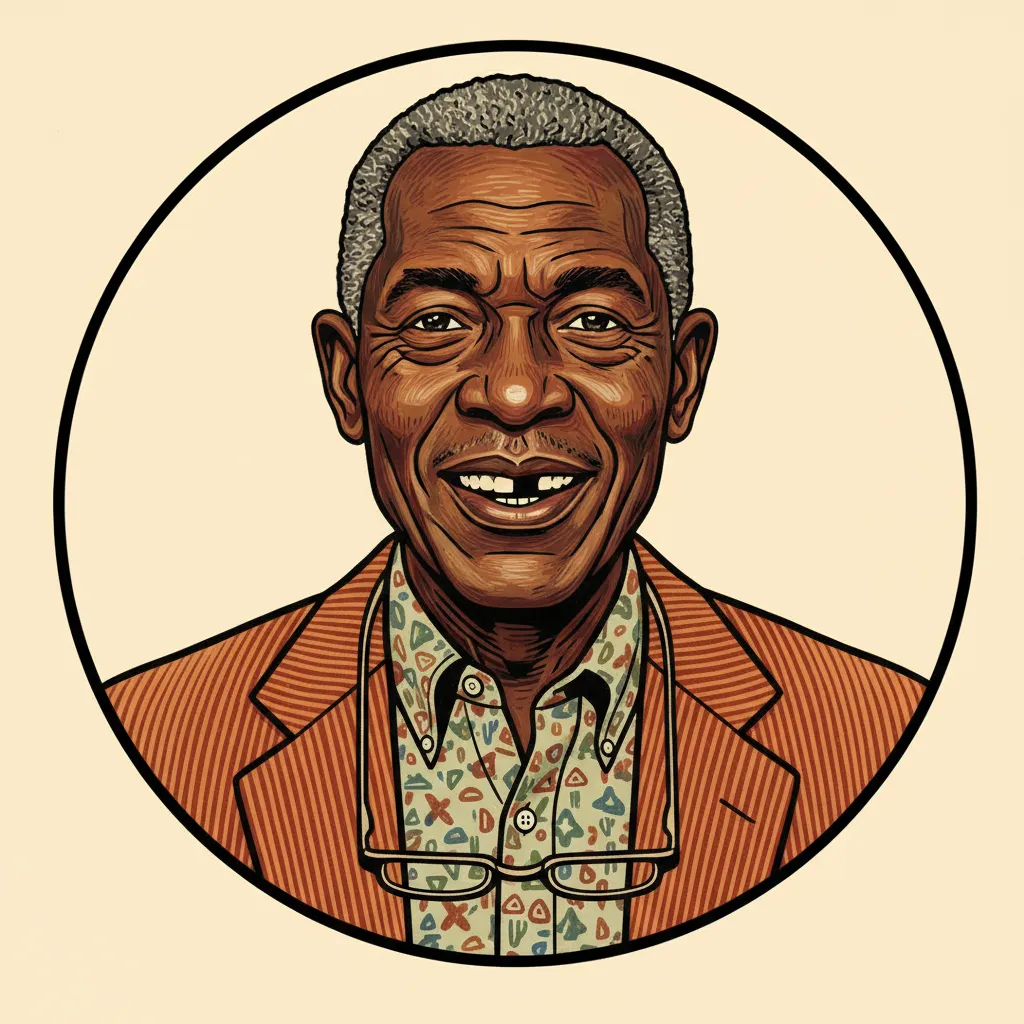
James Baldwin wrote about what it costs to be alive in America if the country has decided you’re only partly part of it. He wrote essays that read like urgent letters and novels that read like music and witness journalism that reads, fifty years later, like something written this morning. I’ve been reading him since I was nineteen years old and I haven’t run out of things to find.
If you read Go Tell It on the Mountain in a college classroom and put it down at the last page and haven’t picked up another Baldwin since, I understand. Academic framing does strange things to a book. You end up writing a paper about it instead of living inside it. My suggestion is to set that novel aside for a while and begin somewhere else, then come back to it when you’re ready, and you’ll find it’s a different book than the one you thought you remembered.
Here’s where I’d start, and where I’d go from there.
The Fire Next Time by James Baldwin (1963)
Start here. Not because it’s his most famous, though it is, and not because it’s the easiest, though it’s more accessible than some of what follows. Start here because Baldwin at his most urgent and his most precise shows up on the first page and doesn’t leave.
The book contains two essays. “My Dungeon Shook” is a letter to Baldwin’s nephew on the hundredth anniversary of the Emancipation Proclamation. It runs fourteen pages. In those fourteen pages, Baldwin does something I haven’t seen another writer do in quite the same way: he tells a young Black man what the country thinks of him, what the country has arranged to make him believe about himself, and why none of it is true, and he does it with love that doesn’t soften into sentiment. It’s the most generous fourteen pages in American nonfiction.
The second essay, “Down at the Cross,” is much longer. Baldwin writes about his years as a teenage preacher in Harlem, his break from the church, his meetings with Elijah Muhammad and the Nation of Islam, and what he observed about the American racial arrangement at a moment when that arrangement was beginning to crack. He says things that were radical in 1963 and that the years since haven’t made less true.
I sold more copies of this book than almost anything else I stocked during twenty-two years behind a counter. I still press it into people’s hands, at the library now instead of the shop. Read it first. Read it twice.
As an Amazon Associate we earn from qualifying purchases. Sunday Evening Review earns a commission if you buy through a link on this page, at no extra cost to you. We have not been paid to recommend anything here.
Check current price on Amazon →
Notes of a Native Son by James Baldwin (1955)
After The Fire Next Time, go back to this one. It’s where Baldwin’s essay voice was formed.
The title essay is about his father’s death and a race riot in Harlem that happened the same week. Charles Dandridge, my father, was a Baptist preacher in Greensboro, North Carolina. Reading Baldwin write about his own father, also a preacher, a deeply bitter man who saw the worst of what this country could do and let it make him smaller, was like reading a conversation I’d been watching my whole life from one side of the room. Not my father’s story, not exactly, but the field it came from.
Baldwin’s argument in that essay, which he arrives at only after burying his father and watching his city burn, is that hatred destroys the person who carries it, that you can’t let the country’s crimes become your own interior weather. He was in his late twenties when he wrote his way toward that conclusion. I’ve read it five times and I’m still learning from it.
The collection also includes “Everybody’s Protest Novel,” which is where Baldwin made his early reputation and his first enemies. He argues, directly, that Uncle Tom’s Cabin and Native Son, two novels most people would have called anti-racist, share a structural flaw: they reduce their characters to the thing being done to them, and in doing so, deny those characters the full humanity that fiction is supposed to deliver. I’ve written before about what Richard Wright’s work actually does and where to begin with it. Baldwin’s critique of Wright is part of that conversation, and they’re worth understanding together.
Check current price on Amazon →
Nobody Knows My Name by James Baldwin (1961)
This collection came out of his years in France, and it’s where Baldwin writes as an American abroad, as an outsider in Europe who sees his own country more clearly from a distance, as someone returning to the American South for the first time in a decade to cover the civil rights movement. The title essay is about what it means to be a Black American man in Europe, where you escape one set of assumptions and encounter another.
The piece I’d send any reader to first in this collection is “The Discovery of What It Means to Be an American.” Baldwin argues that you can’t understand what you are until you get far enough away to see yourself from the outside. He’d gone to Paris at twenty-four to write the book that became Go Tell It on the Mountain, and what he found there was that France had clarified his Americanness in a way that living in America hadn’t. Distance as instrument. He uses that idea in ways that expand well beyond its original occasion.
Check current price on Amazon →
Go Tell It on the Mountain by James Baldwin (1953)
Now you’re ready for this one.
It’s the novel Baldwin started at seventeen and finished in Switzerland in 1952. Set over the course of one night in a Harlem church during a prayer service, the novel follows John Grimes, the fourteen-year-old stepson of a preacher, through his religious conversion and through the family history that has shaped everything around him. The structure moves between present action and long flashbacks, following John’s aunt Florence, his stepfather Gabriel, and his mother Elizabeth, each of them carrying the weight of the South they came from and the North that hadn’t delivered what it promised.
My father’s church wasn’t in Harlem, but the sounds Baldwin describes, the call-and-response, the speaking in tongues, the specific emotional weather of a prayer meeting where something is about to break open, were sounds I knew from childhood. That recognition was part of why the novel hit me the way it did when I finally read it properly, in my late twenties, long after college.
If you tried this book in a classroom and bounced off the Biblical cadences, try it again now. Those cadences aren’t decoration. They’re the whole point. Baldwin learned to write by reading the King James Bible and the writers shaped by it, and the novel’s language is inseparable from what the novel is doing. Once you hear it as music instead of difficulty, you don’t lose it.
Check current price on Amazon →
Giovanni’s Room by James Baldwin (1956)
Baldwin wrote this novel in France and published it in 1956, and it has almost nothing to do with the subjects his earlier work had staked out. There are no Black characters. The narrator is a young American man in Paris who falls in love with an Italian bartender named Giovanni, while his American girlfriend waits in Spain for him to become the version of himself she expects him to be.
It’s a novel about what happens when you can’t make yourself into the person you’re supposed to be, told with a precision that makes every scene feel inevitable. He was writing about desire and shame and what a person does when the life laid out for them doesn’t fit. No other novelist of that period could have written this book, which is part of what makes it so important that Baldwin wrote it when he did.
I’ve recommended this to people who told me they didn’t think they’d connect with it and then called me a week later to say they’d finished it in two sittings. It’s one of the most formally perfect novels he wrote.
Check current price on Amazon →
If Beale Street Could Talk by James Baldwin (1974)
Tish Rivers is nineteen years old, in love with Fonny Hunt, who is twenty-two and has been unjustly imprisoned on a rape charge he didn’t commit. She’s also pregnant with their child. The novel is told from her point of view as she and her family fight to free Fonny before their child is born.
Beale Street is the most tender of Baldwin’s novels, and also the most direct. The anger that runs underneath all of his work is closer to the surface here, because what he’s writing about, the machinery of the criminal legal system as applied to Black men, was something he had seen too many times to feel anything other than grief. But the love story at the center is as beautifully rendered as anything he wrote. Tish and Fonny love each other with a specificity that felt, when I first read it, like Baldwin was describing something he had witnessed very closely and was determined not to idealize.
The 2018 film by Barry Jenkins is excellent and faithful to the book. See it after you read. The book earned the film.
Check current price on Amazon →
Another Country by James Baldwin (1962)
This is the hardest of his novels, and the one that rewards the most. It follows a group of New York artists and intellectuals, Black and white, straight and gay, after the death of a musician named Rufus Scott, and it tracks what his death has broken open in the people who knew him.
The novel is sexually explicit by the standards of 1962 and emotionally brutal in ways that have nothing to do with the explicit content. Baldwin was trying to write the full interior life of people who crossed every border American social arrangements had posted. He mostly pulled it off. What the novel does that’s hardest to describe is make you feel the actual cost of those arrangements on individual people, the specific damage done to people who are told, in a thousand different ways, that their loves and their bodies are problems to be managed.
Save this one. Read the others first. Come to it when you’re ready to spend real time inside it. It asks for that, and it gives back more than it costs.
Check current price on Amazon →
Baldwin died in Saint-Paul-de-Vence, France, in December 1987. He was sixty-three years old. He had been living in the south of France for years by then, the same distance he’d first chosen at twenty-four, the same remove that had clarified his Americanness by separating him from it.
I keep a photograph of him above the desk where I write, one where he’s talking to someone off-camera and looks like he’s in the middle of a sentence he’s been working up to for years. He’s been gone nearly forty years. The sentences are still working.
If you’ve been meaning to read him, start with The Fire Next Time. That’s where I’d put it in your hands if you were standing at the counter of my old shop, asking where to begin. Read it. Come find me when you’re done.