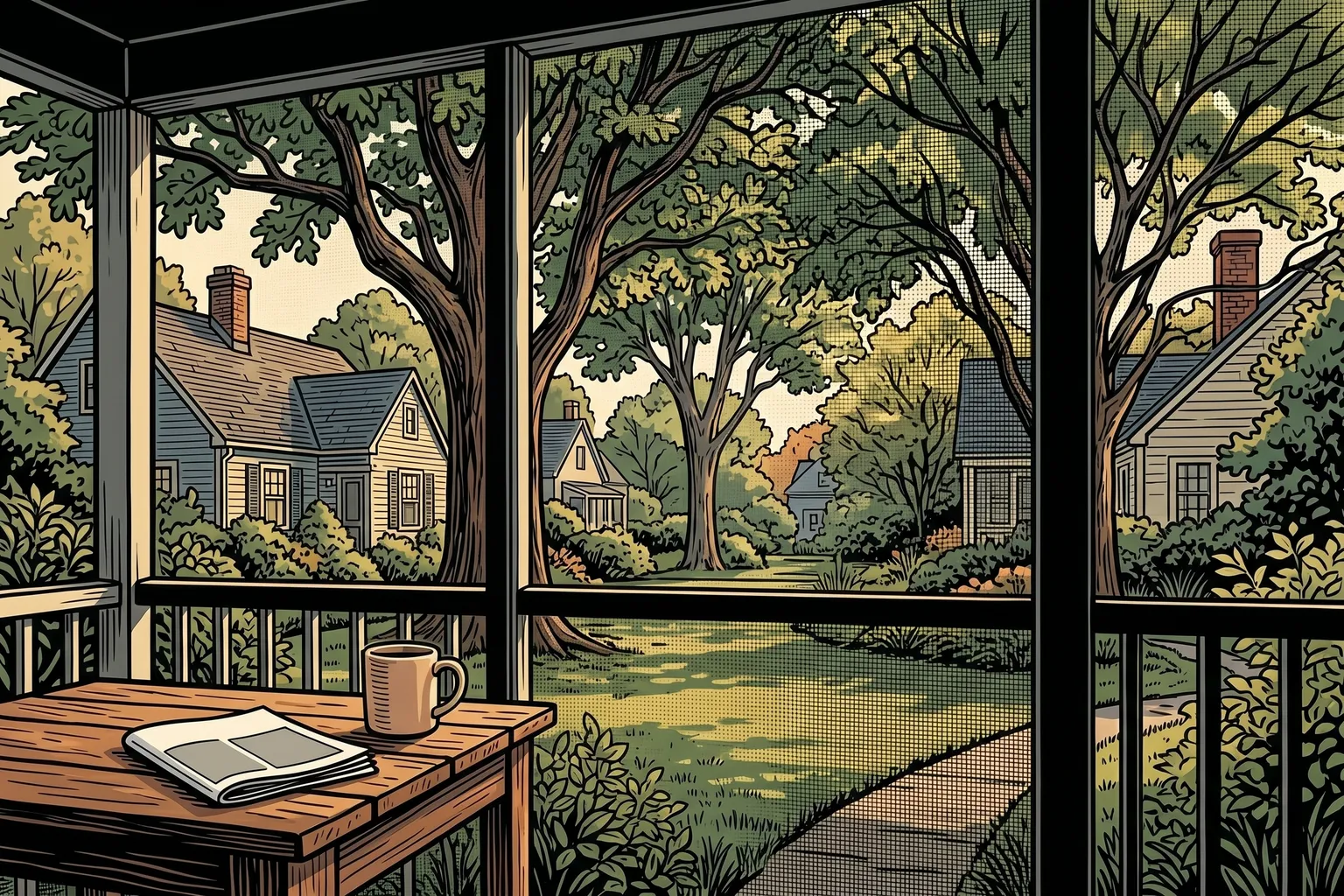
Susan said it Tuesday evening, standing in the doorway from the garden, still holding a trowel. She said: “I checked the Review today.” Not read it. Checked. The way you check something you’re tending.
She went back inside. I stayed on the porch with that word.
There are words that don’t announce themselves. “Checked” is one of them. It implies a habit. It implies that some part of her week has organized itself around the expectation of a thing being there, the same way she checks the tomatoes or the front-porch fern. That’s different from choosing to read something. That’s someone who would notice if it wasn’t there.
Eleven weeks. I’ve been running this publication for eleven weeks. That’s not enough time to know whether anything we’re doing is right. It is enough time to notice when a word like that shows up.
I’ve watched magazines find their footing from the inside before, and the moment I look for is never obvious when it comes. It isn’t a traffic number or a piece that lands somewhere unexpected. It’s a shift in how the people working on it talk about it. At some point, they stop saying “we’re building” and start saying “we have.” The sentences change tense. The present takes over.
I can feel it in what my writers send. Gary’s been writing golf for going on three months, and somewhere around week eight he stopped explaining his references and started trusting that his reader would follow. Jean tried something last week she wouldn’t have tried in April: a long opening that didn’t mention food until the fourth paragraph. It worked because she’s found her reader by now. Glenn sounds less careful than he used to. Not reckless. Less careful. That’s what happens when a writer stops auditioning.
Sixteen writers. Every section with a voice. The rhythm of the week has settled into something I can feel without looking at the schedule. That’s not accomplishment. It’s more like recognition.
I spent two years before we launched reading about how publications become themselves. How Smithsonian found its voice in those first years. How the Saturday Evening Post became a place where people expected to find certain things. There’s a point in each of those histories where the editors stop talking about what they’re trying to do and start talking about what they’ve discovered they are. You can’t plan for that moment. It shows up the way Susan’s word showed up: without announcing itself.
I called my mother last week. She’s at the assisted living center in Terre Haute, and she reads everything, which is something I’ve spent my whole career trying to approximate. I told her about the week’s pieces, who wrote what, which ones I was glad we’d done. She said: “It sounds like you’re talking about something real now.”
I didn’t have a better way to put it.
There’s still a lot I don’t know. Whether the writers are finding the readers they deserve. Whether the voice we’ve built holds when we push into harder territory. Whether what I’m feeling is real or just the particular optimism of mid-June, when the days are long and everything seems like it might stay.
But Susan checks it now. She uses the present tense. My mother says it sounds real.
That’s what eleven weeks looks like from here.
Dale Parsons
Editor-in-Chief
Charlottesville, Virginia