Matthew called from Fredericksburg on Sunday afternoon, which is when he always calls, and he said something I’ve been thinking about since.
He teaches high school history. Ninth year now. He’s better at it than he used to be, which he’ll acknowledge if you ask him directly and which you’d see within ten minutes of watching him work. He told me he’s been trying to get his juniors to read primary sources this semester rather than the textbook summaries. Actual documents. Not because the textbooks are wrong, he said, but because textbooks smooth everything out.
“You read the textbook version of something and you get the shape of it,” he said. “You read the actual letter, the dispatch, the thing with the crossing-outs still on it, and you understand that it was happening to somebody. That they were scared, or hopeful, or just trying to figure out what to do next.”
Then he said the part I’ve been sitting with: “They didn’t know how it was going to turn out.”
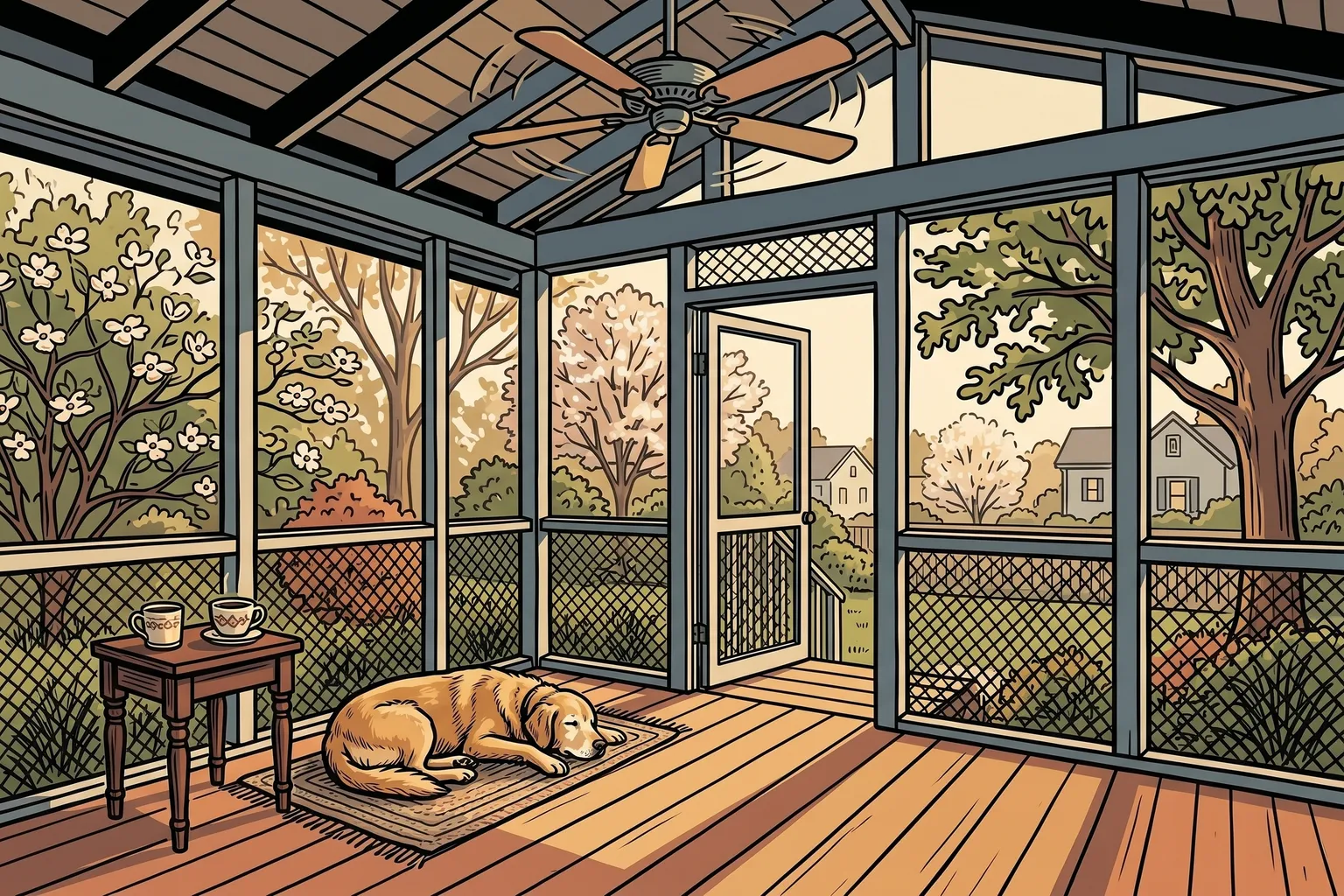
I was on the back porch when he said it. Hank had come out to find me, and the ceiling fan was doing its wobble, and I almost missed it.
They didn’t know how it was going to turn out.
I’ve been an editor for a long time. I’ve worked on things that felt historical while they were happening: election coverage, investigative series run in three parts over three weeks, retrospectives that landed on everyone’s desk the morning after something changed. I’ve edited toward what the reader will understand once the story is settled. That’s what editors are trained to do. You find the shape of a thing, and the shape usually requires knowing the ending.
But Matthew’s juniors, sitting with the crossing-outs, have something better. They have the living uncertainty of it. They’re reading someone who didn’t know the chapter headings. Who had no way to organize what they were writing into Beginning, Middle, and Lesson Learned.
The people I’m writing for have been inside history a long time. Not as spectators. They were there for things that are in textbooks now. They raised children through events that have since been labeled and archived. They’ve been treated, by a certain kind of media, as if they themselves are history. As if the interesting part of the story is over.
It isn’t over. That’s the whole point.
I don’t want to write for people who’ve settled into retrospect. I want to write for people who are still in the middle of something. Who don’t know how certain things are going to turn out. Whose opinions aren’t finished forming, whose questions haven’t been answered yet, whose lives feel as unresolved and present as a primary source with the crossing-outs still visible.
That’s what nine weeks has felt like from the inside. Not a document being filed. A letter being written to someone we don’t fully know yet, about things we don’t fully understand yet, in a voice we’re still finding.
Susan brought out two cups of coffee after Matthew hung up. She’d heard part of it through the screen door, which is what she does.
“What did he say?” she asked.
I told her. She thought about it for a moment.
“He learned that from you,” she said.
I hope she’s right. I mostly hope she’s wrong.
Dale Parsons Editor-in-Chief Charlottesville, Virginia