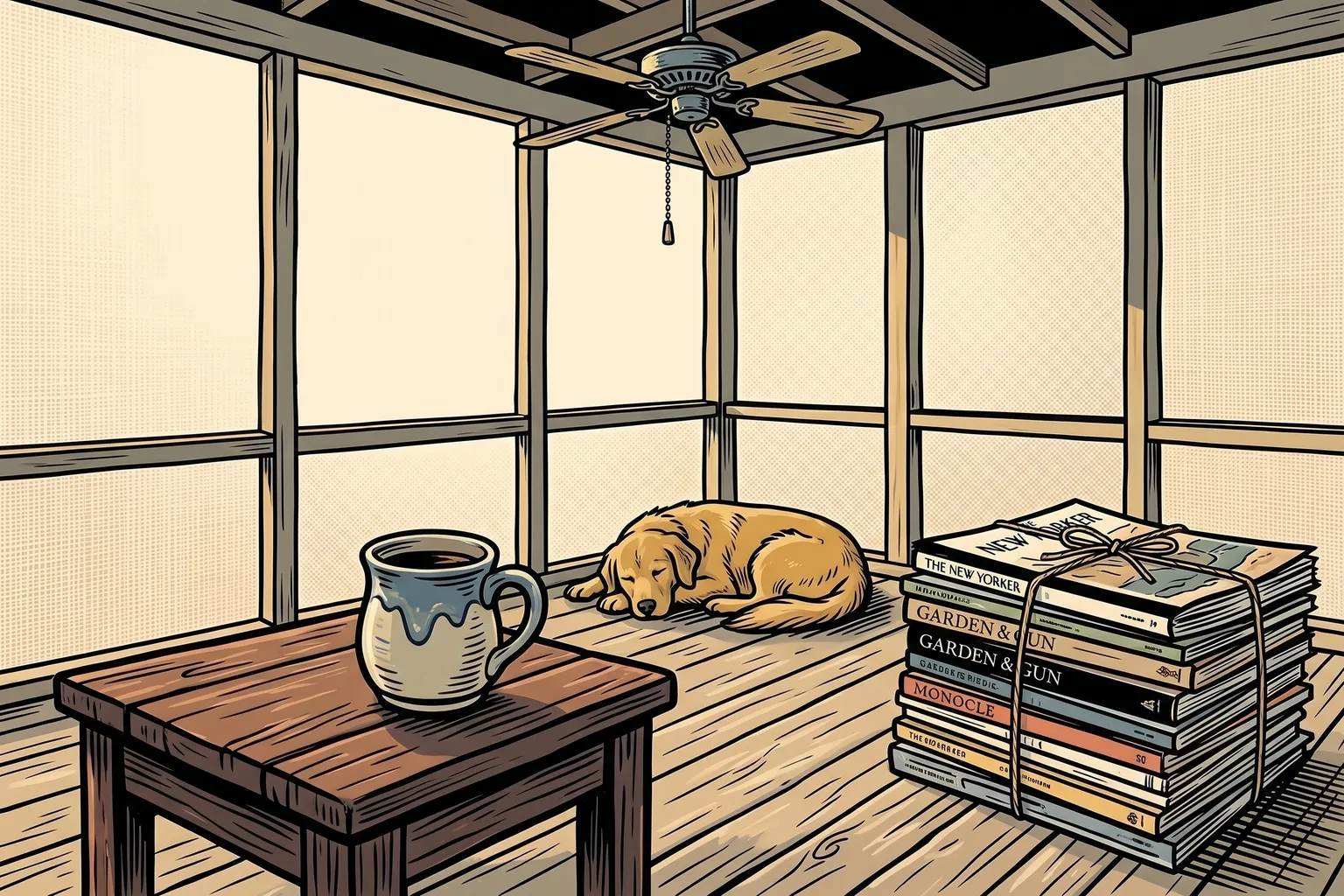
The porch door creaks, and Hank moves. Not quickly. He hasn’t moved quickly in two years. But he moves.
He was eight this spring. A golden retriever past the middle of his years. He takes the stairs one at a time now, front paw first, then a pause, then the rest of him. On cold mornings he stays on the rug until I’ve been outside long enough that he decides he doesn’t want to be alone more than he wants to be comfortable. Then he comes.
June arrived last week. First morning of real June light, the kind that comes in sideways and early and stays longer than it has any right to. I was out on the porch at five-thirty with coffee. Hank came at five-forty-five. He took the stairs, found his spot near the magazine stack, and lay down with a sound that’s somewhere between a sigh and a resignation.
Susan says I’m sentimental about dogs. She isn’t wrong. But there’s something else.
He still goes to the door first. The mail carrier, a delivery, a neighbor cutting across the yard. Hank hears it before I do. He lifts his head, decides it’s worth the effort, and he goes. Slower than he used to. But he goes.
I’ve been thinking about that. About whatever it is that makes you still go.
I spent most of my working life editing other people’s writing, and you see a lot of different ways that people run out of something. Some run out of energy, and it shows in the sentences: they get shorter and harder and lose their peripheral vision. Some run out of interest, which is worse, because you can usually find energy when a piece demands it, but you can’t manufacture caring about a thing if you’ve stopped caring. A few run out of ambition, and this is the strangest one to watch, because sometimes the writing actually gets better.
What I’ve been trying to figure out is whether slowing down is the same as stopping.
It isn’t. But the temptation is to read slowness as decline, and I’m not sure that’s honest. Hank doesn’t go to the door because he’s fast. He goes because whatever comes through that door is still interesting to him. Because the world outside is still worth checking. Because he hasn’t stopped believing that arrivals matter.
I thought about this last week when we had, for the first time, everyone working at once. All the writers, all the sections, the publication running the way it’s supposed to run. Not a launch anymore. Not a test. Just a house that people live in. It didn’t feel like a milestone. It felt like a morning.
Susan has her summer stack on the end table by her chair. She reads differently in summer: thicker books, things she’s been saving since winter, things she doesn’t want interrupted. There’s a certain satisfaction in watching someone who knows how they like to read. She’s been at it since the evenings got long enough.
Hank was still on the porch when the first trucks came down the street this morning. He lifted his head. He went to the screen.
I went back to my coffee.
The ceiling fan wobbled. The light held later than it should have.
He settled back down after a minute. He’d done what he came to do.
There’s something about early June that doesn’t ask you to rush. The days are long and the mornings are slow and the door keeps getting interesting. I think that’s enough of a philosophy for now.
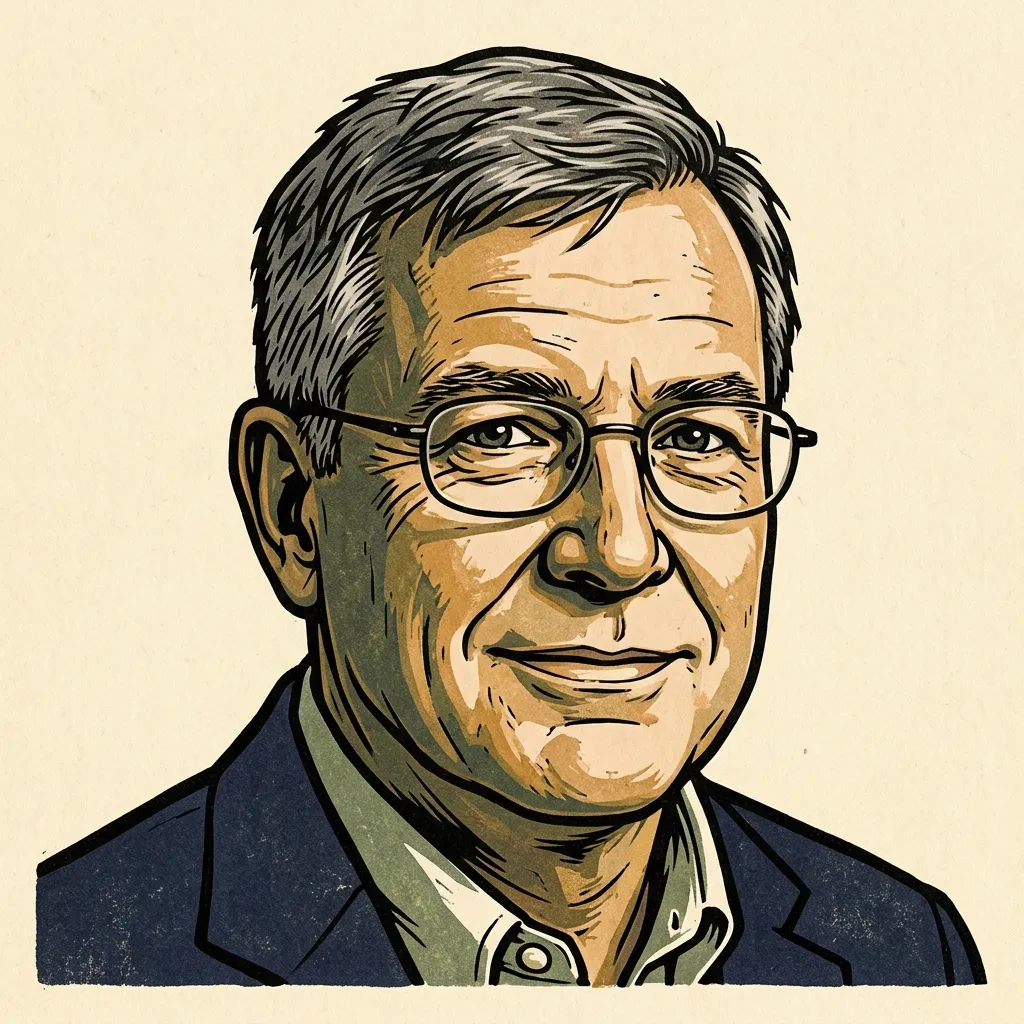
Dale Parsons
Editor-in-Chief
Charlottesville, Virginia