On Saturday afternoon, while millions of Americans were loading up cars and planning cookouts for the long weekend ahead, President Trump posted to social media that an agreement with Iran had been “largely negotiated” and would be “announced shortly.” He listed the countries he’d spoken with: Saudi Arabia, the United Arab Emirates, Qatar, Pakistan, Turkey, Egypt, Jordan, Bahrain, and Israel. The Strait of Hormuz, shut since late February when U.S.-Israeli strikes on Iranian facilities triggered a naval confrontation in the Gulf, would reopen as part of the terms.
No press conference. No joint address. No briefing to the congressional leaders who have spent three months voting on whether the president had the authority to conduct this war. Just a post, and a phrase, on the afternoon before Memorial Day weekend.
The phrase is “largely negotiated.”
I spent Saturday’s walk through Oakley turning it over, which is my reliable test for whether something is worth a column. Forty-five minutes. If I’m still stuck on it when I get back to the study, that’s the week.
Here’s what was stuck. On the same day Trump announced a “largely negotiated” peace, Iran’s Foreign Ministry spokesman told reporters that nuclear issues aren’t part of the current negotiations at all. Secretary of State Rubio repeated the American position that Iran can never have a nuclear weapon and must turn over its highly enriched uranium. Trump said the Strait of Hormuz will open. Iranian state media said the strait stays under Iranian management.
These aren’t edge disputes about phrasing. They’re the center of what the whole thing has been about since the first strikes went in.
In diplomatic language, there are reasons to announce progress before it’s complete. You lock in what you’ve agreed, you signal momentum, you manage domestic audiences on both sides. Trump has worked this way in negotiations for decades. The Iranians are managing their own public as much as they’re managing a text. Both of those things can be true and a real deal can still be coming. I know that. But knowing it doesn’t make the gap between what Trump announced and what Iran confirmed any smaller, and the gap isn’t about wording. It’s about the central questions.
That ambiguity would be unremarkable in a normal treaty process. But this hasn’t been a normal process.
Congress was notified of the initial strikes on March 2. Over the months that followed, the Senate voted seven times to invoke the War Powers Resolution, each time failing. The last attempt, on May 13, failed fifty to forty-nine, with Lisa Murkowski of Alaska crossing over for the first time in six previous chances to do so. The constitutional clock that Congress passed in 1973, after fifty-eight thousand Americans died in a war it never formally declared, ticked past sixty days without being invoked. Seven votes. Seven losses.
The war that Congress didn’t declare may now be ending in a deal that Congress hasn’t been briefed on, announced via social media at the start of a three-day weekend.
I want to be precise about what I’m not saying. I’m not saying the deal won’t hold. Messy announcements precede real agreements all the time in diplomatic history, and if the Strait opens and the shooting stays stopped and the nuclear question gets resolved in the thirty-to-sixty days of further negotiations the framework calls for, then the process will look better in retrospect than it looks right now. I’m not saying the war should have continued. Wars ending is almost always better than wars continuing.
What I’m saying is something more modest: the process by which we began this war, and the process by which we appear to be ending it, are the same kind of process. Executive, fast, announced rather than debated, presented to the country as a social media post on a weekend when most people are thinking about the grill.
That matters more this weekend than it would most others.
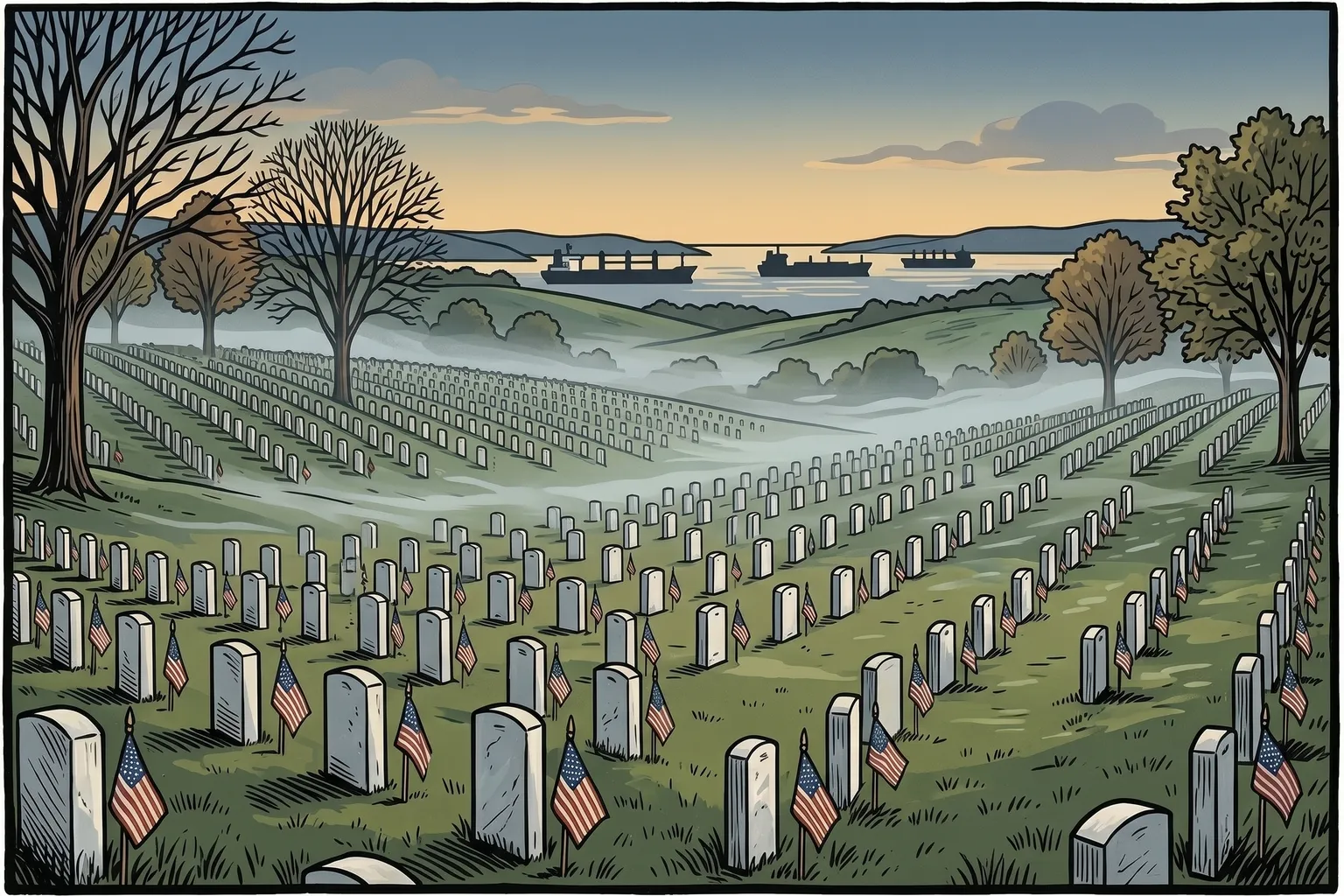
Memorial Day was built around a specific idea: that the decision to send people to die deserves more than administrative routine. The national cemetery ceremonies, the folded flags, the names on the walls, the formal public acknowledgment, all of it exists because the country decided, at some point, that the weight of those decisions had to be made visible and shared. Not just processed. Shared. The VA is holding ceremonies at 129 national cemeteries across the country tomorrow, which is the right thing, and they’ll be done with the care these days deserve.
What the ceremonies can’t do, and weren’t built to do, is substitute for the prior deliberation they were meant to honor. The ritual of Memorial Day makes sense only if the decisions it commemorates were treated with seriousness before the names had to be carved. The ceremony comes after. The weight is supposed to come before.
That weight has been getting lighter for a long time. Not this year only. Long before this particular war, the gap between the constitutional design of the war-making decision and the actual practice of the last seventy-five years has widened in ways that a single Senate vote can’t close, even when it’s fifty to forty-nine and going in the right direction.
But on this particular Saturday, with the flags about to go up and a war that’s “largely negotiated” and the final details still being disputed by the parties who supposedly agreed to them, the question feels worth sitting with longer than a weekend.
What kind of process does this decision deserve?
That question isn’t about this president, or this deal, or this war specifically. It’s the one Memorial Day has always been asking, whether we were listening or not.