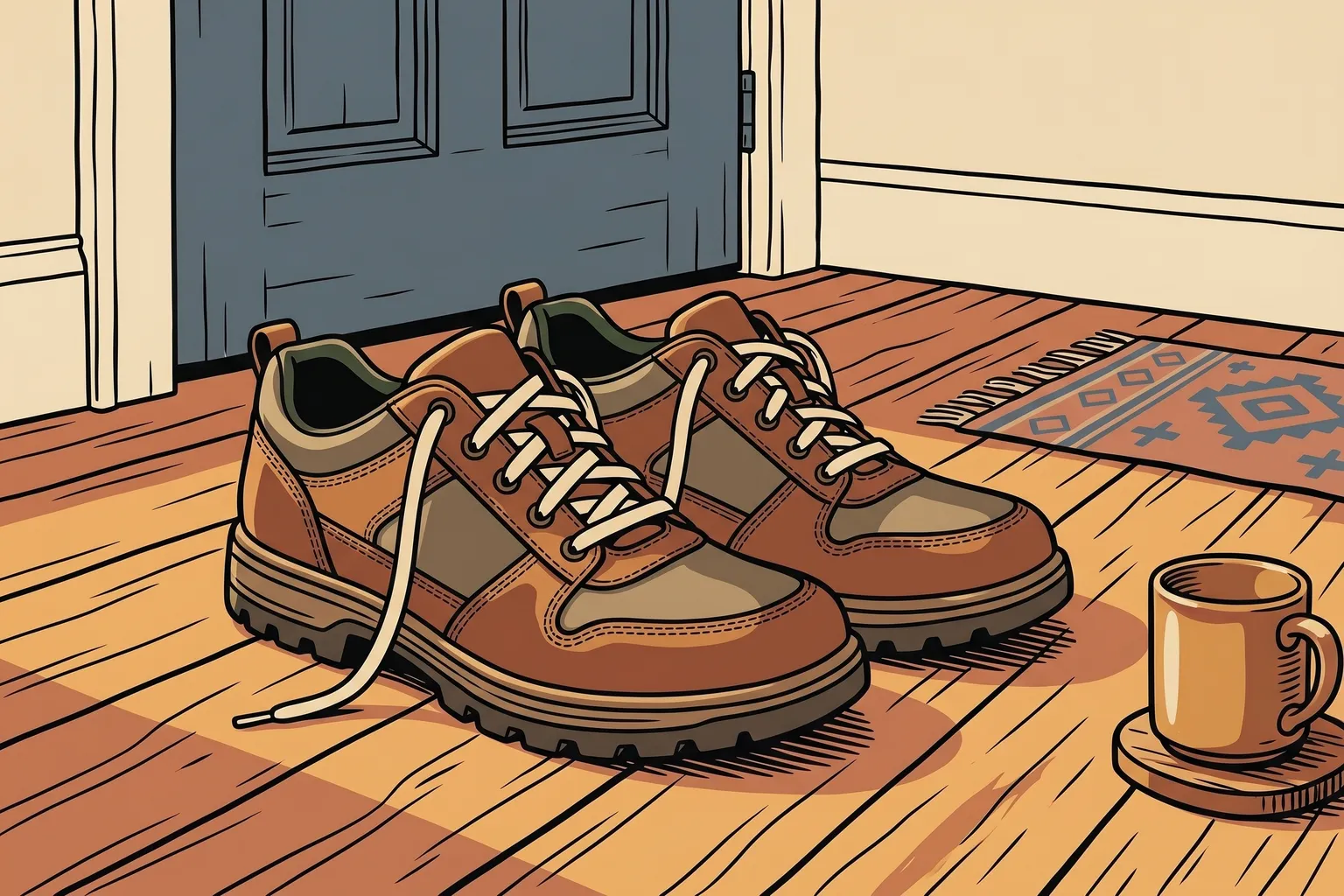
A woman I spoke with last year had been living with heel pain for two years. She was sixty-one. She described it the way almost everyone describes it: a sharp ache in the bottom of her heel, worst with the first steps out of bed in the morning, better after she moved around, then worse again after she sat for any length of time. She had bought three different pairs of shoes over those two years, each one softer and more cushioned than the last. Memory foam insoles. Gel pads. A pair of sneakers so pillowy she said it felt like walking on a mattress.
None of it helped. Some of it made things worse.
When I walked her through what was actually happening in her foot, the anatomy, the mechanics, why the morning pain was the hallmark symptom, she said something I hear constantly: “Why didn’t anyone just explain this to me?” That is a fair question. And it is, essentially, what this piece is about.
What plantar fasciitis actually is
The plantar fascia is a thick band of connective tissue that runs along the bottom of your foot, from the base of your toes to your heel bone. It isn’t a muscle. It’s a ligament. Its job is structural: it supports the arch, absorbs shock, and acts as a kind of bowstring that keeps the foot’s architecture in tension when you stand and walk.
Plantar fasciitis is what happens when that ligament is overstressed, particularly where it attaches to the heel bone. That attachment site becomes inflamed, and in chronic cases the tissue begins to degenerate.
The morning pain is the signature. Here is why. When you sleep, your foot relaxes into a pointed position and the plantar fascia shortens. When you get up and take those first steps, you’re stretching an inflamed, shortened ligament across the bottom of your foot and loading your full body weight onto it. That is why the first five minutes are often the worst, and why it hurts after sitting for a long time. The fascia tightens, and standing re-stretches it.
This isn’t mysterious. It’s straightforward biomechanics. But most people never get it explained to them in those terms, so they reach for solutions that feel logical but miss the point entirely.
Why cushioning is the wrong instinct
The most common response to plantar fasciitis is to seek out the softest, most cushioned shoe available. The heel hurts, so you want something soft under it. But excessive cushioning, particularly without adequate arch support, allows the foot to sink and flatten with each step. That places more strain on the plantar fascia, not less.
What the fascia needs is support, not softness. A shoe that holds the arch in its natural position and prevents the foot from collapsing inward (called overpronation). When the arch drops, the plantar fascia stretches beyond its comfortable range. Do that a few thousand times a day, and you have a tissue that never gets a chance to recover.
Arch support and midfoot stability should come first. Cushioning should come second. That order matters, and it’s the opposite of what most people do.
What to look for in a shoe
I’ve written before about walking shoes and how foot mechanics change over time. Those principles overlap with what matters here, but there are a few things worth getting specific about.
Arch support height is the single most important feature. The shoe’s arch should match the natural contour of your foot when it’s held in a neutral, supported position. If you can press your thumb into the arch area and flatten it easily, that shoe doesn’t have enough structural support.
Heel drop matters. That’s the difference in height between the heel and the forefoot, measured in millimeters. For plantar fasciitis, a moderate heel drop of 8 to 12 millimeters tends to work well, because that slight elevation reduces the angle of stretch on the plantar fascia during walking. Shoes with zero drop or very low drop tend to aggravate plantar fasciitis because they demand more of the fascia with every step.
The midsole should be firm enough to resist compression under load. Press it between your thumb and forefinger. If it compresses easily, it won’t provide meaningful support during walking.
Toe box room is often overlooked. A cramped toe box forces the toes into an unnatural position and alters the way force distributes across the foot. The toes should be able to spread naturally.
And rigidity in the right places. Try to twist the shoe like you’re wringing out a washcloth. A good shoe for plantar fasciitis will resist that twist in the midfoot.
Shoes that actually work
I don’t receive anything from any shoe manufacturer. But I’ve spent enough time looking at the evidence and talking to podiatrists to have opinions about specific models. These are currently available and do the right things structurally.
The Brooks Addiction Walker 2 is a motion-control walking shoe with a firm midsole and excellent arch support. It isn’t glamorous. It has an APMA seal of acceptance, which means the American Podiatric Medical Association has reviewed it. For plantar fasciitis aggravated by overpronation, this is one of the most effective options available.
As an Amazon Associate we earn from qualifying purchases. Sunday Evening Review earns a commission if you buy through a link on this page, at no extra cost to you. We have not been paid to recommend anything here.
Check current price on Amazon →
ASICS makes the Gel-Kayano 32, a stability shoe with a structured support system that holds the midfoot firmly. It was designed for running, but plenty of people use it for daily walking, and for plantar fasciitis, the support characteristics are exactly right.
Check current price on Amazon →
For people who need cushioning but whose plantar fasciitis isn’t driven primarily by overpronation, the New Balance Fresh Foam X 880v15 is worth trying. It’s a cushioned neutral shoe, but unlike some ultra-soft models, it maintains enough midfoot structure to provide real support.
Check current price on Amazon →
I’d also look at the Hoka Bondi 9. Hoka’s rocker geometry (the curved sole that rolls you forward through the gait cycle) reduces the load on the plantar fascia during push-off. It has substantial cushioning and a moderate heel drop. The shoe is bulkier than some people prefer, but the rocker design is genuinely helpful.
Check current price on Amazon →
The Brooks Adrenaline GTS 25 is another stability shoe with a good balance of cushioning and arch support. The GTS stands for “Go-To Shoe,” and podiatrists recommend it frequently for plantar fasciitis because it provides pronation control without being as rigid as a full motion-control shoe.
Check current price on Amazon →
No single shoe is the universal best shoe for plantar fasciitis, because the best shoe is the one that matches your particular foot mechanics, arch height, and gait. But all of these are structurally sound choices.
What makes it worse
Flat shoes are the most common aggravator. Ballet flats, most sandals, and any shoe with a thin, flexible sole and no arch support will increase strain on the plantar fascia with every step. Flip-flops are particularly bad because they provide zero support and force the toes to grip unnaturally to keep the shoe on, which alters gait mechanics.
Worn-out sneakers are the one people don’t think about. The midsole compresses, the arch support flattens, the heel counter softens. Most walking shoes lose meaningful support after 300 to 500 miles. If your sneakers are more than a year old and you wear them regularly, they may be contributing to the problem even if they don’t look worn out.
Going barefoot on hard surfaces, tile, concrete, hardwood, is also a common aggravator. If you’re dealing with active plantar fasciitis, wearing a supportive shoe or sandal with built-in arch support even inside the house makes a measurable difference. And if you exercise regularly, evaluate those shoes too. The wrong footwear during exercise puts more repetitive stress on an already inflamed tissue.
Questions to ask your doctor
If you’re dealing with persistent heel pain, particularly morning pain that has lasted more than two to three weeks, bring these to your next appointment.
“Based on my symptoms, are you confident this is plantar fasciitis, or should we consider other causes of heel pain?” This matters because heel pain can also be caused by stress fractures, nerve entrapment (called Baxter’s neuropathy), or heel pad atrophy, all of which require different treatment.
“Would you recommend custom orthotics, or are over-the-counter arch supports sufficient for my case?” Custom orthotics are expensive and not always necessary. For many people, a well-fitted over-the-counter orthotic does the job. But when there’s a structural foot issue driving the fasciitis, custom orthotics make a real difference.
“At what point would imaging be appropriate?” Most plantar fasciitis is diagnosed clinically, based on symptoms and a physical exam. But if pain persists despite two to three months of treatment, an X-ray can check for heel spurs (which are often incidental and not the actual cause of pain), and an MRI or ultrasound can show the thickness and condition of the plantar fascia itself.
“Is there a physical therapy protocol that would help?” Stretching and strengthening exercises for the calf muscles and plantar fascia are among the most evidence-supported treatments. Eccentric strengthening, night splints (which hold the foot in a flexed position during sleep to prevent the fascia from shortening), and targeted calf stretches are all worth discussing.
“Could my current footwear be contributing to this?” Bring the shoes you wear most often to the appointment. A good podiatrist can tell you in sixty seconds whether your shoes are helping or hurting.
Plantar fasciitis is treatable. In the large majority of cases, it resolves with supportive footwear, stretching, and time. The woman I mentioned at the beginning found relief within six weeks of switching to a properly supportive shoe and starting a daily calf-stretching routine. Two years of pain, resolved by understanding what was actually happening and making one straightforward change. That’s not a miracle. That’s what happens when someone finally gets the right information.