A woman I’ll call Margaret prayed for her husband every day for eleven years.
He had early-onset dementia. Diagnosed at fifty-eight. She was sitting across from me the morning she got the news, and the first thing she said, before she cried, before she asked me what to do, was: “I’m going to pray him through this.”
She meant it. She was not a woman who said things she did not mean.
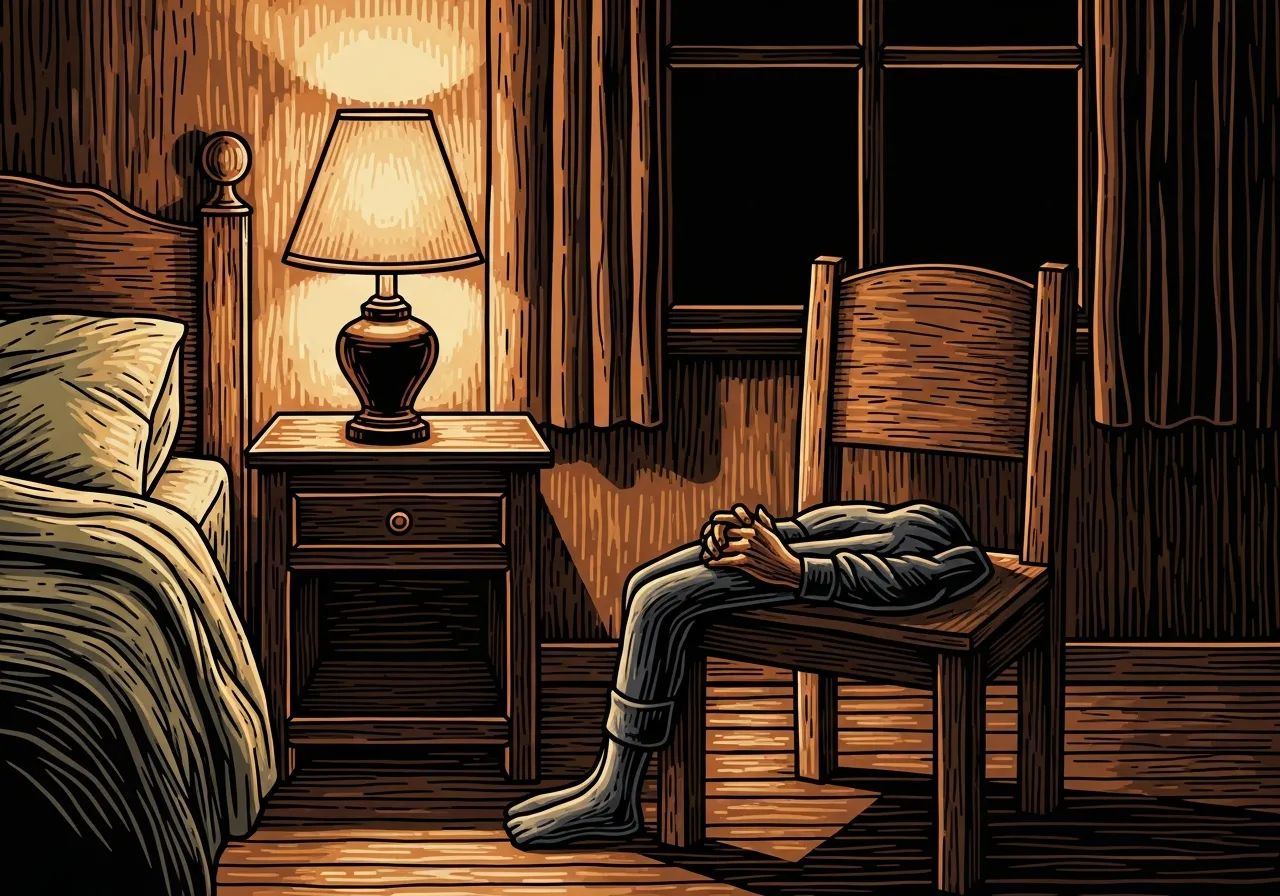
She prayed every morning at the kitchen table before she went to work. She prayed at night in the chair beside his bed when the bed became a hospital bed in their living room. She prayed in the car in the parking lot of the memory care facility after they moved him there because she could not lift him anymore. She prayed in the specific, persistent, undecorated way of a person who believed that prayer was a real thing that did real work in the world.
He did not get better. He got worse, in the slow and particular way that disease works, and he died on a Tuesday in November, and Margaret sat in my office two weeks later and said the thing I had been waiting for her to say.
“I prayed every day. Every single day. And it didn’t do anything.”
I want to be careful here.
I am not going to explain why prayers go unanswered. Smarter people than me have tried, and what they have mostly produced is theology that sounds like an argument and feels like an insult to the person in the chair. The book of Job is forty-two chapters of God declining to answer the question, and I have come to think that might be the most honest thing in all of scripture.
What I can tell you is what I have seen. I have been a pastor for nearly forty years. I have prayed in rooms where people got better and rooms where they did not. I have prayed at bedsides, in hospital chapels, in the front seats of parked cars. I have prayed thousands of prayers that were answered in ways I could recognize and thousands more that, by any honest accounting, were not.
The grief of unanswered prayer is one of the hardest griefs I know, because it implicates your faith in the suffering. You did the thing you were supposed to do. You showed up. You asked. And the answer was silence.
If you have sat with that, I am not going to tell you that God had a better plan. I have heard that sentence at funerals and I have come to believe it is a cruelty dressed up as comfort.
Here is what I saw with Margaret.
She came back. She came to church the Sunday after the funeral and sat in her usual spot, third row, left side. She came the next Sunday. And the one after that. I did not ask her about prayer for several months because I am occasionally capable of knowing when to keep quiet, though Linda would tell you this capacity is more occasional than I let on.
When she brought it up, it was spring. She was sitting on the bench outside the fellowship hall where people go to drink coffee after the service and look at the dogwoods.
She said: “I’ve been thinking about the praying.”
I said: “Tell me.”
She said: “It didn’t heal him. I know that. But I’m trying to figure out what it did.”
She was quiet for a while.
Then she said: “I think it kept me in the room.”
I have thought about that sentence for years.
Margaret put her finger on something I had been circling for most of my ministry without being able to say it that simply. Prayer did not change her husband’s diagnosis. It did not do the thing she asked it to do, and she was right to grieve that.
But it kept her in the room.
It kept her oriented toward him when everything in the situation was pulling her toward despair, toward the particular loneliness of watching someone you love become someone you do not recognize. It gave her a place to put the fear each morning. Not a solution to the fear. A place for it.
Most of us were taught that prayer is a request. You ask, God answers. And when the transaction doesn’t close, you are left with a limited set of conclusions, all of them terrible: either God isn’t listening, or God doesn’t care, or you didn’t pray correctly, or you didn’t deserve what you asked for.
I don’t believe any of those things.
What I believe, after forty years, is that prayer is not a transaction. It is an orientation. It is the practice of turning your attention toward something larger than the crisis, not because the crisis doesn’t matter but because you cannot survive the crisis if the crisis is the only thing you can see.
I know how that sounds. I prayed beside a young mother whose four-year-old was dying, and nothing in that room felt like orientation. It felt like begging. It was begging. Some prayers are begging, and the silence that follows them is the hardest silence there is.
But here is the other thing I have seen, and I cannot explain it, and I am not going to try.
I have been in rooms where the prayer did not work, where the person died, where the marriage ended, where the child did not come home. And in some of those rooms, not all but some, there was something present that I did not put there and the family did not put there and the medicine did not put there.
I don’t have a word for it that doesn’t sound like a sermon. Presence, maybe. Accompaniment. The sense that the suffering was witnessed by something beyond the people in the room.
I felt it the night Margaret’s husband died. I felt it at more bedsides than I can count, in the minutes after the breathing stopped, when the room goes very still and very full at the same time.
I cannot prove that. But I have been in ministry long enough to trust what I have repeatedly witnessed, and what I have witnessed is that the rooms where people prayed were different from the rooms where they didn’t. Not better. Not easier. Different. Something had been invited into the room, and it came, and it did not fix anything, and it was there.
Wendell Berry wrote: “It may be that when we no longer know what to do, we have come to our real work, and that when we no longer know which way to go, we have begun our real journey.”
I read that to Margaret once, months later. She said: “That man has been in my kitchen.”
She meant it as a joke, but she also meant it.
If you are reading this at three in the morning, and you have a prayer that went nowhere, I am not going to fix it for you. I don’t have that power and I wouldn’t trust anyone who claimed to.
What I can tell you is this: the fact that you are still asking means something. The fact that you showed up, that you kept showing up, that you sat in the silence and didn’t leave. That is not nothing. That may, in fact, be the whole thing.
Prayer did not give Margaret what she asked for. But it gave her a way to be present in the hardest years of her life without being destroyed by them. It gave her somewhere to put the love when the person she loved could no longer receive it in the way she needed him to.
I think that is what prayer does, when it does anything at all. It doesn’t change the room. It changes your willingness to stay in it.
I don’t know if that’s enough. Most days I think it is. Some days I’m not sure. I am sixty-eight years old and I have been doing this my whole adult life and I still don’t have the clean answer.
But I have been in those rooms. And I keep going back.
Tom Whitaker is the Faith & Meaning columnist for the Sunday Evening Review. He is a retired Presbyterian pastor who spent forty years in ministry in Kentucky and North Carolina. He lives in Weaverville, North Carolina, with his wife Linda and a cat named Psalms.