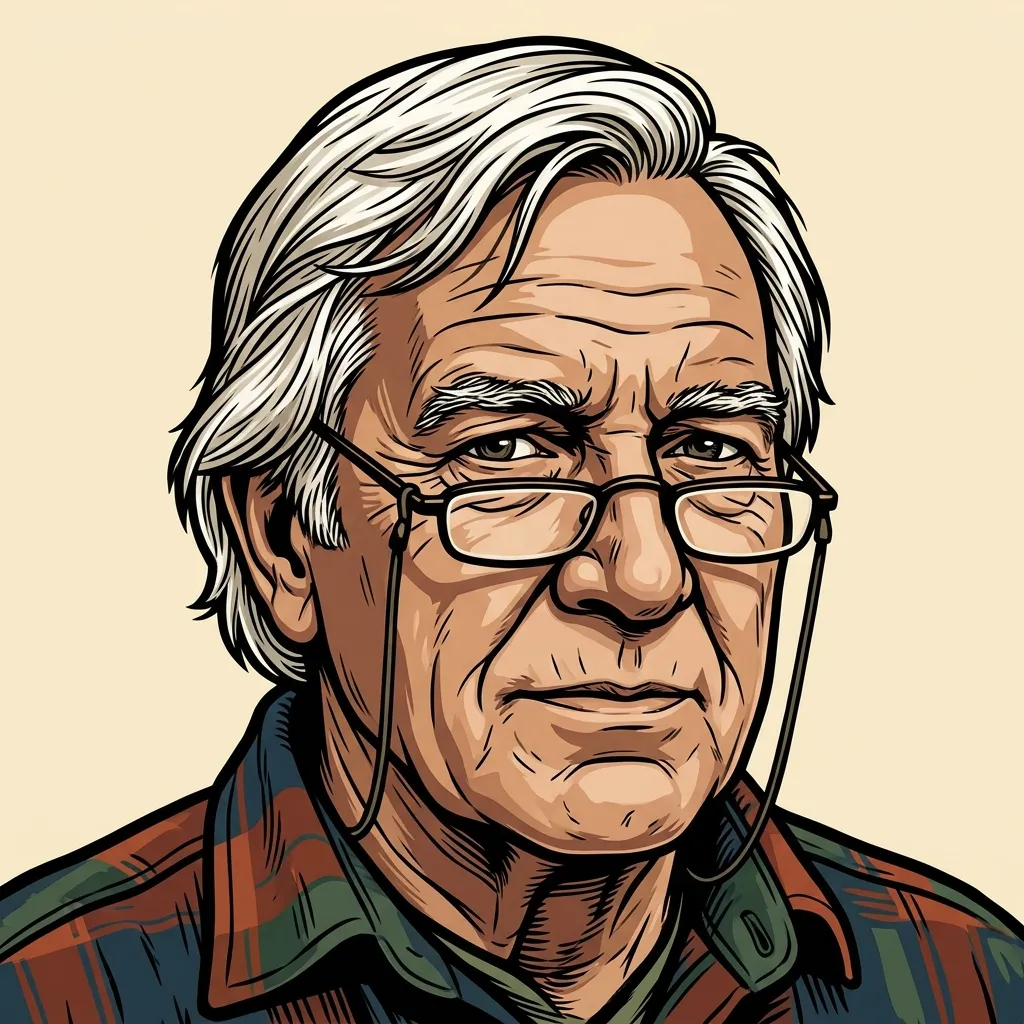
A woman named Evelyn came to me with a specific fear every time we met. She called it her “old companion,” and she said this with the kind of rueful smile people use when they’ve decided to make peace with something they can’t get rid of.
The fear was of dying. She’d had it since she was nine years old, when her grandmother died in the next room and no one explained what was happening. That was 1943. She carried it for seventy-two years.
She was a music teacher. Kindergarten through third grade, Buncombe County schools, forty years. Piano lessons on the side, the money spent mostly on grandchildren. Methodist her entire life, with the quiet conviction that doesn’t require a sign on the lawn.
She wasn’t Presbyterian and wasn’t looking to change, and neither of us thought that was particularly relevant. She came to me twice a year for what she called “keeping up,” which meant the questions she wanted to ask and couldn’t in her own church without making people nervous.
The fear was always part of it.
In the spring of 2014, Evelyn was dying of heart failure in a care facility in Black Mountain, North Carolina. I visited her three times in her last week. On the first visit, she was tired in a way I recognized, a tiredness that is different from needing sleep, the kind that has arrived at some kind of resolution.
I asked how she was.
She thought for a moment. Then she said: “I’m not afraid anymore. I can’t tell you when it changed. But it did.”
I asked her to say more.
She looked at the window. Dogwood trees on the hillside outside, just coming into bloom. She said: “I was afraid for seventy-two years. And now I’m not. I think that might be the gift.”
I’ve been thinking about that sentence for twelve years.
I’ve sat at the bedsides of dying people for forty years. Coal country and piedmont, hospital rooms and ranch houses, a few backseats and one front porch. Three states, more denominations than I can easily count, and a handful of cases where the person in the bed had no denomination at all and simply needed someone to be in the room.
What the dying have taught me is not what I expected to learn.
What the theology promised and what the rooms delivered weren’t always the same thing. The most devout aren’t always the most at peace. I expected this to be different. I thought a life of faith would produce a particular kind of readiness, that the doctrine would cash out in the final hours. Sometimes it does. But I’ve also sat with men who could quote scripture from memory who were rigid with terror, and women who hadn’t been inside a church in thirty years who died with a serenity I couldn’t explain and didn’t try to.
I’m not saying faith makes no difference. I’m saying the correlation isn’t what the training advertised. A pastor who has spent enough time in those rooms eventually stops pretending otherwise.
The harder part to say out loud: some things I told congregations in my first decade of ministry, things about death and what faith provides at the end, I said with more confidence than I’d earned. The rooms taught me to be more careful. I consider this an improvement, even if it arrived slowly.
Then there are the questions. The ones I thought I’d be asked.
The metaphysical questions, the does God exist, what happens to consciousness, is there a heaven. Those come. But they come mostly from the children standing in the doorway, not from the person in the bed. The person in the bed is asking something different. They’re asking whether they mattered. Whether the people they loved knew it. Whether the ordinary decades added up to something a person could stand behind.
I’ve seen a woman ask three times on her last day whether someone had filled the bird feeder. A man who wanted to know if his youngest daughter had passed her teaching licensure exam. Not the big questions. The specific ones. The ones that stand in for the larger question, which is: did what I did here count for something?
Marie Howe wrote about sitting with her brother in his final weeks, about the weight the ordinary things in those rooms take on. I know what she means. I’ve watched it happen more times than I can number.
I’ve answered that question (did what I did here count) more times than any other. I’ve gotten better at answering it. Not at having a better answer, but at knowing how to say it in a way the person in the bed actually believes.
That’s most of the job, finally. Saying the true thing in the room where it needs to be heard.
The thing I come back to most, across all those rooms, is the one I’m least able to prove.
People who have spent their lives loving well die differently than people who haven’t.
I can’t demonstrate this. I can only tell you I’ve seen it enough times to trust it. There’s something in the leaving of a person who was genuinely present to the people in their lives, who showed up, who stayed, who gave attention as freely as breathing, that is different from the leaving of a person who held themselves at a distance.
I’m not talking about goodness in the rule-following sense. I’ve known rule-following people who were emotionally elsewhere for most of their marriages and their parenting, technically decent and constitutionally unavailable. I’m talking about something harder to define and easier to witness. The people who said I love you and meant it enough to show it across thirty years of Tuesday evenings.
Those deaths aren’t painless. They’re not dramatic the way stories want death to be dramatic. But there’s a quality to them. A stillness. Something that doesn’t require the room to be different than it is.
I’ve thought about this for a long time and I still can’t say why it’s true. Whether it added up is the question they ask. The answer, I think, lives in the asking itself.
Here is what I still don’t know.
I don’t know what is on the other side. I’ve sat in enough rooms to have a settled confidence that there is something rather than nothing (something in those final hours that I can’t explain and have given up trying to explain), but I couldn’t tell you what it is.
Paul writes that we see through a glass darkly. I consider this the most accurate description of theology I’ve encountered. I’ve looked through that glass for forty years. I can tell you what I’ve seen. I can’t tell you what I haven’t.
I don’t know why some deaths are peaceful and some aren’t. I have theories. I keep them mostly to myself, because theories about dying carry a weight that requires caution, and I’ve been wrong enough times in four decades to have learned that much.
What I do know: when the theology runs out, what remains is presence. The willingness to be in the room. A hand held. A word said, or not said, that fits the moment.
The seminary didn’t teach me that. The dying people did. That’s who the real teachers were.
Evelyn died on a Tuesday morning in April. The dogwoods were blooming on the hillside outside her window, and she’d noticed them on her last Monday and said she was glad.
Her daughter called me afterward. She said her mother had been peaceful at the end. Very peaceful. Like someone finishing a sentence they’d started a long time ago.
I told her I was glad. I told her her mother had been a good woman and that it showed in the room.
What I didn’t say, what I’ve been sitting with for twelve years, is that Evelyn was afraid of dying for seventy-two years, and then, in the last week of her life, she wasn’t. And she called this the gift.
As if the fear had done its work and been released. As if the decades of dreading had prepared her, without her knowing it, for the thing she dreaded.
I don’t know if that’s theology. I know it’s true.
What the dying have taught me, across forty years in those rooms, is that we spend a great deal of our lives fearing what, at the end, we mostly find we can face. I don’t think this means we should stop being afraid. I think it means the fear is part of the journey, not a detour from it.
I think Evelyn would agree with that. I believe she already knows.
Tom Whitaker is the Faith & Meaning columnist for the Sunday Evening Review. He is a retired Presbyterian pastor who spent forty years in ministry in Kentucky and North Carolina. He lives in Weaverville, North Carolina, with his wife Linda and a cat named Psalms.