A man I’ll call Richard asked me, on a Tuesday afternoon in his living room, what I thought was on the other side.
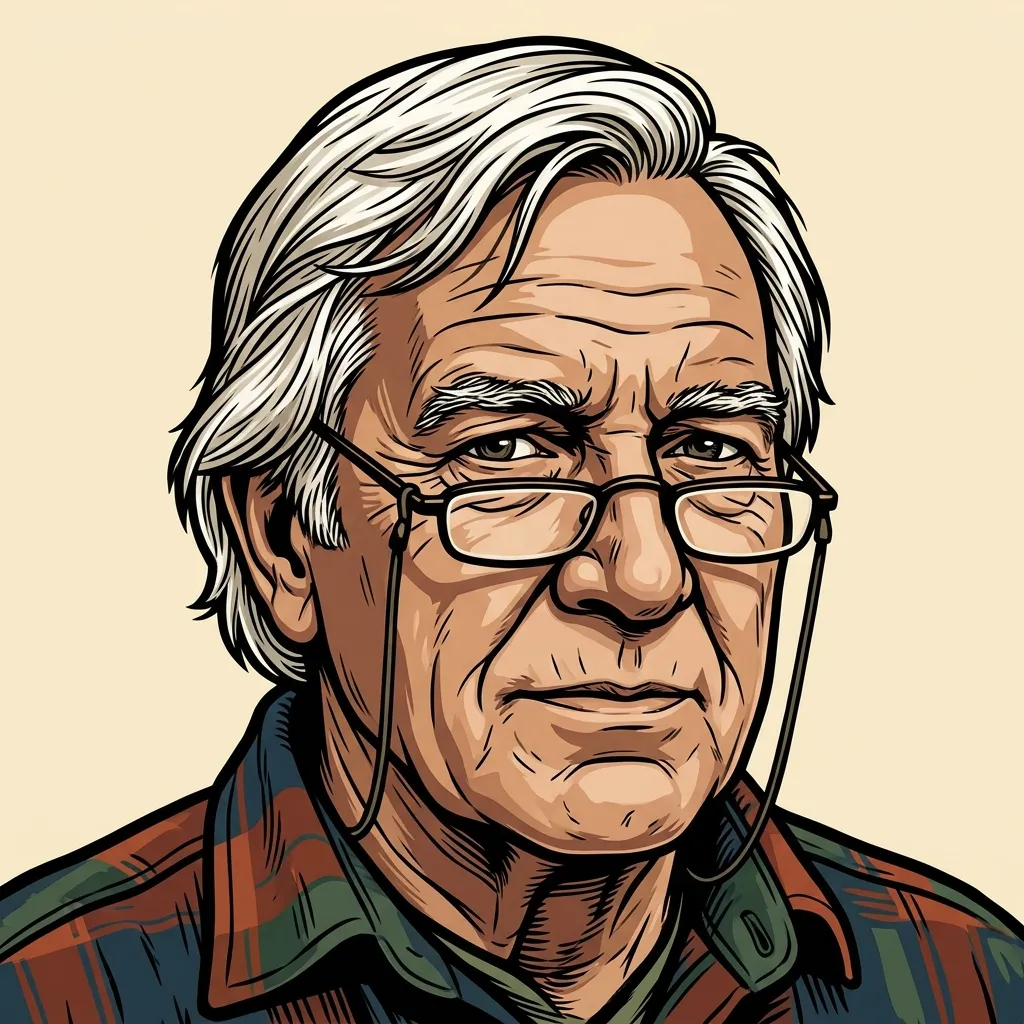
He was seventy-six. Retired electrician. Hands like worn leather, still strong, resting on the arm of a recliner that had conformed to his shape over fifteen years. His wife, June, was in the kitchen making coffee neither of us would drink. The hospice nurse had come that morning. He had three weeks left, maybe four. He knew it. I knew it. June was still negotiating with it, which is her right and her way.
He looked at me across the small distance between his recliner and the couch where I sat, and he said: “Tom, I’m asking you straight. What’s over there?”
I have been a pastor for nearly forty years. I have performed more funerals than I can accurately count. I have been in the room when the breathing changed, when the room got quiet in a way that quiet doesn’t usually get. And I will tell you what I told Richard that Tuesday, which is the same thing I have told myself on every morning I’ve been brave enough to be honest:
I don’t know.
That answer is the reason you are reading this, if you’re being honest with yourself. Not because you want someone to confirm what you already believe. Not because you want a Bible verse or a theological framework or a diagram of the afterlife with labeled sections. You want someone who has been in those rooms, who has seen what happens when the body lets go, to tell you what they actually think. And you want them to not lie to you.
I won’t.
Here is what I do not know. I do not know if there is a place. I have said from pulpits in three states that I cannot tell you what heaven looks like, because I haven’t been there, and anyone who claims otherwise is selling something I’m not buying. I do not know if consciousness continues in any form I would recognize. I do not know if the personality, the self, the thing that makes you you, persists beyond the last heartbeat. I have read the theology. I have studied Paul’s letters and the Revelation and the Gospel of John and the various attempts across two thousand years to map what cannot be mapped. They disagree with each other. I find that comforting, somehow. It means the honest people were always honest about not knowing.
I do not know if you will see your mother again.
I want to. I want to tell you yes, absolutely, she’s waiting for you. I understand why you need that to be true. But I am sixty-eight years old and I have been doing this work since I was twenty-seven, and I have made a decision, somewhere along the way, that I would rather be trusted than comforting. Those two things sometimes line up. Often they don’t.
Here is what I do know.
I know what I have witnessed. I have been in more rooms where people died than almost anyone I’ve ever met. Hundreds. Possibly more. I stopped counting in Hazard because counting felt like the wrong relationship to have with the work. But I have been there, present and awake and paying attention, when people crossed whatever line separates this from whatever comes next. And I have noticed something over forty years that I’m not going to pretend I haven’t noticed.
The people who loved well die differently.
That isn’t a platitude. I need you to hear that. I’m not putting it on a greeting card. I’m reporting what I have seen with my own eyes in rooms where there was nothing left to perform and nothing left to sell.
The people who spent their years attending to the people around them, the ones who were present, the ones who loved imperfectly but persistently, who showed up even when showing up was the harder thing to do: those people, in my experience, die with something I can only call peace. Not always. Not without fear. But with a quality in the room that I have felt enough times to know it’s real and not enough times to explain it.
And the people who spent their years elsewhere, who kept their attention on their own comfort and their own advancement and their own protection at the expense of the people closest to them: those people tend to die harder. More afraid. More alone, even when the room is full. I have seen that too. I don’t enjoy reporting it. But I have seen it enough times that I trust the pattern.
I preached a sermon once, maybe fifteen years ago, where I said something like this out loud. I said I didn’t know what heaven was but I knew what I’d seen in rooms where people died well, and the two things felt connected to me, and that was all I could honestly offer.
A woman in the third pew, a woman who had been sitting in that same spot every Sunday for twenty years and had never once spoken to me after the service, came up afterward and took my hand and held it for a long time without saying anything.
I think she had been waiting for someone in that pulpit to say what she already knew. That certainty isn’t required. That the question matters more than the answer. That we don’t need a map of heaven to know that love is real and that it costs something and that the cost is the proof.
You are reading this because someone you love died and you need to know they went somewhere. Or because you are dying, or think you might be, or have started to reckon with the fact that you will. Or because it’s three in the morning and the question found you the way it finds all of us eventually: in the dark, without permission, and without a satisfying answer anywhere you look.
I will tell you what I told Richard, after the “I don’t know.” I told him what I had witnessed at other bedsides. That the years he spent wiring houses and loving June and raising his two girls and coaching Little League and being frustrating and wonderful and ordinary were not nothing. That love isn’t a feeling that dies when the body does. That whatever I have seen in those quiet rooms at the end of a well-lived life doesn’t look like nothing. It looks like something. I told him I couldn’t prove it. I told him I believed it anyway.
He said: “That’ll have to do.”
I said: “It always does.”
Paul wrote to the Corinthians that we see through a glass darkly, and that we know in part. I have always loved that verse for its honesty rather than its promise. Paul, who had his conversion on the road, who was knocked flat by certainty, still said: I see in part. I know in part. The full picture isn’t yet available to me.
If it wasn’t available to Paul, I am not going to pretend it’s available to me.
But here is where I end up, every time I circle this question. And I have circled it my entire adult life.
I have sat with enough dying people to know certain things. That the love they gave was real. That the years were real. That the attention they paid to the people in their lives wasn’t wasted and didn’t evaporate. That whatever God is (and I believe in God, though my version of God gets simpler and less certain every year), God is not keeping score the way the frightened theologies say. God is not a scorekeeper. God is not a judge in the courtroom sense. If God is anything I have witnessed in forty years of pastoral work, God is the thing I have felt in rooms where love was present and the body was leaving.
I cannot tell you what happens after you die.
I can tell you that the people who loved well didn’t seem, at the end, to be afraid of the answer.
I can tell you the room felt different when they left.
I can tell you that I have been doing this for four decades and I still can’t explain what I have felt in those moments and I have stopped trying to explain it and started simply trusting it.
Here is the world. Beautiful and terrible things happen in it. The people who love well seem to know something the rest of us are still figuring out. I don’t think they know what’s on the other side. I think they know it doesn’t matter as much as we think it does. Because whatever comes next, the love was real. And that, in the end, is the only thing I have ever been certain about.
It has always been enough.