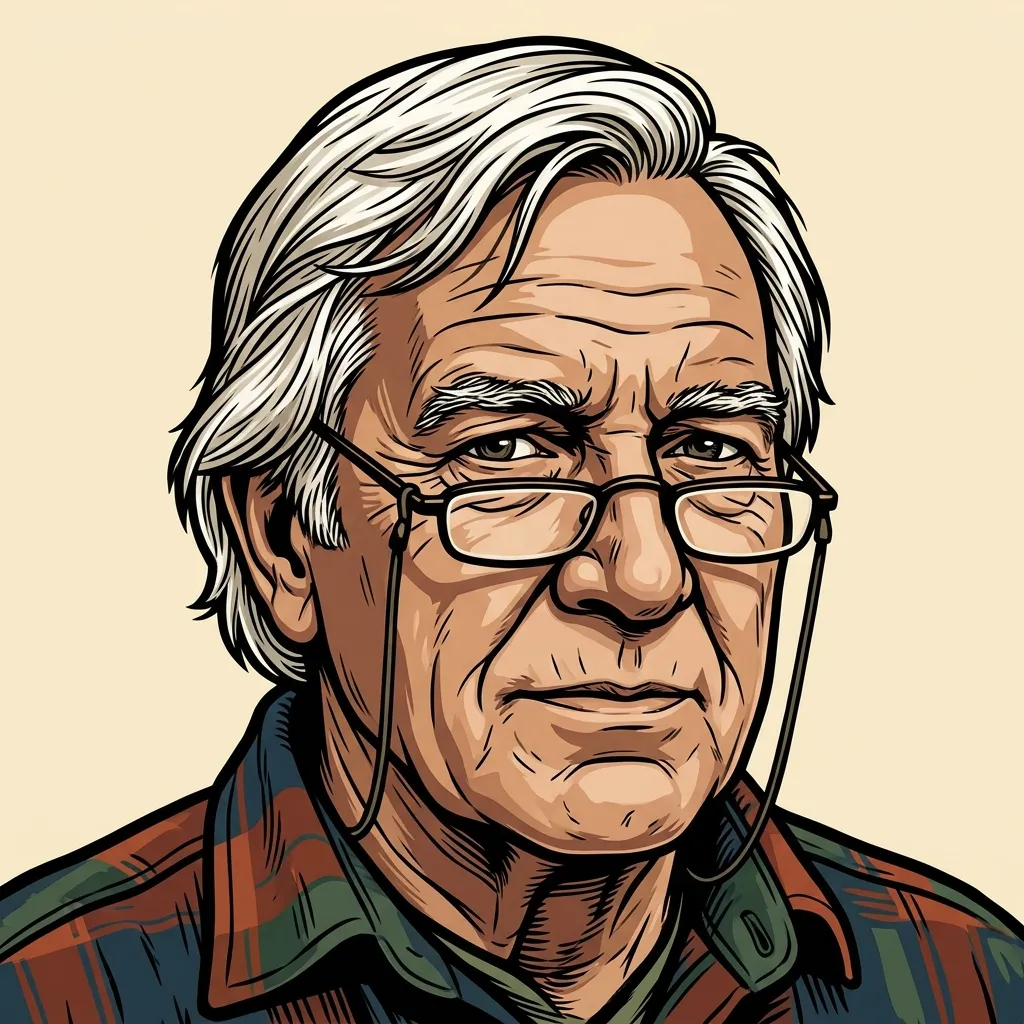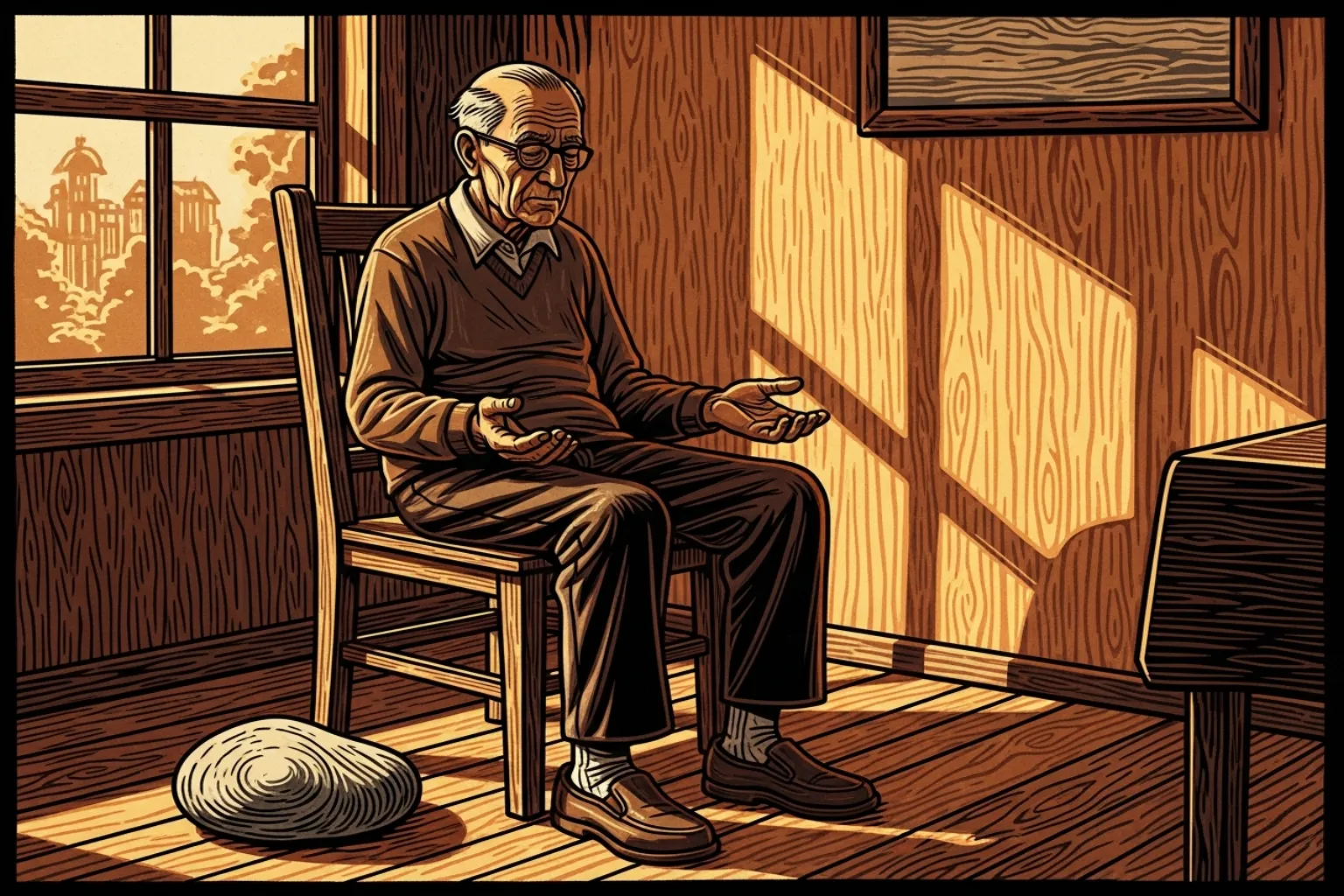
A man I’ll call Harold came to see me on a Thursday afternoon in October. He was seventy-one. Retired machinist. Married to the same woman for forty-six years. Two grown daughters, both doing well. By any reasonable measure, a good life.
He sat in the chair across from my desk and didn’t say anything for a while, which I have learned to allow. People who come to talk to a pastor on a weekday afternoon are almost never in a hurry. They have been carrying the thing for a long time. Another minute won’t hurt.
Then he said: “I need to forgive my brother.”
I said: “Tell me.”
He said: “He cheated me out of the family property when our mother died. Thirty years ago. I haven’t spoken to him since.”
I said: “And now?”
He looked at his hands. Big hands. The kind that come from decades of working with metal. He said: “He’s dying. Pancreatic. His daughter called Shirley last week. And I realized I don’t have thirty more years to carry this.”
I want to be honest about something.
When I was a young pastor, I thought forgiveness was about the other person. I preached it that way. I counseled it that way. Go to them. Make it right. Reconcile. The whole ministry apparatus around forgiveness was built on the assumption that two people were going to sit down and work it out, and that the goal was restoration of the relationship.
Sometimes that happens. I’ve seen it happen, and it’s as good as anything I’ve witnessed in a church.
But most of the time, that’s not what happens. Most of the time, the other person is gone, or dead, or unwilling, or so far past the injury that they don’t remember what you’ve been carrying for three decades. Most of the time, forgiveness is not a conversation between two people. It’s something that happens inside one person, alone, in the quiet.
I didn’t understand this until I was well into my fifties. Which is to say I didn’t understand forgiveness until I had enough of my own to do.
Here is what I have noticed about forgiveness in the last third of life.
It changes. Not the theology of it. I still believe what I’ve always believed, which is that forgiveness is central and costly and not optional if you want to live honestly. But the texture of it changes. The urgency changes. What you’re forgiving, and why, and what happens inside you when you do, or don’t.
In your thirties, you forgive because you’re supposed to. Because the preacher said so, or the marriage counselor, or the self-help book. It’s an act of will, sometimes a muscular one. You grit your teeth and say the words and hope the feeling follows.
In your fifties, you start to notice that the unforgiven things have weight. Physical weight, almost. You can feel them in the way you hold your shoulders, in the conversations you avoid, in the people whose names you can’t say without your jaw tightening. You start to forgive not because you should but because you’re tired of carrying it.
In your late sixties, it shifts again. I can only speak for myself, but I’ll try. The forgiveness that matters to me now is not primarily about the other person. It’s about the shape of my own soul. It’s about what I want to be made of when I get to the end. And I have sat at enough bedsides to know that the end comes, and that what you’re carrying when you arrive there matters more than I can tell you.
Seamus Heaney has a poem called “Postscript,” about driving along the coast of Ireland in September and seeing swans on a lake and the light on the water, and the whole thing hits him so hard that he says you are “neither here nor there, / a hurry through which known and strange things pass.” He is describing a moment of being so open to the world that you lose your grip on yourself, just for a second, and what rushes in is everything.
I think forgiveness, when it finally happens, feels like that. Not the muscular act. Not the gritting of teeth. The moment when you simply stop holding the door closed against the thing you’ve been keeping out, and what comes through is not the person who hurt you but something larger and less personal. A kind of weather moving through you.
I don’t have a better way to say it. Linda would tell you I should have become a poet instead of a pastor. I tell her the pay is worse, which she says is hard to believe.
Harold went to see his brother.
I didn’t tell him to. I don’t tell people what to do about forgiveness anymore, not after forty years of watching how badly that can go when the timing is wrong. What I said was: “What do you want to have done, a year from now, when you think about this?”
He sat with that for a long time.
Then he said: “I want to have gone.”
He drove four hours to a hospital in Virginia. He sat with his brother for an afternoon. He told me later that they didn’t talk about the property. They didn’t talk about the thirty years. His brother was thin and tired and hooked to machines, and what they talked about was their mother’s garden and the summer they built a tree house in the walnut tree behind the barn and the fact that their father had never once told either of them he loved them, which they both understood, at seventy-one and seventy-four, had shaped everything that followed.
Harold said: “I thought I was going to forgive him. But that’s not what happened.”
I said: “What happened?”
He said: “I just sat there and looked at him and realized we were both old men and we’d both been carrying this and neither of us had won anything by keeping it going.”
He paused.
“I don’t think I forgave him exactly. I think I just put it down.”
I’ve been thinking about that distinction ever since.
Forgiveness, in the formal sense, implies a transaction. Someone wronged you. You release the debt. There’s a ledger, and you’re crossing off a line. The church has often taught it this way, and I don’t think it’s wrong, exactly. But I think it misses something about what actually happens in the rooms where I sit with people.
What happens, more often, is what Harold described. You put it down. Not because the wrong didn’t matter. Not because you’ve decided the other person was right, or that the pain wasn’t real. But because you’ve carried it long enough to know what it weighs, and you’ve reached the part of your life where you get to choose what you bring with you into the remaining years, and you choose to bring something else.
That’s not weakness. That’s not letting someone off the hook. That’s a man at seventy-one deciding what he wants to be made of.
I should say this plainly, because I’ve spent too many years circling the point in sermons and I’m trying to get better at it: I have things I haven’t forgiven.
Not many. But they’re there, and they’re old, and I know their weight the way you know the weight of a stone you’ve been carrying in your coat pocket so long you’ve stopped noticing it until someone asks why your coat hangs funny on one side.
I’m working on it. That’s the honest answer. I’m sixty-eight years old and I’m still working on it, and if anyone tells you they’ve got forgiveness figured out, they’re either lying or they haven’t been hurt badly enough yet. Both are possible. Neither is helpful.
What I can say is that the work has changed. It used to feel like an obligation. Now it feels like maintenance. Like cleaning out a room you want to be able to sit in. You don’t do it because someone told you to. You do it because you want the room back.
Harold’s brother died six weeks after the visit. Harold called me that evening. He didn’t cry on the phone. He said: “I’m glad I went.”
I said: “So am I.”
He said: “It didn’t fix anything.”
I said: “No.”
He said: “But I think that’s all right.”
If you’re carrying something that’s been with you for years, I’m not going to tell you to forgive. That word has been used as a weapon too many times by too many people who were not the ones hurt. It’s not my place to tell you when you’re ready.
But I will say this. There comes a point, and you’ll know when you’ve reached it, where the question stops being can I forgive them and becomes what do I want to carry into whatever comes next. The shift is quiet. You might not notice it right away.
When you do, pay attention. That’s the opening. Not a command from the pulpit or a chapter in a book. Just the simple, late-arriving recognition that the weight was never doing what you thought it was doing. It wasn’t protecting you. It was just heavy.
You can put it down.
Not because the person who hurt you deserves it. Because you do.
Tom Whitaker is the Faith & Meaning columnist for the Sunday Evening Review. He is a retired Presbyterian pastor who spent forty years in ministry in Kentucky and North Carolina. He lives in Weaverville, North Carolina, with his wife Linda and a cat named Psalms.