The call came on a Wednesday evening. A woman from my congregation, a retired schoolteacher named Barbara, had lost her father that Sunday. He was eighty-seven. The death was not unexpected. And now the family had decided that Barbara, who had been the steady one all through the long final months, should speak at the service.
She wasn’t calling to ask if I would write it for her. She was calling because she had been staring at a blank page for two days and she needed someone to tell her where to start.
I have had some version of this conversation dozens of times over forty years of ministry. The person is always scared. The blank page is always the same blank page. And there is almost always the same misconception underneath the fear: that a eulogy is supposed to be a summary. That the job is to account for the whole life, to make sure nothing important is left out.
It isn’t. A eulogy is not a Wikipedia entry. It is a single true thing, offered in the presence of people who are grieving, that allows them to recognize the person they loved.
That is smaller than a summary. That is, I think, more possible.
The act of writing a eulogy is an act of love. I know that sounds like something printed on a greeting card, but I mean it in a specific way. You are doing the work of paying attention, of seeing this particular person clearly and finding the words for what you see. That is not a small thing. That is the same work good marriages require, and good friendships, and good pastoral care. The difference is that you’re doing it when the person can no longer correct your errors or tell you what you missed.
Which is why you ask.
The best preparation for a eulogy is not sitting alone with your memories. It is sitting down with the people who knew the deceased from angles you didn’t, and asking: what did I not know about him? What made her laugh in a way you had to be present to catch? What was he like in the morning before coffee? What did she do when she thought nobody was watching?
Those conversations are sometimes the most honest ones a grieving family will have in the weeks after a death. And what they surface is almost always more specific, more alive, than anything you would have arrived at on your own.
Here is what I told Barbara, and what I have told people since.
A eulogy doesn’t have to cover the whole life. It has to carry the truth of the person, the particular weight and warmth of who they were, in the time you have. Five or six minutes. Seven, if you speak slowly. That is roughly eight hundred to a thousand words on paper, which sounds like a lot until you start writing and realize you could go on for four times that and still not have said everything.
The constraint is the gift. You cannot say everything, which means you have to choose, which means the eulogy becomes an act of discernment: what is truest, what carries them most fully, what will make the people in those seats feel seen.
The congregation is not there to be educated about the deceased. They are there because they knew this person and they are hurting and they need to feel, in the room, that someone else sees what they see.
The first thing I asked Barbara was: what do you hear when you hear your father’s voice?
She paused for a long time. Then she said: “He always called me Barbara Jean. Even when I was fifty-three years old. Nobody else calls me that.”
I said: “Start there.”
That is where every eulogy I’ve heard that was worth hearing started. Not with the date of birth. Not with the resume. With something specific enough that the people in the room could hear it. A name he called her. A phrase she used every morning. A chair she never let anyone else sit in. Something that couldn’t have been said about anyone else who ever lived.
If you’re figuring out how to write a eulogy, that is the first work: find the specific detail. The one that carries this person’s particular weight.
The structure, once you have that, isn’t complicated.
You can open with a scene or a detail that captures who this person was. You can spend the middle of the eulogy in the territory you know best: what it was like to be loved by them, or to be the one they called when things went wrong, or the quality in them that will be hardest to replace. You can end with something simple. Not a platitude. A hope. A truth. Something for the people in the room, not only about the person in the box.
The biblical book of Ecclesiastes tells us there is a time for everything. A time to mourn and a time to dance. A eulogy is not the time for comprehensive biography. It’s the time for mourning, and mourning is specific. Mourning says: this exact person. This voice. These hands. This particular way they laughed at their own jokes before the punchline.
Ecclesiastes has been read at more funerals than I can count, usually the passage about seasons. I never tire of it, partly because it is true and partly because it makes room for grief without apologizing for it. A good eulogy does the same.
John 11:35, the shortest verse in the Bible, says only: “Jesus wept.” He was at the tomb of Lazarus, a man he loved, and he wept. Not a doctrinal statement. Not a lecture about resurrection. Just grief, plainly stated. I have thought about that verse in a lot of funeral parlors over the years. The permission it gives. You don’t need eloquence. You need presence.
The most common thing I see go wrong is the platitude problem.
“She was always there for everyone.” “He would want us to be happy.” “She lived life to the fullest.”
None of these are lies. They’re just not specific. They could have been said about any number of people. And the people in the room, who loved this particular person, can feel the distance between the words and the person they’re grieving. The words slide off. Nothing lands.
Compare that to Barbara’s eulogy, which I heard at her father’s funeral that Saturday morning.
She stood at the lectern looking like a woman who hadn’t slept in three days, which she hadn’t, and she said: “My father called me Barbara Jean until the day he died, and I’m going to miss that more than I know how to say.” She paused. Six people in the front two rows began to cry, not from sadness only but from recognition. Because they had known him too, and the sound of her saying that made him present in the room for a moment in a way that nothing abstract could have.
That is what a eulogy is for. Not comfort in the abstract. Recognition. The sense that someone has seen the person clearly and is saying so out loud.
There are things to leave out.
Leave out the grievances. If the relationship was complicated, which most long relationships are, a funeral isn’t the time to air it. That work belongs somewhere else, in some quieter room. At a funeral, what the room needs is what was real, what was worth the grief you’ll carry out to the parking lot. Not a sanitized version, not pretend simplicity. The true thing that was worth grieving.
Leave out too much biography. The dates, the jobs, the organizations. A little of this is appropriate, enough to place the person in time. A lot of it is a defense against actually saying anything.
Leave out what you’re not certain is true. Saying someone “is in a better place” may be what you believe, and if it is, say it. But don’t say it because you think you’re supposed to. If you’re uncertain about what happens after death, and I have spent forty years with that question and remain less certain than people might expect, there are honest ways to speak about hope that don’t require you to claim more than you know. Something like: “I don’t know what comes next, but I know what was here, and it was worth loving.” That is more honest than a certainty the speaker doesn’t feel, and in my experience, more comforting.
I should tell you about the eulogy I got wrong.
It was early in my years at Harlan. A man in my congregation died, a well-liked man, and his widow asked me to speak. I knew him moderately well. I knew her much better. I wrote something careful and true, but I spent too much of it on generalities, on what a good man meant to a community, on the texture of public virtue. Not enough on what he specifically had meant.
I remember watching his wife’s face while I spoke. She was listening politely, and I could feel the distance.
After the service she thanked me. She was gracious about it. I went home and told Linda that I had missed the point, and Linda said: “You talked about what he was. You should have talked about who he was.”
I have carried that distinction for thirty-some years.
A few practical things, since this is what you came for.
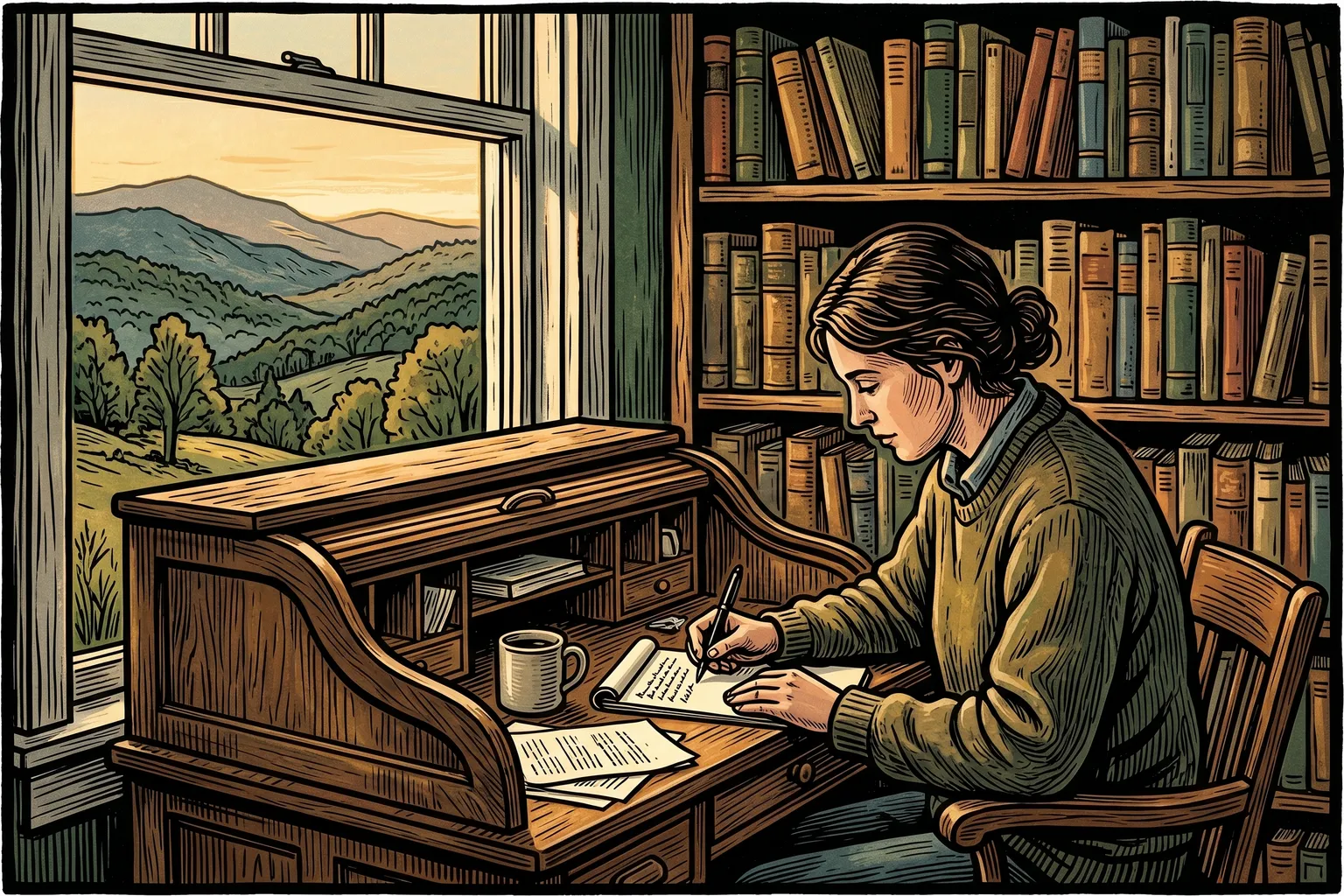
Write it down. Even if you plan to speak from memory, write it first. The act of writing forces you to choose. You cannot write everything, which is the point. The constraint gives the eulogy its shape.
Read it out loud before you give it. Not once. Twice, at least. A sentence that looks fine on the page sometimes reveals itself, when you say it aloud, as something that needs to be cut or reworded. The ear is a better editor than the eye for this kind of writing.
Let yourself feel it while you’re writing. Some people shut down their emotions to get through the task. That’s understandable, but it usually shows in the result. The honest weight of the loss belongs in the writing. Not performed grief. Just the true feeling, present under the words. The people in the room will feel whether it’s there or not.
I’ve spent enough years at bedsides to know that what the dying teach the living is mostly about presence. The willingness to stay in the room. A eulogy is a last version of that same gift.
Don’t worry too much about whether it is good. The people who’ve come to a funeral aren’t critics. They are hurting. They want to feel that someone in that room loved this person the way they did, and is saying so. What the dying want, in my experience, is to know that they mattered. A eulogy is the last chance the living have to say: yes, you did. You were specific. You were yours. We saw you.
You’re going to be nervous. That’s fine. It shows you cared. The trembling voice and the shaking page are not failures of composure. They are evidence that what you’re doing is real.
The best eulogy I ever heard was given by a man who had sold insurance his whole life and was not a man who made speeches. He shook for the first thirty seconds. Then something settled in him. He said: “My wife thought I was funnier than I am. Forty-one years, and she still laughed at my jokes, even the ones she’d heard fifty times. I don’t know if she was being kind or if she just loved me that much, but I chose to believe it was both.” He sat down. That was most of it. The whole room exhaled.
I have been to funerals where professional speakers said far more and far less.
Write the true thing. Say it out loud. Let the love show.
That is enough.
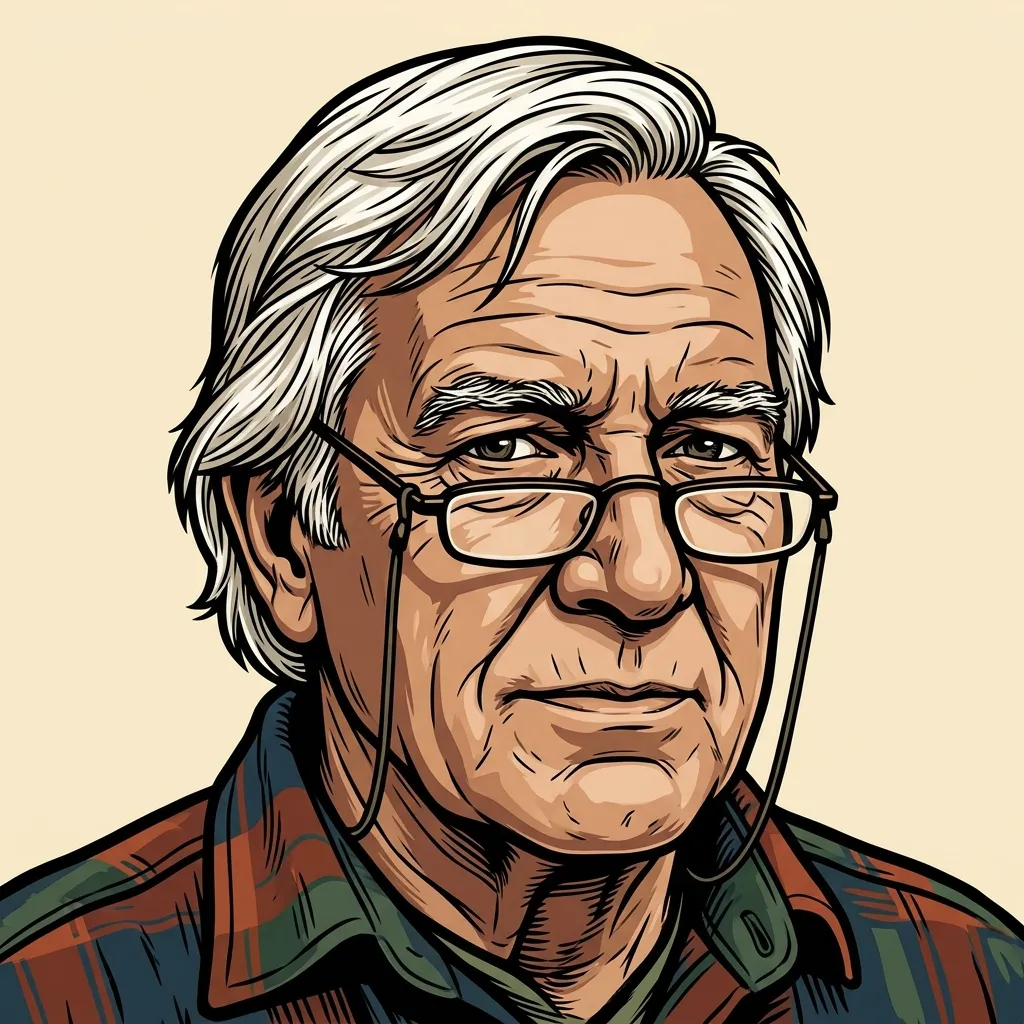
Tom Whitaker is the Faith & Meaning columnist for the Sunday Evening Review. He is a retired Presbyterian pastor who spent forty years in ministry in Kentucky and North Carolina. He lives in Weaverville, North Carolina, with his wife Linda and a cat named Psalms.