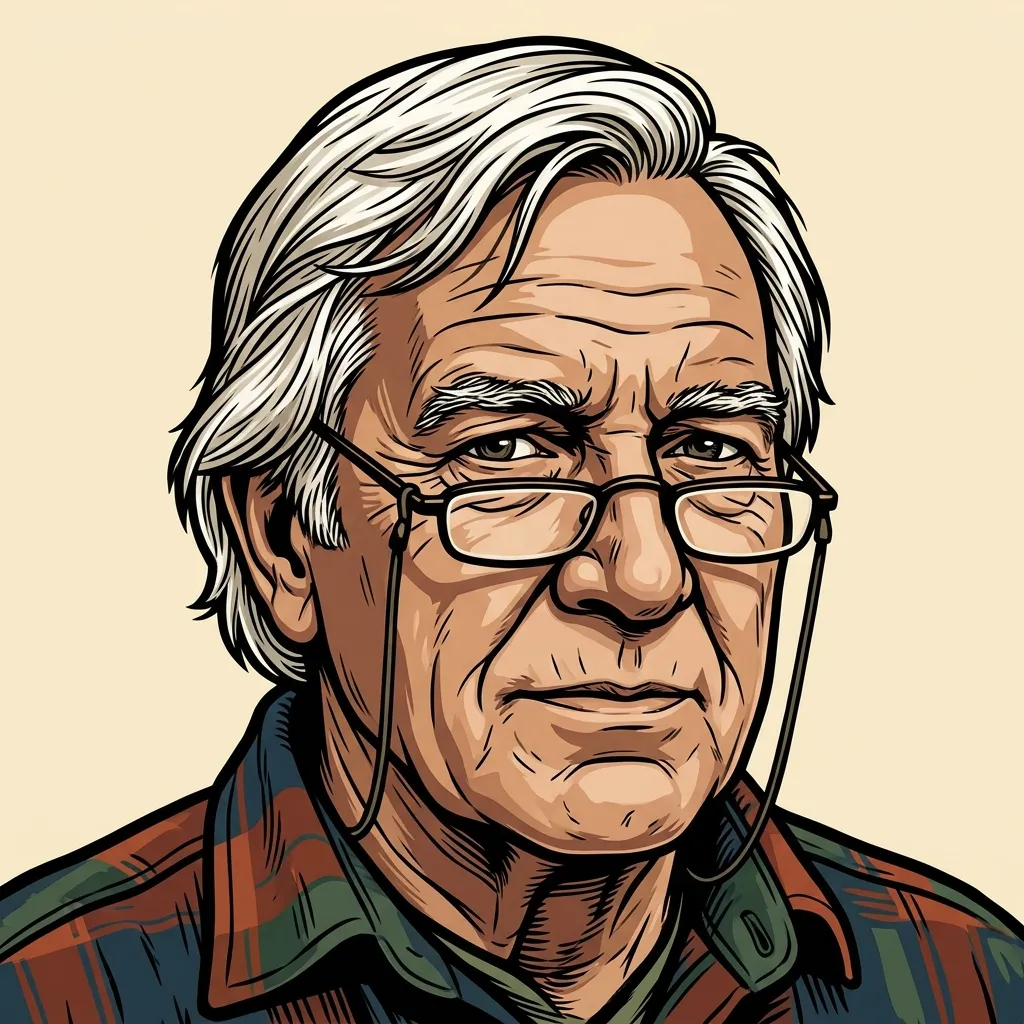
A man I’ll call Douglas came to see me on a Wednesday afternoon. He had been a deacon in my congregation for eighteen years. He had helped build the new wing on the fellowship hall with his own hands. He and his wife had buried two grandchildren and were still in the pews every Sunday.
He sat down across from my desk and looked at his hands for a while.
Then he said: “I’m not sure I believe anything anymore.”
I waited.
He said: “I still come. I still do the work. But I think the thing that was in it for me is gone. And I don’t know when it left.”
I said: “How long has it been like this?”
He looked up. “Maybe ten years.”
He was sixty-four.
I have heard versions of this more times than I can count. Not from young people in the throes of their first real questioning – those conversations are different, louder, they have the energy of a door swinging hard on its hinges. What Douglas was describing was something else. Not a crisis. A quieting. The slow withdrawal of a certainty he had not noticed he was counting on until it was no longer there.
He asked me if that meant he had lost his faith.
I said: I think it means your faith finally started telling you the truth.
The doubts that arrive in your sixties are not the doubts of your twenties.
The doubts of your twenties are about whether any of this is real. Whether the whole edifice holds. Whether you are a fool or a believer, and whether those words mean the same thing. They are large doubts. They have the swagger of philosophy.
The doubts that arrive later are smaller and harder.
Did I love well enough? Did I love the people closest to me, specifically, the ones whose ordinary presence I walked past for years assuming I had time? Was I present in the ways that mattered, or was I performing presence?
What does prayer actually do? Not what should I believe about it. What happens in that room, that chair, that silence – and why do I keep returning to it, and what am I returning to?
Was it enough. This is the hardest one. Not the mistake-accounting – everyone’s balance sheet has mistakes. This is a reckoning with the whole, not the parts. The question that arrives at three in the morning with a specificity that daylight never quite recovers.
These are not signs of spiritual failure.
These are signs of spiritual maturity.
Wendell Berry has a poem called “The Peace of Wild Things,” about waking in the dark full of worry and going out to lie down in the woods, where the wild creatures sleep without grief. I have read that poem to myself in the dark more than once. What I notice is that Berry does not resolve the worry. He does not arrive at answers. He arrives at the heron plunging down. He arrives at the water, still and cool. He arrives at a peace that does not require him to stop asking.
That is what I am talking about.
In the winter of 2015, I stood up on a Sunday morning and told my congregation that I was not certain what happened after death.
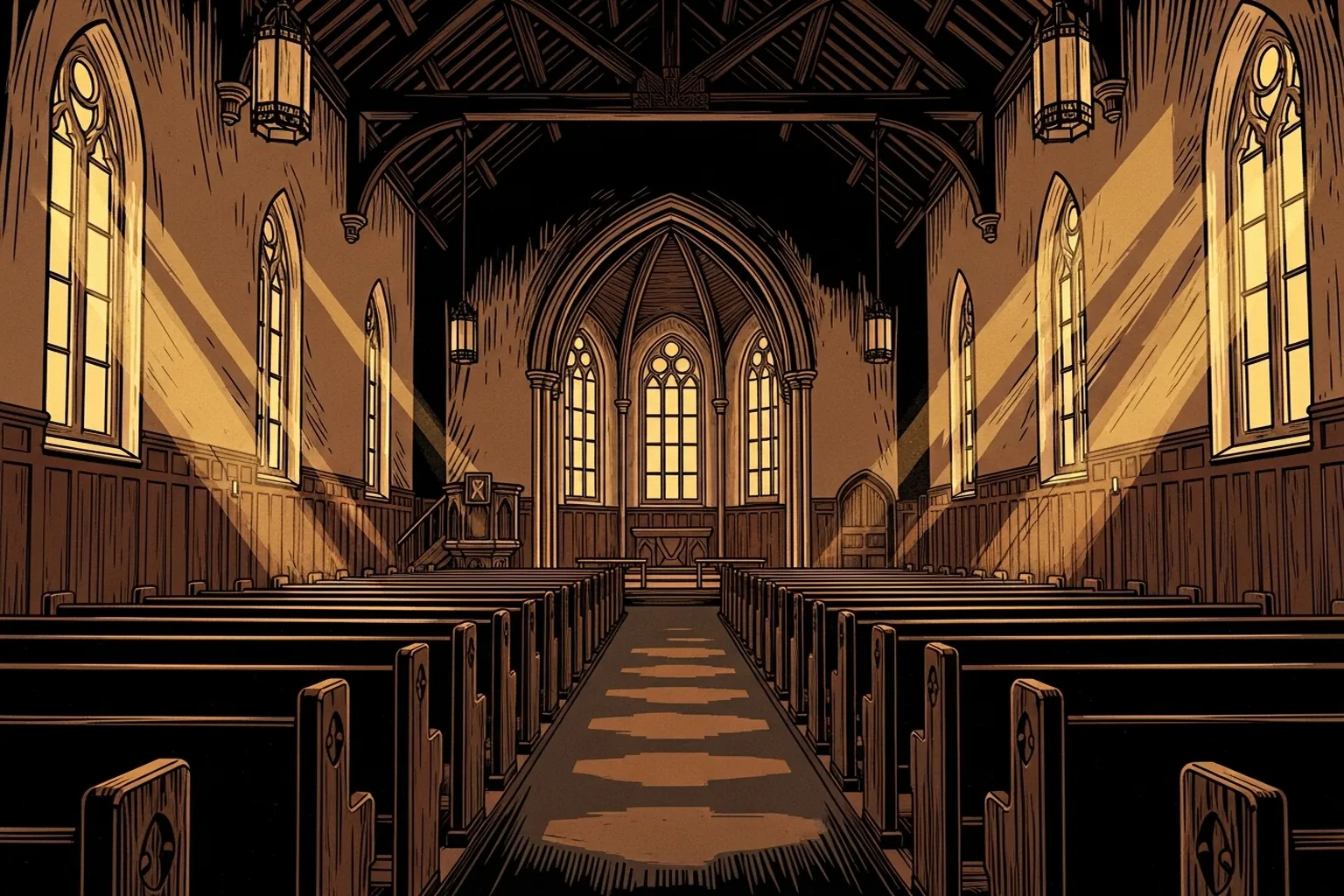
I did not plan to say it quite that way. I was preaching on the resurrection – the Sunday after Easter, always the hard Sunday, after the lilies are gone and the borrowed attenders have gone home and you are back to the regular people who have heard every sermon you own. I looked out at the faces in front of me, and something in me decided I was done pretending.
I said: I have been a pastor for thirty years. I have been at more deathbeds than I can count. I am not going to stand here and tell you I know exactly what happens next. What I can tell you is what I have witnessed. I have witnessed love that did not end when the person died. I have witnessed something in those rooms that I cannot explain and will not insult by reducing to a formula. Whether that is heaven in the way any of us were taught – I honestly do not know.
The sanctuary was quiet.
After the service, a woman who had sat in the third row on the right for twenty-two years came up and took my hand and held it. She had never done that before. She said: “I’ve been waiting for someone to say that.” She was seventy. She had been carrying the question like a stone in her pocket for years, convinced she was the only one.
She was not the only one. They are never the only one.
This is the great loneliness of congregational life – that everyone is holding the same uncertainty and has been led to believe that everyone else has resolved it.
The church has failed people by treating certainty as the goal.
I say this as a man who has loved the church his whole life, who has given his life to it, who believes in what it is trying to be when it is being itself honestly. I say it not to condemn but because I think it is true and I have watched it hurt people.
When we say, implicitly or explicitly, that doubt is a sign of weak faith, we tell the sixty-eight-year-old woman in the third row that her questions are a failure. We tell Douglas that his ten years of honest attending – his showing up without certainty, his continued doing of the work – doesn’t count.
It counts. It counts more than the easy faith.
Marie Howe wrote, in a poem I keep returning to: I am living. I remember you. She was writing about her brother, who had died. What she found was that grief and presence are not opposites. That to continue living while holding someone gone is itself a kind of faith. I read that line and think: this is what prayer is. Not a transaction. Not a hotline. An I am living. I remember you. An orientation toward something you cannot prove and cannot stop reaching for.
Doubt is not the opposite of faith. Doubt is faith with its work clothes on.
I have believed this for a long time, and I believe it more now than I did at forty. The faith that has never been tested is not faith – it is comfort food wearing a cross. The faith that has been in the room with suffering and silence and prayers that were not answered and has come out the other side still asking – that is something harder and more durable and worth protecting.
If you are sitting somewhere right now with questions you have never felt safe enough to say out loud – in the third pew or in your car or in your kitchen at three in the morning – those questions are not a failure. They are the evidence that you have been paying attention.
The questions are the practice.
You do not have to resolve them to continue.
Douglas came back to see me about a month later. He sat across from my desk and looked less like a man in trouble than he had the first time.
He said: “I think I was trying to go back to something I used to have. The way I believed at thirty. Like I’d lost it somewhere and could find it again if I looked hard enough.”
I said: “And now?”
He said: “Now I think I don’t want the thirty-year-old version back. I think this is what I have now. And I think I can work with this.”
He was right.
That is, in the end, what I have to offer. Not resolution. Not the tidy answer. A hand in the dark, and the news that you are not as alone in your questions as you think you are.
You never were.
Tom Whitaker is the Faith & Meaning columnist for the Sunday Evening Review. He is a retired Presbyterian pastor who spent forty years in ministry in Kentucky and North Carolina. He lives in Weaverville, North Carolina, with his wife Linda and a cat named Psalms.