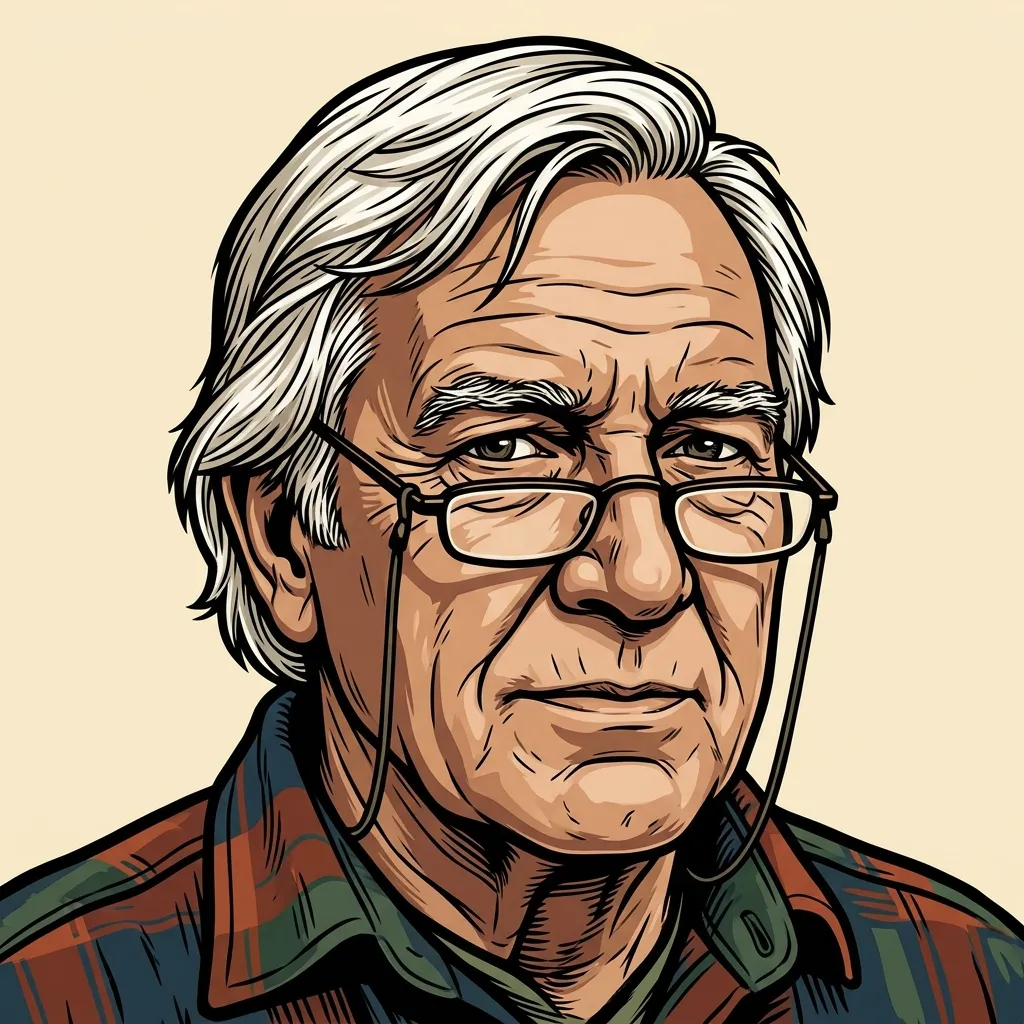
A man named Gordon brought his bucket list to a pastoral visit.
He was sixty-seven, recently retired from a career managing inventory for a regional hardware company, and his wife had called me the week before. Three months into retirement and Gordon didn’t know what to do with himself. He’d rearranged the garage twice. He’d been reading articles about places to go. He’d been driving his wife to the edge of her considerable patience. “He made a list,” she told me when she called. I asked what kind. She said: “The other kind.”
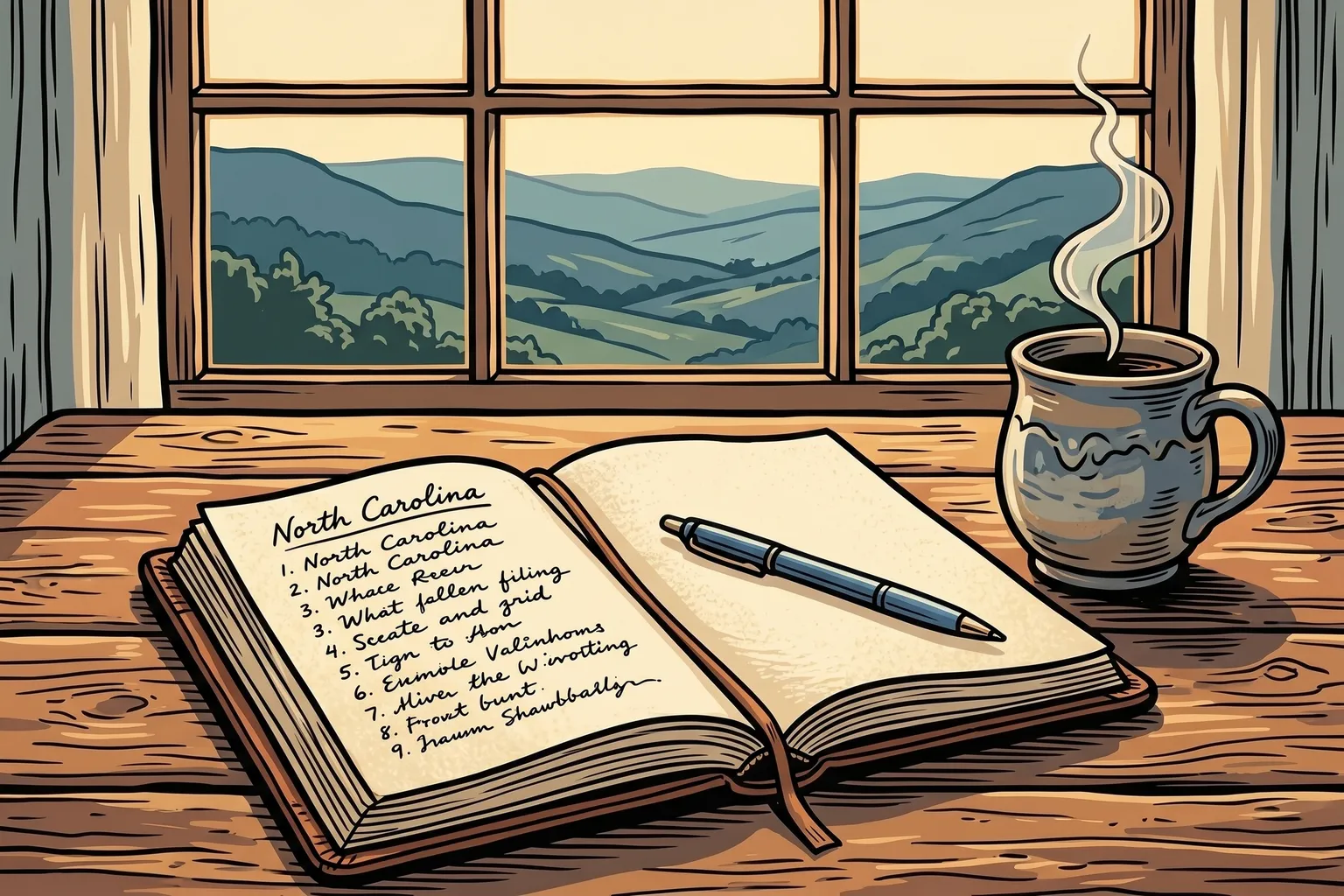
When I arrived, Gordon had the list ready on a yellow legal pad, divided into categories, which told me something about him right away. He was a categories man. There was an Africa section. A food section. A few items under Architecture. Twenty-two things altogether, some of which I recognized from the kind of publications that know what you ought to do before you die and aren’t shy about telling you.
I read through it while he waited. He watched me the way people watch the pastor, which is to say with a slight holding of breath.
When I got to the end, I said: “Which one are you most afraid you won’t get to?”
He answered without hesitating. “The pasta,” he said.
I looked back at the list. There it was, near the bottom of the food section: Learn to make pasta from scratch. The real way. From my grandmother’s recipe.
Kilimanjaro was on the list. The Amalfi Coast was on the list. A specific waterfall in Iceland was on the list. And the one Gordon was most afraid of missing was an afternoon in a kitchen with his grandmother’s handwritten recipe card.
I sat with that for a moment before I said anything.
That’s the thing about bucket list ideas, when you actually look at them. The honest ones aren’t about the mountains.
Gordon made his pasta eventually. He told me about it afterward with the particular satisfaction that men his age often bring to things they’ve made with their hands. His daughter was there. His grandmother’s card was stained with oil and forty years of use. He said he cried a little and blamed it on the flour.
He got to the Amalfi Coast too, a couple of years later. He said it was beautiful. He talked about the pasta more.
I’ve spent most of my adult life thinking about what people actually want, which isn’t the same as thinking about bucket list ideas, except that it turns out to be almost exactly the same.
The work I did for forty years involved sitting with people during the parts of life that strip away the noise. Bedside visits. Funerals. The kitchen table conversations that happen after the hospital appointment. What I found, over and over again, is that when the noise clears, what’s left is specific. Not grand. Not impressive. Not the twenty-two-item list with the Africa section.
A letter that got written or didn’t. A relationship that was repaired or wasn’t. The afternoon in the kitchen.
What I’ve come to believe is this: a bucket list is a spiritual document disguised as a to-do list. It knows something about what you love before you fully know it yourself. The act of writing one is, if you take it seriously, an act of discernment. It asks you to name the things you’d be sorry to miss. Which is another way of asking what you actually love. Which is one of the oldest questions in any tradition I know.
What’s interesting, and I’ve noticed this across many years of these conversations, is how the list changes.
The lists people make at thirty are different from the lists they make at sixty-five. At thirty the list tends toward accumulation and novelty. Places to see. Experiences to collect. A life lived wide. There’s nothing wrong with that. Thirty is supposed to be wide.
But something shifts, somewhere in the middle decades. The adventures don’t disappear entirely, though they often scale. What tends to appear, and what often wasn’t on the earlier list at all, is quieter. Specific visits. Particular conversations that have been deferred for years. Things to make or learn or finally say. Things that have a person attached to them rather than a geography.
I want to be careful here, because this shift is easy to misread as settling or as some kind of spiritual resignation. It isn’t. I’ve watched too many people mistake it for that.
What I think it actually is: a clarification. The noise of all the possibilities gradually quiets, and what remains is what was there all along. The list at sixty-five knows something the list at thirty didn’t know yet.
The question is whether you notice the shift when it happens. Whether you take the new list seriously enough to act on it.
I know that for some people, the phrase “bucket list” carries weight it didn’t always carry. The bucket you kick, and all that. The list exists, there’s no denying it, because time is finite.
I’ve been in enough rooms where finitude stops being abstract to take that seriously. I’m not going to pretend otherwise.
But I’d push back on the frame that makes a bucket list primarily about what you might run out of time for. That frame puts the emphasis in the wrong place. It turns the list into a fear document. And the lists I’ve watched people make with genuine attention aren’t fear documents.
They’re desire documents. They’re attempts to name what you love.
The finite time is the frame that makes the naming necessary. Without it, the list never gets written. But the list itself isn’t about running out. It’s about choosing what fills the time you have.
There’s a reason people often revisit these lists after a diagnosis, or after losing someone close, or at the moment a retirement clears away the structure that had filled the hours. It’s not that those events introduce the fear of death. It’s that they clear away the noise that had been drowning out the question.
And the question, once you hear it clearly, isn’t morbid. It’s the right question. It’s the one worth asking.
If you want a model for what this looks like when it’s done well, consider what good palliative care does. I wrote about this not long ago in The Conversation Families Keep Not Having, and what I found, both in my research and in forty years of pastoral work, is that the teams who do this well aren’t primarily managing death. They’re managing life. They’re helping people stay present to what matters to them while they still can.
A bucket list, approached honestly, is a version of that same work. Not a death document. A life document.
The hardest part isn’t making the list. We’re good at making lists. We are a list-making species.
The hard part is taking the list seriously enough to do something about it.
Gordon’s pasta was on his list for six months before he made it. The recipe card had been sitting in a drawer for years before that. His grandmother had been gone for a decade. There was no urgency pressing him toward the kitchen. Which is exactly the problem: until there’s urgency, the things on lists stay on lists.
The reframe I keep coming back to, in more pastoral conversations than I can easily count, goes something like this: don’t ask what you want to do before you die. Ask what you’d want to have done, if you were sitting down to help someone write your eulogy.
That shift matters.
I wrote about this in How to Write a Eulogy, and what I said there applies here. A eulogy isn’t a summary. It’s a single true thing, offered in the presence of grief, that lets people recognize the person they loved. What you want to have lived is what you’d want in that story.
When you hold your bucket list up against that question, the list rearranges itself. The things that are primarily impressive tend to move down. The things that have a person attached to them tend to rise.
Gordon’s list, when he handed it to me, was a document about Gordon that Gordon himself hadn’t quite read yet.
The mountains were there because he’d grown up in a flat place and spent his whole career in a flat vocation and there was something in him that wanted height. The pasta was there because he missed his grandmother and hadn’t found another way to say that.
He hadn’t thought about it in exactly those terms. Most people don’t. That’s not a failure. That’s just how the list tends to work. It holds information about what we love in a form we can look at without being overwhelmed by it.
The work is to take it seriously. To not leave the pasta in the drawer while you plan the mountain.
To understand that the bucket list ideas worth pursuing aren’t finally about what you plan to do with remaining time. They’re about what you already know you love.
You already know. You knew when you wrote it down.
The list has been waiting for you to read it.